
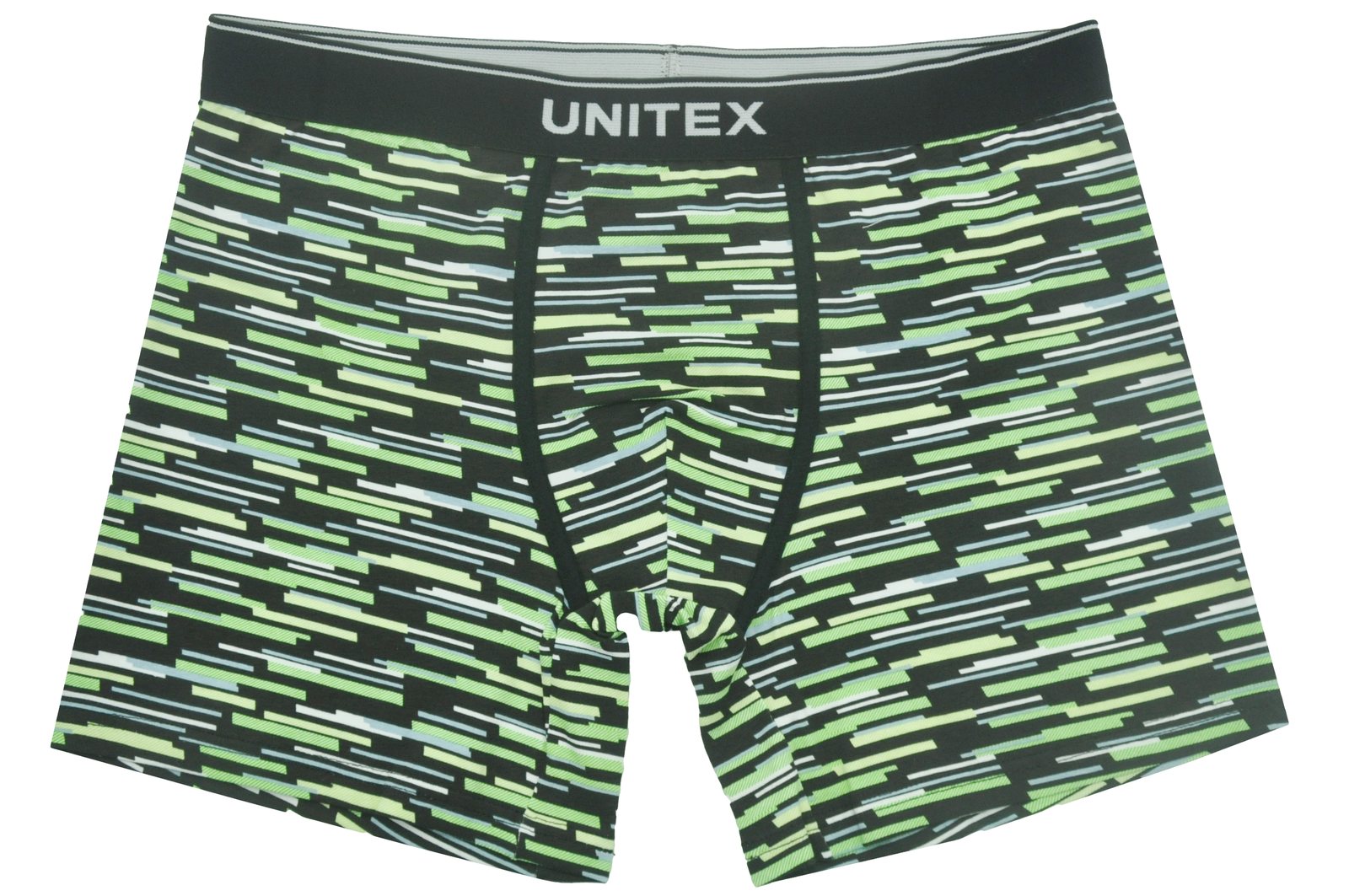
Quick answer. Women’s panties normally run on a minimum of 2,000 pieces per style and colour. Four specification items decide the garment: the silhouette and coverage, the fabric with its blend and weight, the gusset and lining — which is usually a different fibre from the body and accounts for most comfort complaints — and the size grade per market. Sampling takes 7–10 days on a stock block and 12–18 days for full development.
1. The silhouette spectrum, and what each one costs
The category is not one garment with variations; it is several distinct blocks, and each carries its own pattern and its own minimum.
- Brief. Full back coverage and a mid rise. The volume silhouette in most mature markets.
- Bikini. A higher leg opening than a brief, with less back coverage. The mainstream silhouette in younger segments.
- Hipster. A lower rise with fuller back coverage — sits on the hip rather than the waist.
- High-cut. A much higher leg opening, which raises fabric consumption and changes the leg-opening elastic requirement.
- Boyshort. Full coverage with a short leg; the closest in construction to a men’s boxer brief.
- Thong and g-string. Minimal coverage, with the highest dependency on the elastic and the seam finish.
- Seamless. Knitted as a piece rather than cut and sewn, which is a production route rather than a silhouette.
Coverage is what moves the cost, because it changes fabric consumption per piece. A high-cut and a brief in the same cloth do not price the same, which is why a quotation should state the silhouette rather than “panties”.
2. The gusset is a specification line of its own
- Usually a different fibre. The lining is commonly cotton even when the body is modal, microfibre or a lace knit, because the two are doing different jobs.
- Most comfort complaints sit here. In this category the lining accounts for a disproportionate share of returns, which is why it is quoted, sampled and inspected as its own item.
- Construction matters as much as fibre. A flat seam at the gusset edge matters more than the fibre name on a garment worn all day.
- Content has to be labelled accurately. Fibre percentages are a legal declaration in most markets, and the lining is part of it.
3. Fabric and finish
- Cotton and cotton-rich. The volume base; breathable and easy to wash.
- Modal and micro-modal. Softer hand and better drape; used in comfort-positioned ranges.
- Microfibre and polyamide blends. Smooth surface, good shape retention, often used for seamless and for print-led ranges.
- Lace and mesh. A different construction rather than a different fibre — check the stretch recovery and the edge finish, not only the appearance.
- Weight in g/m² alongside the blend. In this category the weight difference between a summer and a winter version of the same style is a specification item.
4. Size, grading and the ends of the run
- Confirm the band per market. EU, US and UK runs are cut to different blocks, and women’s blocks vary between markets more than men’s do.
- Expect a second block for extended sizes. Extending a band usually needs a re-graded set rather than more sizes on the same block.
- Check the ends. Fit complaints concentrate at the smallest and largest sizes, because the middle is usually the developed size.
- Grading cost is one-time and sits with the pattern cost, before any garment is cut.
5. MOQ and lead time
- Minimum. Around 2,000 pieces per style and colour.
- Granularity. Per style and per colour — six silhouettes in three colours is eighteen minimums, not one.
- Fastest lever. Reduce the silhouette count rather than the quantities within each.
- Sampling. 7–10 days on a stock block, 12–18 days for full custom development.
- Bulk production. 45–60 days for a new style, 30–40 days on a repeat, from the approved pre-production sample.
- Sea freight. 30–35 days to Europe or the US east coast.
- Peak season. August to October adds 10–15 days.
6. Common specification errors
- Quoting “panties” without naming the silhouette. Coverage changes consumption, so an unnamed silhouette cannot be compared.
- Inheriting the gusset from the body fabric. It is usually a different fibre and it is where the complaints sit.
- Specifying lace or mesh without checking the recovery. The edge finish and the stretch behaviour decide how it wears.
- Extending a size band without re-grading. The garment measures correctly and sits wrong at the ends.
- Assuming one block serves every silhouette. A bikini and a boyshort cut from the same block rarely both fit.
- Leaving the colour ratio undecided. In this category colour, more than fabric, drives end-of-season markdown.
7. How to compare two quotations
- Silhouette stated. By name and by coverage rather than by the category word.
- Gusset and lining itemised. Fibre and construction on their own line.
- Fabric and weight itemised. The same fibre at a different weight is a different garment.
- Grading cost shown separately. One-time, and it explains why a first order prices differently.
- Minimum basis, trade term and validity. Per style and colour, FOB and the port, plus how long the figure stands.
Specification at a glance
| Specification item | What to write | Why it decides the order |
|---|---|---|
| Silhouette | Brief, bikini, hipster, cheeky, high-cut or boyshort | The name alone is not a specification; ask for the measurement set |
| Gusset | Cotton lined, two-piece or single, seam finished flat | The gusset is what the wearer judges first |
| Waistband | Knitted-in or folded, height in cm, recovery stated | A folded band can roll where a knitted band does not |
| Leg opening | Elastic width and tension per size | Where a grading error appears as a visible fault |
| Fabric | Cotton, modal or cotton/spandex with weight in g/m2 | Modal changes drape and shrink behaviour |
| Size grade | EU, US and UK blocks confirmed separately | The same letter size is three different garments |
Where the specification usually slips
| Item | What buyers often write | What it should say |
|---|---|---|
| Shape | Panties | Brief, bikini, hipster, cheeky, high-cut or boyshort |
| Gusset | Cotton lined | Two-piece or single, seam finished flat |
| Fabric | Modal | Weight in g/m2 and blend ratio, plus shrink behaviour |
| Size | US 6 | The market block and the hip measurement it maps to |
Related specifications
Related specifications: women’s briefs programme and thong briefs programme. For the commercial side of the same decision, see panties silhouettes compared and women’s supplier guide.
· Xiamen Unitex Trade Co., Ltd. — OEM & ODM underwear sourcing partner