

Buyer Insights
Blog — Underwear OEM Manufacturing Insights
Buyer-facing notes on underwear sourcing, fabric specification, compliance and lead times — published by Unitex Underwear (Xiamen Unitex Trade Co., Ltd.), a sourcing company based in Xiamen, Fujian Province, in the Xiamen–Quanzhou–Jinjiang knitwear cluster of south-east China.
 Manufacturing & Quality Control · Oct 2026 · 9 min read
Laser-Cut Bonded Underwear: Construction, Bond Strength and What to Specify (2026)
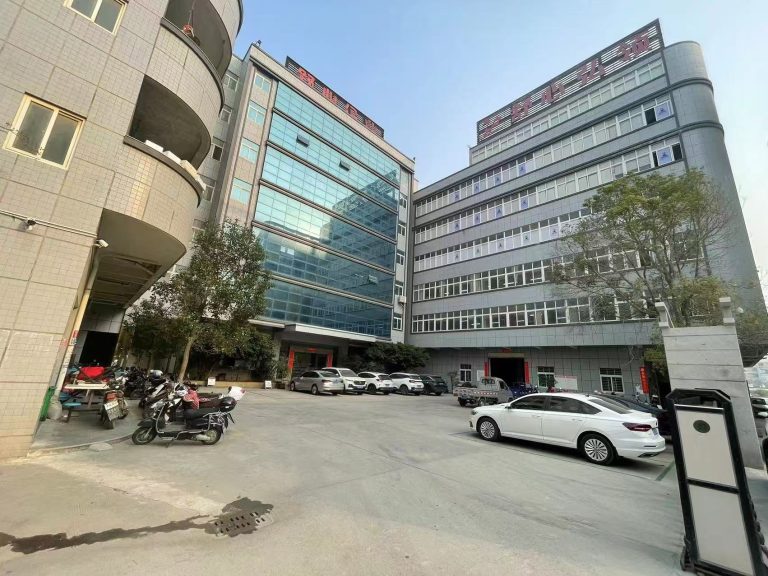
Laser-cut bonded underwear is made by cutting the panels with a laser and joining them with a hot-melt adhesive tape rather than a stitch. The construction removes the side seam and the edge binding, which produces the flat finish — and it is a different construction from circular-knit seamless, which is moulded as a tube rather than cut and bonded.
 Compliance & Certification · Oct 2026 · 7 min read
Underwear Sourcing at a Trade Fair: What Five Days Settle (2026)
A trade fair settles the things you can hold: fabric weight in your hand, elastic width, grading across a size curve, a counter sample, and the person who will run your file. It does not settle landed cost, destination labelling, transit time or payment terms. Plan that split before you travel: Phase 3 of the 140th Canton Fair runs 31 October to 4 November 2026 for the whole apparel and underwear category.
 Sourcing & Procurement · Oct 2026 · 3 min read
The True Cost of Changing an Underwear Supplier (2026)
The cost of changing a supplier is usually recorded as the development and tooling fees, and that understates it. The items that dominate are the transition period, the double minimums, the working capital carried through it, and the quality ramp a new relationship goes through before it settles.
 Sourcing & Procurement · Oct 2026 · 4 min read
Moving a Pattern to a New Supplier: What Transfers and What Does Not (2026)
A pattern does not transfer between suppliers, but a standard does. What moves is the set of measurements and tolerances, the construction detail, the approved sample and the specification — which means a new supplier is developing to the same numbers rather than receiving the same block.
 Sourcing & Procurement · Oct 2026 · 7 min read
Evidence for a Quality Claim: What You Need Before You Ask (2026)
A quality claim is settled by evidence rather than by argument, and the first document in that evidence is the specification rather than the photograph. What makes a claim succeed is a comparison — the written specification, the sealed sample and the records from the run, held before the shipment arrives.
 Sourcing & Procurement · Oct 2026 · 4 min read
First Order Failures: The Mistakes That Cost the Most (2026)
First-order failures are rarely production failures. They are specification and process failures — an unwritten specification, a sample approved at one size, a minimum budgeted per order rather than per style and colour, and a lead time counted from the wrong date.
 Sourcing & Procurement · Oct 2026 · 4 min read
Sample and Tooling Fees: Who Pays, and What Should Be Refundable (2026)
Sample fees and tooling fees are two different things, and the confusion between them causes most of the arguments. A sample is a piece of work; tooling is a physical asset that produces future work, which makes the tooling question a question about ownership rather than about price.
 Sourcing & Procurement · Oct 2026 · 4 min read
Supplier Disruption: A Contingency Plan for Underwear Buyers (2026)
Disruption cover is built before it is needed, because a second source established during an emergency is a first order under adverse conditions. The practical preparation is a complete order file, a verified alternative, and a contingency you have walked through once.
Sourcing & Procurement · Oct 2026 · 4 min readWhat to Put in an Underwear Supply Agreement (2026)
An underwear supply agreement is worth writing because of the clauses that apply when something goes wrong rather than because of the price. The specification, the amendment rule, the inspection standard, the remedy and the delay allocation are the five that decide how a problem is handled — and each is cheaper to agree before the first order.
 Sourcing & Procurement · Oct 2026 · 3 min read
Building a Second Source: Adding a Backup Supplier Without Losing Control (2026)
A second source is a second supplier for the same style, and it is not the same order split in two. It needs its own pattern, its own grade, its own approved sample and its own verified certification, which makes establishing one a development project rather than a procurement step.
 Sourcing & Procurement · Oct 2026 · 4 min read
When to Replace an Underwear Supplier: Signals and a Decision Framework (2026)
The decision to replace a supplier turns on whether a problem is occasional or systematic rather than on how serious any single incident felt. A defect type that keeps appearing traces to a stage that has not changed, while different defects occurring once each is the ordinary variation of production.
 Sourcing & Procurement · Oct 2026 · 8 min read
When a Supplier’s Bank Details Change: A Verification Protocol (2026)
A request to change a supplier's bank details is the highest-value single point of risk in a supply relationship, because the amount involved is the whole balance of an order. The rule that makes it manageable is simple: verify through a channel you already had, never through the channel the request arrived in.