

Buyer Insights
Blog — Underwear OEM Manufacturing Insights
Buyer-facing notes on underwear sourcing, fabric specification, compliance and lead times — published by Unitex Underwear (Xiamen Unitex Trade Co., Ltd.), a sourcing company based in Xiamen, Fujian Province, in the Xiamen–Quanzhou–Jinjiang knitwear cluster of south-east China.
 Manufacturing & Quality Control · Oct 2026 · 4 min read
Remote and Video Factory Audits: What They Can and Cannot Verify (2026)
A remote audit is good at showing a live production floor and weak at verifying documents or catching what a site does not want shown. It verifies what is happening now rather than a filing system, so the questions and the recording method follow from that.
 Manufacturing & Quality Control · Oct 2026 · 4 min read
Reading QC Records: What Production Records Tell You (2026)
Production records and a shipment report describe different things. Records produced during the run describe the process that made the goods, while a report written for the shipment describes the goods themselves. Only the first tells you anything about the next order.
 Manufacturing & Quality Control · Oct 2026 · 4 min read
Verifying a Factory’s Capacity for an Underwear Order (2026)
A monthly output figure does not tell you whether your order can be scheduled in. Capacity is what is left after the orders already booked, so the useful questions are how many lines the style would run on, what those lines are doing now, and how many days your order would occupy them.
Compliance & Certification · Oct 2026 · 3 min readWhich Tests to Request for an Underwear Order (2026)
The test list follows the use, the market and the age band rather than a standard template. Chemical testing, colour fastness, physical performance and — for children's articles — the age-band requirements each answer a different question, and the scope has to cover print, dye and trims rather than the base fabric alone.
Manufacturing & Quality Control · Oct 2026 · 3 min readSealed Sample Management: Why the Approved Sample Is the Reference (2026)
The sealed approved sample is the reference a reorder is measured against, which is why it is held by both sides and kept with the order file rather than in a drawer. Without it, a claim about a delivery has nothing to be measured against, and the discussion becomes a comparison of recollections.
 Manufacturing & Quality Control · Oct 2026 · 4 min read
Pre-Production Sample Approval: The Gate Before Bulk Runs (2026)
The pre-production sample is the gate the bulk run waits behind, and it is the point the bulk clock is counted from. It is not a second sales sample: it is made to the production specification, on the material and the line that will run the order, which is what makes approving it a decision rather than a preview.
 Compliance & Certification · Oct 2026 · 3 min read
Arranging a Third-Party Inspection for an Underwear Order (2026)
A third-party inspection is arranged against a defined standard, at a defined point in the process, with a defined consequence for a fail. The standard and the consequence are agreed before the inspection rather than after the result, because an inspection without an agreed remedy is a report rather than a control.
 Compliance & Certification · Oct 2026 · 4 min read
How to Verify a Supplier’s Certificate Number: A Buyer’s Walkthrough (2026)
Verifying a certificate takes three steps rather than one: ask for the number rather than the image, check it on the issuing body's own database, and then read the scope — which entity holds it, which site and article it covers, and whether it is current. A real certificate with the wrong scope is the failure mode the sequence exists to catch.
 Compliance & Certification · Oct 2026 · 4 min read
Audit Report vs Test Report: What Each One Proves for an Underwear Order (2026)
An audit report and a test report prove two different things, and neither substitutes for the other. An audit report evidences how a site is run; a test report evidences what a specific article contains. Neither describes the shipment, which is what an inspection report covers.
 Sourcing & Procurement · Oct 2026 · 4 min read
Who Bears the Cost When an Underwear Order Is Delayed? (2026)
Who carries a delay depends on which category it falls into: one the buyer controls, one the supplier controls, or one neither controls. Where the contract is silent, the default is usually the buyer's exposure, which is why the allocation is worth writing down before the first order rather than after the first delay.
 Sourcing & Procurement · Oct 2026 · 4 min read
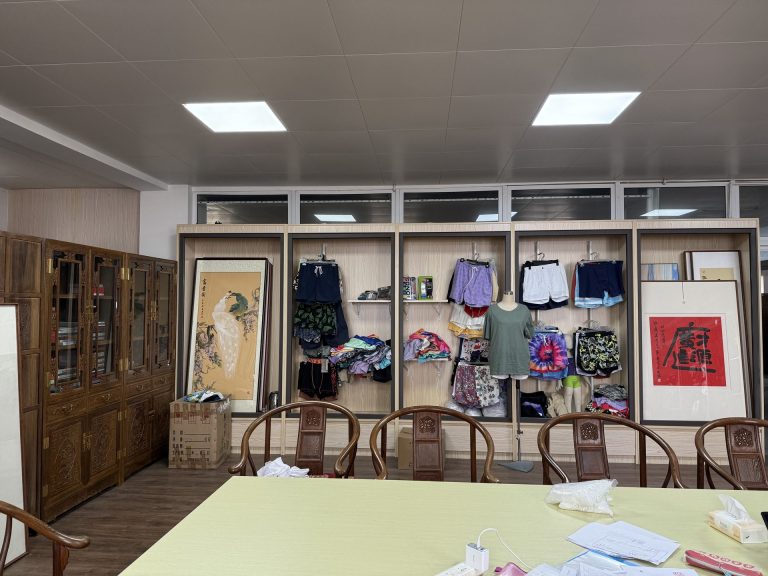
Comparing Underwear Quotations Line by Line: A Method for RFQs (2026)
Two underwear quotations rarely differ across the whole offer — broken down line by line, most of the gap usually sits in two or three lines. The purpose of the comparison is to find which two or three, because those carry the whole price difference and the whole risk.
 Sourcing & Procurement · Oct 2026 · 5 min read
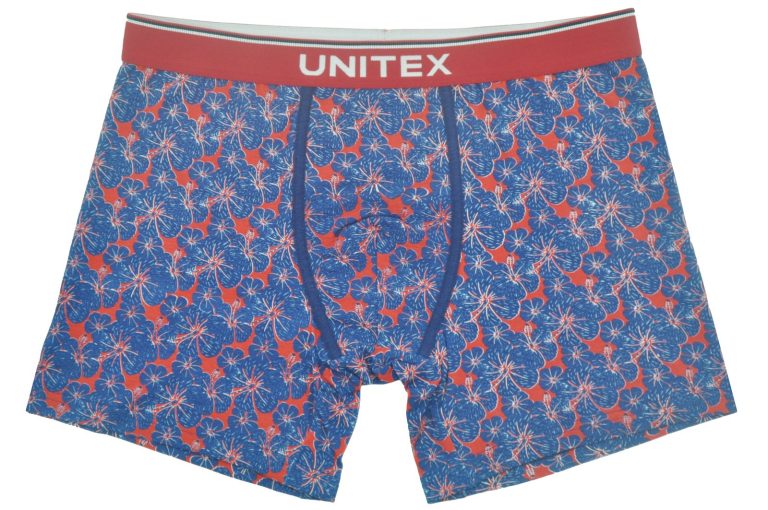
Red Flags in an Underwear Quotation: 12 Signals Worth Checking (2026)
Most quotation risk is not hidden in the price — it is in what the price does not state. A quotation that names no specification, no minimum basis and no validity cannot be compared with another one, and the absence is usually the signal rather than the number.