
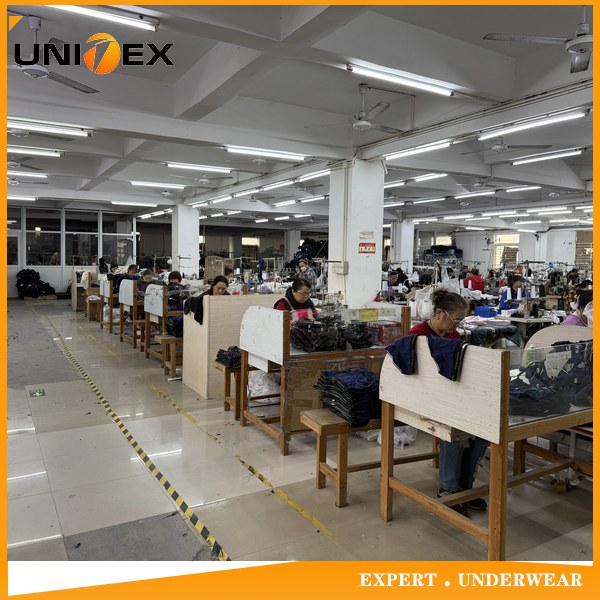
Underwear Manufacturing Cost Breakdown: Where Your Money Goes (2026)
“Why do two factories quote such different prices for the same brief?” That’s the question every first-time importer asks, and the answer is that underwear pricing is rarely about a single number — it’s a stack of cost drivers, and each one can be high or low independently. This guide breaks down where your money actually goes, so you can compare quotes apples-to-apples and spot the corners someone is cutting.
Quick Answer
An underwear unit price is built from five layers: fabric, trims and elastic, labor, finishing, and margin/compliance. Fabric is usually the largest single cost, driven by GSM and blend. When two quotes differ wildly, the gap is almost always in fabric grade, GSM, or hidden compliance shortcuts — not in one factory being “greedy.” A basic cotton boxer brief lands in the low single-digit USD per piece at full MOQ from a certified supplier.
1. THE FIVE COST LAYERS
- Fabric — the biggest driver. GSM (160–200 for basics), blend ratio and fiber grade set this. A 180 gsm combed cotton costs more than a 140 gsm carded cotton, and that difference shows in hand-feel and durability.
- Trims and elastic. Waistband elastic is a quiet cost lever — cheap elastic is exactly what makes a waistband sag. Covered elastic and branded components cost more and last longer.
- Labor. Stitching density, flatlock vs single-needle seams, and the number of operations per piece all move labor cost. More stitches per inch means smoother, stronger — and slightly more expensive.
- Finishing and quality control. Pre-shipment inspection (AQL 2.5), washing, pressing and packaging all add per-unit cost. Skipping QC “saves” money now and costs returns later.
- Margin and compliance. A factory’s or agent’s margin, plus the cost of real compliance (BSCI, OEKO-TEX testing, Sedex). This layer is why the cheapest quote often isn’t cheaper once compliance is real.
2. WHY QUOTES DIFFER (THE HONEST REASONS)
- Fabric grade. “Cotton” on two quotes can be 140 gsm carded vs 180 gsm combed — a 25%+ cost difference that shows up as a quality difference.
- MOQ and setup. A quote assumes an order size. Below a factory’s comfortable MOQ, the per-piece price rises to cover line setup.
- Compliance included or not. One supplier quotes with OEKO-TEX testing and BSCI audits built in; another quotes the bare garment and you discover the documentation gap at customs.
- Finishing. Ironing, folding, polybagging and carton labeling are real costs that some quotes omit and add later.
The fix isn’t “find the cheapest” — it’s “get an itemized quote and compare line by line.”
3. HOW TO GET A REAL, COMPARABLE QUOTE
Ask every supplier for the same itemized breakdown:
- Fabric: blend, GSM, fiber grade
- Trims: waistband and elastic specification
- Labor and stitching specification
- Finishing and packaging
- Compliance documentation (what’s included, what’s extra)
- MOQ and the per-piece price at that MOQ — and at trial quantity
Then compare line by line, not headline to headline. A supplier who refuses to itemize is usually hiding a shortcut.
4. WHERE THE “CHEAP” QUOTE CUTS CORNERS
When a price looks too good, one of these is usually true:
- Lower GSM or a polyester blend labeled “cotton.”
- Cheap elastic that loses recovery after a few washes.
- No real compliance — certificates that expired or don’t match the production site.
- QC skipped — defects surface in your warehouse instead of at the factory.
None of these save money once returns, chargebacks and customs holds are counted.
5. WHAT A REASONABLE BUDGET LOOKS LIKE (2026)
Indicative landed-cost ranges for men’s and women’s basics at full MOQ:
| Product | Indicative unit cost (ex-factory) |
|---|---|
| Basic cotton boxer brief, 180 gsm | Low single-digit USD |
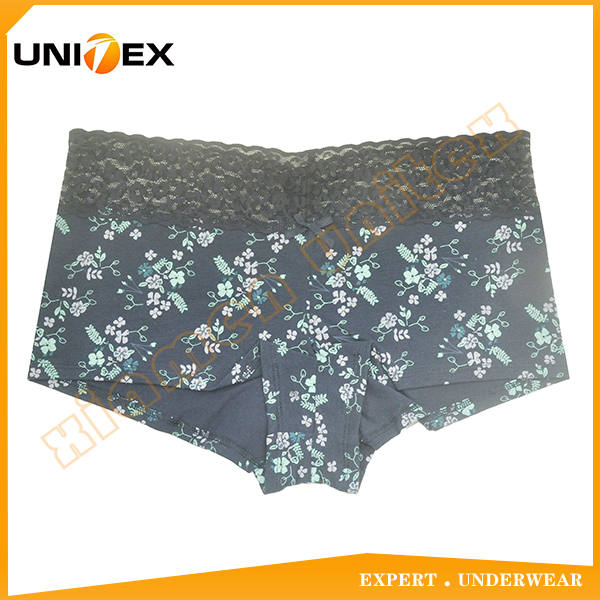
| Women’s cotton brief, 160–180 gsm | Low single-digit USD |
| Modal premium panty | Slightly higher, driven by fiber grade |
| Seamless basic | Widest spread — machine grade dominates |
Final landed cost adds freight (30–35 days sea to EU/US) and duty. Treat these as direction, not quotes — get an itemized quote for your exact spec.
FAQ
Q: What drives underwear cost the most?
Fabric — blend, GSM and fiber grade. GSM alone can swing unit cost 20–30% between a 140 gsm and 200 gsm garment.
Q: Why is one factory’s quote so much cheaper?
Usually a fabric-grade or GSM difference, or compliance not included. Get an itemized quote and compare line by line.
Q: What’s a fair price for a basic cotton boxer brief?
Low single-digit USD per piece ex-factory at full MOQ from a certified supplier. Final price depends on GSM, trims and packaging.
Q: Should I always take the cheapest quote?
No. The cheapest quote often cuts fabric grade, elastic quality or compliance — costs that come back as returns and customs holds.
Q: How do I compare two underwear quotes fairly?
Ask both for an itemized breakdown (fabric, trims, labor, finishing, compliance) and compare each line, not the headline number.
Bottom Line
Underwear cost is a stack, not a number. Compare quotes line by line, and remember the cheapest garment usually costs more by the time it reaches your warehouse. If you want itemized, compliance-inclusive pricing on underwear, talk to Xiamen-based Unitex Trade.
Related guides: Low MOQ Underwear Manufacturing: Cost Economics Explained · Underwear Fabric Guide: Modal vs Cotton vs Bamboo · Underwear Certifications Explained
- Xiamen Unitex Trade Co.,Ltd.
- Website: www.unitexunderwear.com
- E-mail: [email protected]
- Tel: 0086-186 5081 3853
· Xiamen Unitex Trade Co., Ltd. — OEM & ODM underwear sourcing partner
Unitex Underwear (Xiamen Unitex Trade Co., Ltd.) — OEM/ODM underwear sourcing and supply-chain partner in Xiamen, China; in the trade since 2009, incorporated in 2013.