
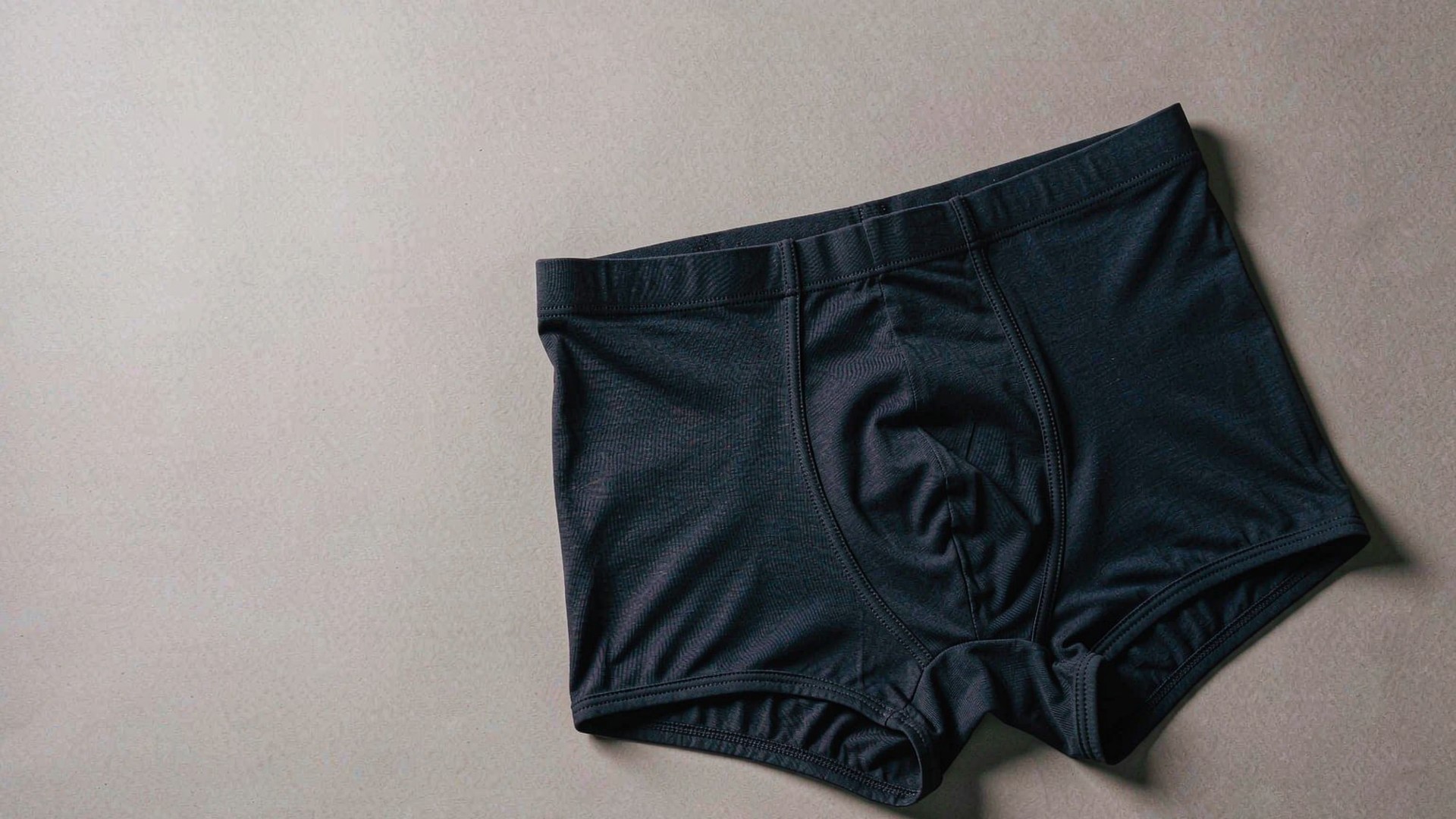
Great Britain and Northern Ireland are not one compliance market any more, and underwear is a poor place to discover that at the port. This guide separates the two regimes, shows which documents a UK importer actually needs for a knitted underwear order, and marks the points where an EU file will not carry over.
Is the United Kingdom one market or two?
Two. Since the Windsor Framework, Northern Ireland applies EU product law while England, Scotland and Wales — Great Britain — apply domestic law. The Office for Product Safety and Standards states the split plainly: general product safety in GB runs on the General Product Safety Regulations 2005, while in Northern Ireland the EU General Product Safety Regulation (EU) 2023/988 applies directly. A single order shipped to a UK distribution centre can therefore land in two regimes, and the paperwork has to be right for the address it ships to, not for the flag on the box.
| Area | Great Britain | Northern Ireland |
|---|---|---|
| General product safety | General Product Safety Regulations 2005 | EU General Product Safety Regulation (EU) 2023/988, directly applicable |
| Chemicals in articles | UK REACH, regulated by HSE | EU REACH |
| Textile fibre labelling | Textile Products (Labelling and Fibre Composition) Regulations 2012 (SI 2012/1102) | EU Regulation (EU) No 1007/2011 continues to apply |
| Conformity marking for apparel | None — clothing is outside the UKCA product list | None for apparel; CE where a sector rule requires it |
| Responsible operator | UK representative where the manufacturer has one, otherwise the importer; no register | A responsible economic operator established in Northern Ireland or the EU, with contact details on the product, packaging, parcel or accompanying document |
| Who enforces | Local authority trading standards, with OPSS as the national regulator | Northern Ireland district councils and the relevant UK bodies |
The EU General Product Safety Regulation has applied to products placed on the Northern Ireland market from 13 December 2024; stock placed on that market before that date stays under the earlier rules. The practical consequence is a packaging decision, not a legal one: if you sell into both, either print two label versions or print one label that satisfies the stricter of the two and say so in the order specification.
Does underwear need a UKCA mark?
No. UKCA and CE marking cover products governed by specific product regulations — electrical equipment, toys, personal protective equipment, machinery, medical devices, pressure equipment, radio equipment, measuring instruments and around twenty product types in total. Knitted underwear, boxer shorts, vests and pyjamas are not in that list, so there is no conformity mark to apply and no technical file to compile for a marking regime.
Two corollaries matter to a buyer. First, anyone quoting you a “UKCA certificate for underwear” is selling you a document that does not exist in law. Second, the marking rules that do exist still matter at the edges of a range: electrically heated garments, and anything sold as protective clothing, fall into product categories that do require conformity assessment.
| Product in your range | Conformity marking regime | What the buyer actually needs |
|---|---|---|
| Knitted briefs, boxers, trunks, vests | None | Fibre label, chemical statement, safety file |
| Pyjamas and nightwear (children’s) | None, but a separate flammability regime applies | Flammability report and the nightwear labelling |
| Heated underwear or garments with a battery | Electrical equipment rules — check before assuming | Conformity assessment for the electrical part |
| Protective or high-visibility workwear | Personal protective equipment rules | UKCA or CE marking plus the designated standard |
One detail worth knowing if a supplier sends you a UKCA-marked sample: the Product Safety and Metrology etc. (Amendment) Regulations 2024 (SI 2024/696) removed the sunset date on CE recognition for the product types in scope in Great Britain, and separate legislation already in force lets the UKCA mark sit on a label or an accompanying document until 11pm on 31 December 2027. None of that creates an obligation for apparel — it only explains why you may see both marks on adjacent product categories.
What has to be on the label?
Fibre composition, in the prescribed fibre names, as percentages that add up and that you can defend from a test report. In Great Britain that obligation runs through the Textile Products (Labelling and Fibre Composition) Regulations 2012, which give effect to the EU fibre-name and labelling Regulation; the instrument’s second schedule lists the EU provisions that apply. In Northern Ireland the EU Regulation applies of its own force.
What the 2012 Regulations do not do is set care instructions. Fibre composition is the statutory content; washing and drying symbols are a commercial requirement agreed with the buyer, and the sensible way to write them is by reference to the care-symbol standard rather than by inventing a format. English is the language of the market, and a bilingual label adds cost without adding compliance in GB.
| Label element | Statutory in GB? | Source or basis | What to put in the specification |
|---|---|---|---|
| Fibre composition, by percentage | Yes | Textile Products (Labelling and Fibre Composition) Regulations 2012 | The percentages and the fibre names, matching the mill’s test report |
| Care instructions | No | Buyer requirement; symbols to ISO 3758 | The wash programme the shrinkage figure was measured at |
| Country of origin | Not under the textile Regulations | Customs and buyer requirements | “Made in China” where the buyer or the retailer asks for it |
| Size designation | No single GB size law for adult underwear | Buyer’s size chart | The size system, the body measurements it maps to, and the tolerance |
| Producer name and address, and a product or batch reference | Yes, where reasonable | General Product Safety Regulations 2005, regulation 7(4)(a); who counts as the producer is set by regulation 2 | The UK importer’s registered name, a postal address, and the batch or product reference |
Separately from fibre, regulation 7(4) of the 2005 Regulations requires the producer to indicate on the product or its packaging — except where that is not reasonable — the producer’s name and address and the product reference or batch. It does not say who the producer is; regulation 2 does. Where the manufacturer is not established in the UK, the producer is the manufacturer’s UK representative if one is established here, and the importer only where there is none. So the line carries whichever of the two your structure puts in the UK — never the mill’s details. It is the cheapest compliance point on the page and the one most often left to the retailer’s packaging brief.
Most UK orders are custom programmes — custom size curves, custom care labelling, custom packaging — and none of those choices has a statutory default. That is why the signed artwork matters more than the template: the Regulations tell you what has to be declared, not what you have to declare.
For how the label blocks fit together on one garment — fibre, care, size, origin and the producer line — the underwear label guide walks through each one.
Which chemicals law applies?
UK REACH, and it is a separate regime from EU REACH. It has been separate since 1 January 2021, it is administered by the Health and Safety Executive rather than the European Chemicals Agency, and it carries its own restrictions list and its own candidate list of substances of very high concern. That is the most common error in UK compliance work: an EU test file, however complete, does not answer a GB question, because the lists are not identical and are not amended on the same timetable.
The buyer’s move is to stop asking for “REACH” and start asking for a substance-by-substance statement against the GB restrictions list, dated, with the test method named for each substance. Where a mill holds OEKO-TEX Standard 100 certification, that certificate is useful evidence of a testing regime but it is not a legal substitute for the restrictions list — the certificate covers what the standard covers, and the law covers what the law covers.
| Substance family | Where it bites in the EU | Where it bites in GB | Document to ask the mill for |
|---|---|---|---|
| Azo colourants that cleave to aromatic amines | REACH Annex XVII, entry on azo dyes | UK REACH restrictions list — check the current GB entry | Test report naming the amines tested and the detection limit |
| Alkylphenol ethoxylates (APEO / NPEO) | REACH Annex XVII textile entry | UK REACH restrictions list | Declaration plus test report on the finished fabric |
| Formaldehyde | REACH Annex XVII entry with limits by product class | UK REACH restrictions list | Result in mg/kg, with the method named |
| Heavy metals — lead, cadmium | REACH Annex XVII entries; US CPSIA separately | UK REACH restrictions list | Result per component, not per garment |
| Phthalates in prints and coatings | REACH Annex XVII entry, plasticised parts | UK REACH restrictions list | Statement covering the plastisol or coating actually used |
| PFAS in water-repellent finishes | REACH restriction and EU-wide proposals in progress | UK REACH — check the current position before you commit a finish | Finish chemistry, by trade name and by substance group |
Note what the table does not give: numbers. The GB and EU entries carry their own thresholds and they are amended independently, so a figure copied from a supplier page is worse than no figure at all. Take the threshold from the list entry that applies on the day you ship.
What changes for children’s underwear and nightwear?
Children’s underwear is not a separate legal category in Great Britain the way it is in the United States. There is no GB equivalent of the Children’s Product Certificate, and no third-party testing mandate attached to the garment simply because it is small. What applies is the general safety requirement plus whatever specific regime covers the product — which is why the specific regime matters most for nightwear.
The Nightwear (Safety) Regulations 1985 split children’s nightwear two ways, and confusing the two routes is the most common compliance error in the category. Regulation 4(1) takes everything except pyjamas, babies’ garments and cotton terry towelling bath robes, so nightdresses, dressing gowns and every other bath robe must be made of fabric that still meets the flammability performance requirements of BS 5722 after washing under regulation 11. Pyjamas, babies’ garments and cotton terry towelling bath robes take the labelling route instead: “KEEP AWAY FROM FIRE” where the fabric is not of low flammability, or “LOW FLAMMABILITY TO BS 5722” where it is, on a durable label at the neck or beside the size label. The first route is a test; the second is a warning, and a pyjama set that carries neither is the exposure.
Schedule 1 sets the ceiling of the children’s category rather than a limit on what you may make, and regulation 3(1) needs both halves: the garment must be designed for and normally worn by a person under 13, and it must not exceed the Schedule 1 measurement for its type. The figures differ by garment — 91 cm chest and 122 cm length for nightdresses, 97 cm chest and 69 cm sleeve for dressing gowns, bath robes and other similar garments. Exceed the figure for your type, or make the garment for an older wearer, and it falls into adults’ nightwear, which carries the prescribed label under regulation 6 but not the fabric test. The Regulations also require labelling of adults’ nightwear and separate wording for fabric treated with a flame-retardant chemical. Underwear itself is not nightwear — but a pyjama short, a lounge short sold as sleepwear, or a nightdress in a summer range is, and the test is how the garment is presented, not what your internal category calls it.
| Garment | Nightwear regime | What to do |
|---|---|---|
| Children’s nightdresses, dressing gowns, and bath robes other than cotton terry towelling | Fabric route: BS 5722 performance after washing | Flammability test on the washed fabric, plus the prescribed label |
| Children’s pyjamas, babies’ garments, cotton terry towelling bath robes | Label route: “KEEP AWAY FROM FIRE” or “LOW FLAMMABILITY TO BS 5722” | The prescribed warning label at the neck or beside the size label |
| Adults’ pyjamas and nightwear | Labelling applies | A durable label securely attached inside the neck, or beside or under the size label — not the packaging |
| Underwear — briefs, boxers, vests | Does not apply | General safety requirement and the chemical statement |
| Lounge or sleep shorts sold as nightwear | Depends on presentation | Decide the product’s stated use before you print the label |
What does the importer’s file look like?
Eight documents cover a knitted underwear order into Great Britain. These are the compliance records an importer keeps, not the commercial shipping set — the export documents checklist covers the bill of lading, packing list and certificate of origin. None of them is a certificate of compliance, because no such certificate exists at product level for apparel; what they do is let an importer answer a trading standards enquiry without reconstructing the supply chain from emails.
| Document | Who issues it | What it has to show |
|---|---|---|
| Fibre composition test report | The knitting or dyeing mill | Percentages by fibre, method named, roll or lot identified |
| GB restrictions statement | The mill or the supplier, backed by a laboratory | Substance by substance against the current UK REACH restrictions list, dated |
| Flammability report, nightwear only | An accredited laboratory | The standard applied, the wash cycle before testing, the result |
| Label and packaging artwork approval | Buyer and supplier, signed | The exact fibre wording, care symbols, size and origin line |
| Supplier declaration | The supplier | Which site made the order, and that the goods match the approved specification |
| Inspection report | The inspection body or the supplier’s QC team | AQL and sampling plan to ISO 2859-1, defects classified, result per lot |
| Traceability record | The mill and the sewing site | Lot, date, dye lot and the link between the roll and the carton |
| Incident procedure | The importer, agreed with the supplier | Who notifies the authority, in writing, and within what internal deadline |
The last row is the one that gets written after the first problem, and it should not be. Under regulation 9 of the 2005 Regulations a producer that knows a product it has placed on the market poses risks must notify an enforcement authority in writing forthwith. A contact route that goes quiet for a week turns a labelling error into an enforcement case, so agree the contact and the response deadline before the first shipment, not after.
Will these rules change?
Yes, and the direction is already visible. The Product Regulation and Metrology Act 2025 received Royal Assent in July 2025 and gives the government power to replace the 2005 Regulations with a modernised framework; a consultation on the new core framework ran from 31 March to 23 June 2026. As of November 2026 no replacement instrument was in force for general consumer products, so the 2005 Regulations remain the benchmark to build to. A file built to them is correct today and will need re-signing rather than re-testing when the framework changes.
What that means in practice is a design choice, not a waiting game: keep the documents in a form that can be re-issued under a new instrument (test reports dated and identified by lot, declarations naming the site), and the transition costs you a re-signature rather than a re-test.
What do buyers most often get wrong?
- Treating the UK as one market. Northern Ireland is on EU product law; a GB-only file shipped to Belfast is the wrong file.
- Asking for a UKCA certificate for underwear. Apparel is outside the UKCA product list, so the document does not exist.
- Reusing an EU REACH report for a GB question. UK REACH is a separate regime with its own restrictions list and its own regulator.
- Assuming OEKO-TEX Standard 100 covers the law. It is a testing standard, not a GB legal instrument, and the two cover different ground.
- Calling a sleep short underwear. If it is presented as nightwear, the nightwear flammability and labelling regime applies to it.
- Leaving the label artwork unsigned. The artwork approval is what turns a fibre percentage into a defensible label.
For the chemical side in more detail, including how GB, EU and US limits diverge on the same fabric, see chemical limits on underwear by market. For the shipping paperwork that travels with a UK order, the export documents checklist sets out who issues each one. If you are pricing a UK programme rather than checking a file, the UK wholesale supplier page covers terms and routes, and our quality control process shows where the inspection and the document check sit.
Xiamen Unitex Trade Co., Ltd. is a sourcing and trading company working with partner factories in the Xiamen–Quanzhou–Jinjiang knitwear cluster, in the trade since 2009 and incorporated in Xiamen in 2013. We run OEM and ODM programmes for UK importers, and the mill report, the OEKO-TEX Standard 100 certificate and the amfori BSCI audit belong to the sites that make the order; we name those sites so the documents can be checked against them. A reliable supplier will do that before the first purchase order, not after the first problem.
· Xiamen Unitex Trade Co., Ltd. — OEM & ODM underwear sourcing partner