
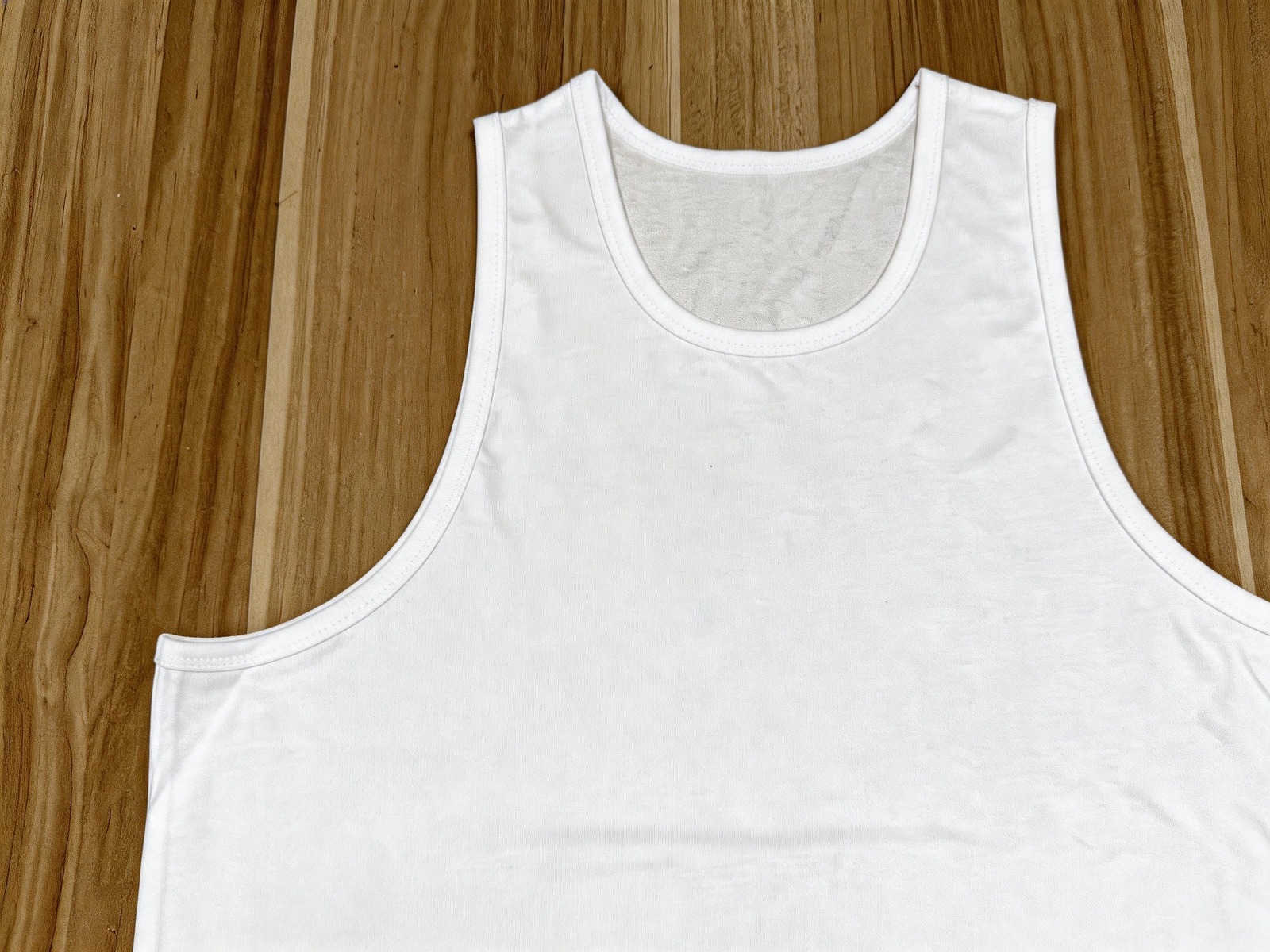
A printed tee hides a lot. A blank one hides nothing — the weight, the stitch density, the way the neckline is finished and how much the body moves after washing are all visible at arm’s length. That is why blank cotton jersey is the harder brief, and why most of the cost arguments about it are settled before a single garment is cut.
This guide covers the four decisions that actually determine whether a blank tee or vest survives its first ten washes: fabric weight, yarn and knit density, neckline construction, and dimensional change. It is written for buyers running OEM programmes — men’s singlets, tank tops and short-sleeve crews in 100% cotton single jersey — and for the QC person who has to accept or reject the bulk.
Why the blank version is the harder specification
On a printed style, a buyer can approve a strike-off and stop there. On a blank style there is no artwork to discuss, so every judgement lands on the fabric and the seams. Two mills can quote the same “180 gsm cotton jersey” and deliver garments that feel and behave differently, because weight per square metre is a single number that says nothing about yarn count, stitch length or finishing.
The practical consequence: a blank tee specification has to be written as a set of coupled numbers, not a list of adjectives. “Soft” is not a specification. “30s combed ring-spun, 160 gsm after compaction, 3.2 mm stitch length, shrinkage within 3% after ISO 6330 at 40°C” is. If the underlying knit structures are new to you, our note on knitted jersey as the basic fabric of underwear sets out how jersey, interlock and rib differ before the numbers start.
Decision one: fabric weight, and why white needs its own number
Single jersey for apparel usually sits between 120 and 180 gsm, and that ceiling is set by the knit structure rather than by ambition. Within the band the weight does different jobs:
- 120–140 gsm — light summer vests and promotional tees. Cool and cheap to ship, but a white version at this weight is close to transparent under strong light.
- 150–170 gsm — the mainstream retail band for men’s crews and tank tops. Holds shape, prints well, still drapes.
- 180 gsm — the practical top of single jersey. Heavier retail and workwear, reads as substantial, less prone to clinging, warmer. A plant can knit it, but it is not where most programmes sit.
Above 180 gsm the answer is not “knit the jersey heavier” but “change the structure”. A cotton interlock — a double-knit using two interlocking needle beds — carries 200 gsm comfortably and gives a denser, less transparent face, at a higher yarn cost per metre and a heavier garment for the same size. Both are 100% cotton and both are plain, but they are not interchangeable in a specification: the interlock has different stretch, different recovery and a different hand, and a buyer who specifies only “200 gsm cotton” will get whichever one the mill finds easier to source.
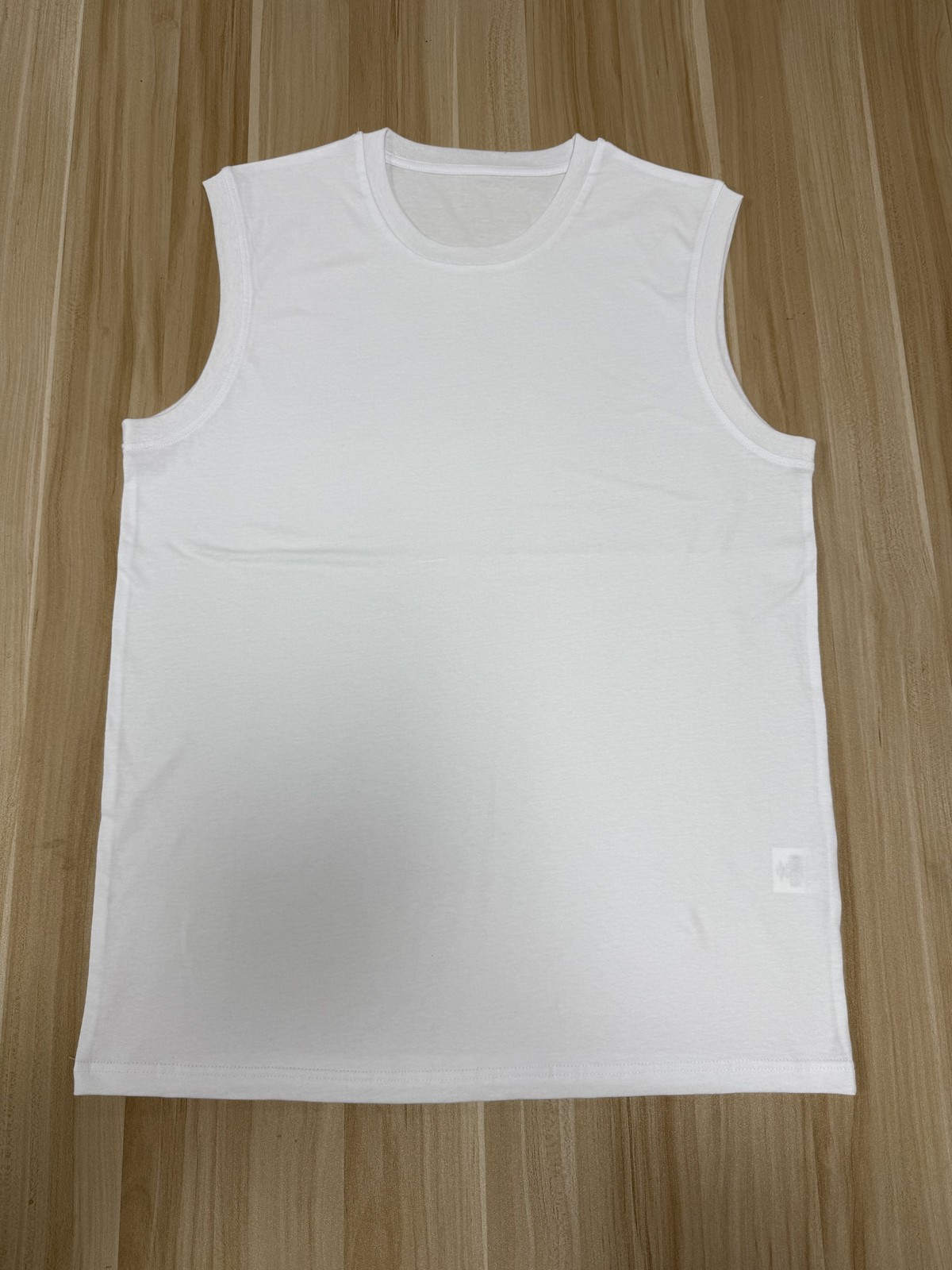
The trap is white. Opacity is a function of both weight and stitch density, and white has no dye to mask what is behind it. Two moves fix it: add roughly 10–15 gsm over the dyed version of the same style, and tighten the stitch length rather than only adding weight. A loosely knit 140 gsm white jersey will still read through; a tightly knit 155 gsm is far less likely to. If a buyer specifies one weight for the whole colour range, white is the colour that fails first.
Ask for the weight after finishing, not at the knitting machine. Compaction and calendar finishing both change the finished weight, and a mill quoting grey weight is quoting a number the buyer will never see on the garment.
Decision two: yarn count and knit density
Weight alone does not predict hand-feel. Two fabrics at 160 gsm can differ in how they age, because yarn count and stitch density trade off against each other.
For cotton single jersey, the working range is 28s to 32s, with combed ring-spun dominating retail programmes. Within that range the count trades surface against body: a finer 32s gives a smoother face and a lighter hand, while a 28s carries more substance and holds up better at the heavier end of the weight band. Coarser territory below 28s exists, but it belongs to promotional work and coarse knits rather than a retail crew — and it is not what a 180 gsm jersey is normally built from.
Three specifications belong alongside the count:
- Combed or carded. Combed yarn removes short fibres, which reduces pilling and gives a cleaner surface. Carded is acceptable for promotional work but should be stated, not assumed.
- Stitch length (course length). This is the number that controls density and recovery. A mill that will not quote stitch length cannot be held to a hand-feel.
- Gauge. Fine-gauge machines produce a denser, smoother surface; coarser gauge gives a more open, textured knit. Gauge and yarn count have to be chosen together.
If a buyer wants to hold a supplier to a hand-feel, the efficient route is a signed hanger sample plus the fabric test report, not a photograph. Photography cannot carry stitch density.
Decision three: the neckline, which is where blank tees fail
This is one of the most under-specified parts of a blank tee order, and the part that generates the most after-sales complaints. There are two common constructions, and they behave differently in ways the price difference does not advertise.
Ribbed collar (1×1 or 2×2 rib). A separate strip knitted in rib, attached under tension. The rib structure is built to stretch and recover laterally, so the neckline returns to shape after being pulled over the head. This is the retail standard for a reason. It costs more because the collar is a second knitting operation and a separate inventory item per colour, and a custom ribbed collar knitted to a specified width adds a development step on top of that.
Self-fabric binding. A strip cut from the body fabric, cut across the width so the stretch runs around the opening, then folded and stitched around the neck. It matches the body exactly in colour and texture and costs less, because no separate collar has to be knitted and stocked. The trade-off is mechanical: single jersey has limited lateral recovery, so a self-fabric bound neck stretches with wear and does not fully return. Over repeated washing and dressing, the opening relaxes and begins to sit away from the collarbone.
Neither is defective. The question is what the garment is for:
- A ribbed collar suits retail programmes where the garment will be washed repeatedly and the neckline is visible — a crew-neck tee sold on its own.
- A self-fabric bound neck suits undershirts and vests worn under something else, promotional and giveaway programmes, and cases where an exact colour match between neckline and body matters more than recovery.
The same logic applies to the armhole on a tank top. A vest carries all of its shape across two narrow shoulder straps, so the armhole binding takes more tension than a tee’s. If the binding is cut from body fabric and attached without enough recovery, the armhole gapes. Vests therefore need either a ribbed armhole binding or a self-fabric binding cut to a tighter specification, and the shoulder strap width has to be specified in centimetres rather than described as “regular”.
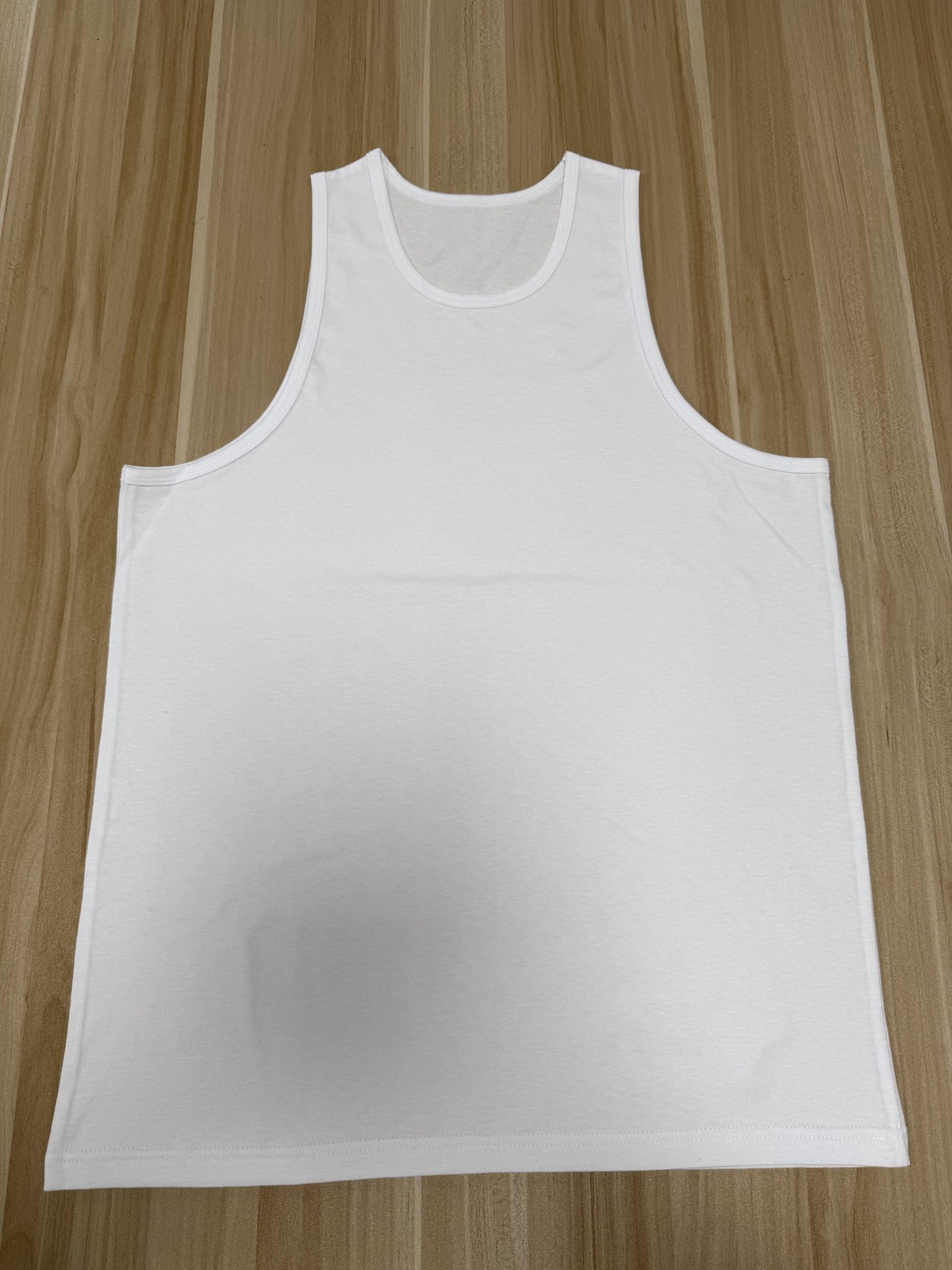
One more detail worth writing into the spec: whether the neckline seam is taped or covered. On an unlined tee, the inside of the back neck is where a cheap construction shows first — a raw overlocked seam against the skin versus a taped or bound finish.
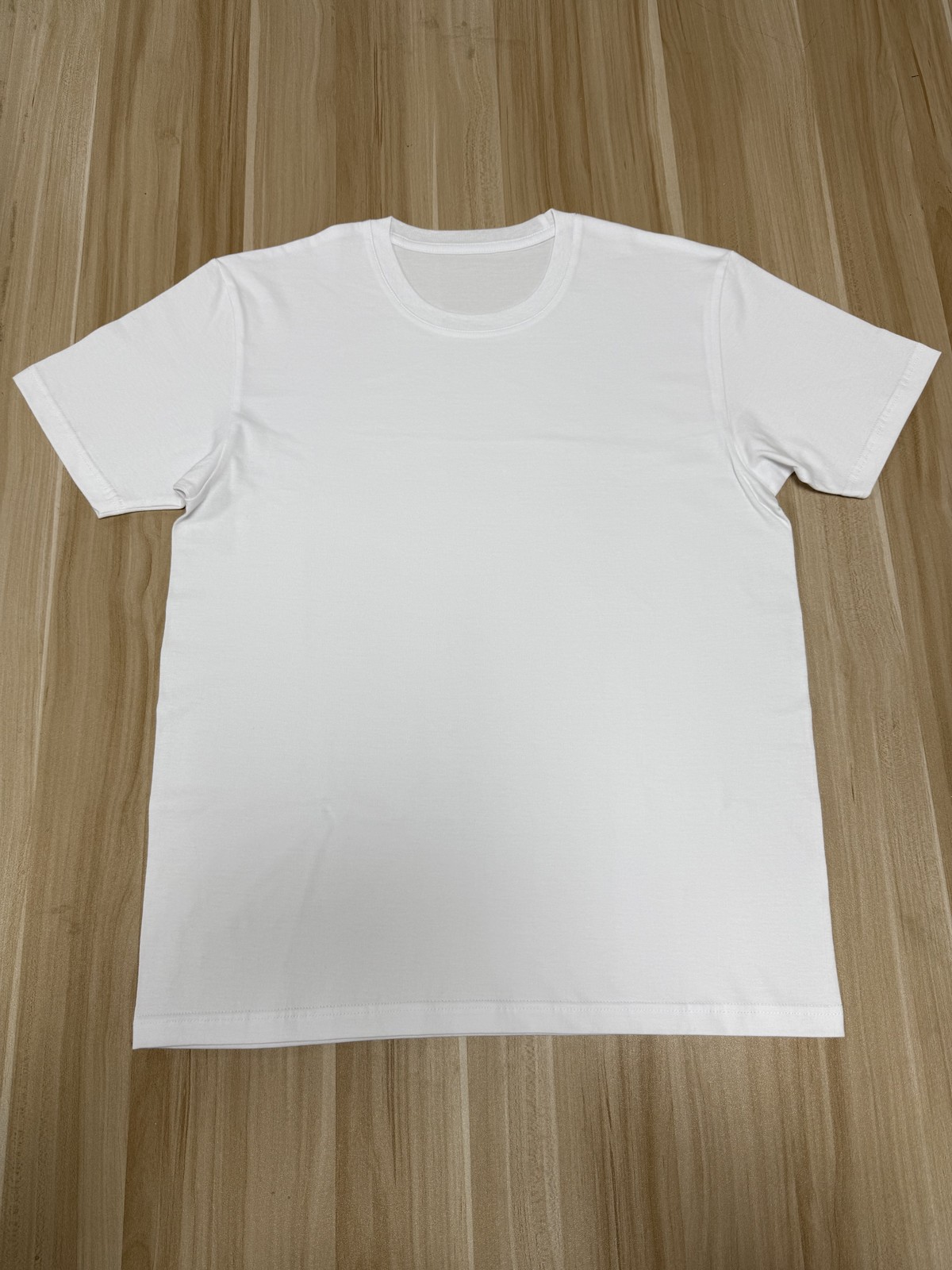
Side seams are a separate specification from the neckline, and a vest cut without them changes how the body hangs; we cover that trade-off in Zero Side Seam: men’s cotton undershirts.
Decision four: dimensional change, specified as a method
“Pre-shrunk” is a marketing word, not a number. Cotton jersey relaxes and shrinks as a function of yarn tension in knitting, tension in finishing, and the washing regime it meets afterwards. A specification should therefore name the test method and the wash condition, not just a percentage.
The relevant standards are ISO 6330:2021 for the domestic washing and drying procedure, ISO 5077:2007 for the determination of dimensional change, and ISO 3759:2011 for preparing and marking the specimens. In the United States the equivalent method is AATCC 135. Results from different procedures are not interchangeable, so a report that says “shrinkage 3%” without naming the method is not evidence of anything.
Two numbers matter, and they must be reported separately: length and width. Knitted structures frequently shrink asymmetrically, and a combined figure hides which direction is at risk.
There is a second failure mode that buyers discover later: spirality — the garment twisting after washing, so the side seams rotate out of position: one swings towards the front, the other towards the back, and which is which depends on the direction of twist. Single jersey is especially prone to it, because the loops in a single-knit structure lean consistently in one direction. ISO 16322 covers the measurement of spirality in knitted fabrics and garments. A tee can pass a shrinkage test and still fail on twist, so both should be on the inspection sheet.
Practical ranges: an uncompacted cotton jersey commonly moves several percent in both directions; a compacted (pre-shrunk) fabric, tested after the finishing route it was designed for, typically lands at a lower figure. The number a buyer should fix is the tolerance and the method together — for example, “within 3% in length and width, ISO 6330 at 40°C, flat dry, measured to ISO 5077” — rather than a bare percentage a mill can interpret loosely.
The white-specific problems: shade, batch and fluorescence
White is not one colour. It is a target measured on a whiteness index, and it drifts between fabric lots.
- Whiteness target. Specify the whiteness value and the illuminant, or approve a physical standard under a defined light source. “Optical white” is not a target.
- Lot-to-lot variation. Body and trim can come from different lots. A ribbed collar knitted in one lot and a body in another is where a visible mismatch appears — which is one more argument for approving the collar and body together.
- Optical brightening agents. Fluorescent whitening agents make white read brighter but are a restricted substance group with limits under OEKO-TEX Standard 100. If the programme is certified, the whitening route has to be chosen with the certificate in view, not added later.
- Yellowing in storage. Cotton finished white can yellow with age and with certain packaging. If goods ship slowly, ask how the fabric is wrapped and whether a non-yellowing finish was used.
For opacity, the practical acceptance test is not a lab number but a controlled visual check: the garment over a standard grey card under consistent lighting, photographed, and the photo signed off as the reference. Cheap, and it catches the problem the buyer actually cares about.
Compliance: two exemption routes, and what they do not exempt
For the United States, 16 CFR 1610 (the Flammability of Clothing Textiles standard) governs. Its exemption provision matters for cotton jersey, and it is frequently misread.
16 CFR 1610.1(d)(1) exempts plain surface fabrics, regardless of fiber content, weighing 2.6 ounces per square yard or more from the requirement for testing to support guaranties. 2.6 oz/yd² converts to approximately 88 gsm. A cotton single jersey tee or vest in the usual 150–170 gsm retail band is therefore on the exempt side of that line by a wide margin.
16 CFR 1610.1(d)(2) exempts all fabrics, both plain surface and raised-fiber surface textiles, regardless of weight, made entirely from acrylic, modacrylic, nylon, olefin, polyester or wool. Cotton is not on that list, so a cotton style relies on (d)(1) — the weight route — and not on fibre content.
Two cautions that belong in the spec discussion:
- The exemption is from testing to support a guaranty, not from the standard itself. The obligation to ensure the goods are not dangerously flammable remains.
- The weight route has a floor. A very light cotton vest specified below roughly 88 gsm falls outside (d)(1), and fibre content will not rescue it. This is exactly the situation where a “lighter and cheaper” brief creates a compliance problem nobody priced.
Other tests that belong on a cotton jersey programme:
- Colour fastness — to washing (ISO 105-C06), to rubbing (ISO 105-X12), and to perspiration (ISO 105-E04). White garments still need the perspiration and rubbing tests, because collar, binding and sewing thread do not have to be white.
- Pilling — ISO 12945-2 (modified Martindale). Combed yarn reduces risk; carded yarn and loose knitting raise it.
- Restricted substances — OEKO-TEX Standard 100 is the certificate buyers most often ask to see; note that the certificate is issued per product class and names the production site, so the certificate has to match the article being bought, not just the supplier. How to verify OEKO-TEX and BSCI certificates covers what to request and how to read what comes back.
- Formaldehyde — relevant to easy-care and some print routes; check the destination market’s limit rather than assuming one global figure.
What to put in the specification, in order
A workable sequence for a blank cotton jersey programme, from the buyer’s side:
- End use and market — retail crew, undershirt, promotional, workwear. This decides weight and neckline before anything else.
- Fabric — 100% cotton, combed ring-spun, yarn count, finished weight in gsm with a tolerance, stitch length, colour (white to a stated whiteness target).
- Construction — neckline type (ribbed or self-fabric bound), collar/binding width in millimetres, back-neck finish, shoulder strap width for vests, armhole finish, hem and sleeve hem stitch type and stitch density in stitches per inch.
- Fit — measurements by size point, with tolerances, on a signed measurement sheet rather than a size name.
- Performance — shrinkage tolerance with method and wash condition, spirality limit, colour fastness ratings, pilling rating.
- Compliance — destination-market flammability route, restricted-substance certificate, labelling content.
- Commercial — 2,000 pieces minimum per style and colour, packing, and the approval sequence (hanger sample, PP sample, bulk).
The order matters because each item constrains the next: choosing a lightweight white crew commits the buyer to a density solution, which commits the mill to a yarn count, which commits the programme to a price band.
Bulk inspection: what to actually check
At final inspection on a blank jersey programme, these are the checks that catch the failures the specification was written to prevent:
- Neck opening after relaxation. Lay the garment flat, measure the neck width, then stretch and release. A ribbed collar returns; a self-fabric bound neck that has already relaxed in the carton will not.
- Armhole gaping on vests. Check on a form or a person, not flat. Flat measurement hides the gap.
- Side seam position and twist. Measure seam position at hem and underarm. If it has migrated, spirality is present even before washing.
- Shade across body, collar and sleeve. Under the agreed light source, with the approved standard present. Do not accept a judgement made under mixed lighting.
- White under grey card. The signed opacity reference photo, compared side by side.
- Stitch density at the hem. Count stitches per inch on the double-needle hem; a low count is where the hem starts to wave after washing.
- Weight check by cut-and-weigh. GSM from a cut swatch, not from the mill’s ticket.
- Measurement against the sheet, by size point, with the agreed tolerance.
When a lot does fail, the arithmetic of credit versus rework and the evidence a claim needs are set out in claims and replacements on underwear orders.
Summary
A blank cotton jersey tee or vest is decided by coupled numbers: finished weight and stitch density (with white getting its own, higher figure), yarn count and combing, neckline construction matched to end use, and dimensional change plus spirality specified as a method rather than an adjective. The neckline is where most programmes fail, because a self-fabric bound neck is cheaper for a real mechanical reason and that reason shows up after ten washes. On compliance, cotton relies on the weight route under 16 CFR 1610.1(d)(1), which exempts testing for plain surface fabric at or above roughly 88 gsm — and which quietly excludes the ultra-light vest that looked like a saving.
If you are sourcing blank cotton jersey tees, singlets or tank tops and want the specification reviewed against your market, Xiamen Unitex Trade Co., Ltd. works with amfori BSCI-audited partner factories in Fujian and can quote against a written spec. Send the end use and the destination market first; the fabric numbers follow from those two.
One practical screen before that conversation: a reliable supplier will quote stitch length, name the test method behind a shrinkage figure, and tell you which exemption route the style sits on. A supplier that answers only in adjectives — soft, breathable, high quality — has not specified anything, and the gap surfaces at inspection rather than at quotation. Cotton jersey programmes start at 2,000 pieces per style and colour, whether the brief is a crew-neck tee, a tank top or a vest. Colour count and yarn move the price at that volume, but they do not move the floor.
References
- U.S. Code of Federal Regulations, 16 CFR Part 1610 — Standard for the Flammability of Clothing Textiles, §1610.1 Purpose, scope and applicability. https://www.ecfr.gov/current/title-16/chapter-II/subchapter-D/part-1610/section-1610.1
- International Organization for Standardization, ISO 6330:2021 — Textiles: Domestic washing and drying procedures for textile testing. https://www.iso.org/standard/76063.html
- International Organization for Standardization, ISO 5077:2007 — Textiles: Determination of dimensional change in washing and drying. https://www.iso.org/standard/41877.html
- International Organization for Standardization, ISO 3759:2011 — Textiles: Preparation, marking and measuring of fabric specimens and garments in tests for determination of dimensional change. https://www.iso.org/standard/56150.html
- International Organization for Standardization, ISO 16322 — Textiles: Determination of spirality after laundering (Parts 1–3). https://www.iso.org/standard/62632.html
- International Organization for Standardization, ISO 105-C06 — Textiles: Tests for colour fastness, Part C06: Colour fastness to domestic and commercial laundering. https://www.iso.org/standard/51276.html
- International Organization for Standardization, ISO 105-X12 — Textiles: Tests for colour fastness, Part X12: Colour fastness to rubbing. https://www.iso.org/standard/63146.html
- International Organization for Standardization, ISO 105-E04 — Textiles: Tests for colour fastness, Part E04: Colour fastness to perspiration. https://www.iso.org/standard/57962.html
- International Organization for Standardization, ISO 12945-2:2020 — Textiles: Determination of fabric propensity to surface pilling, fuzzing or matting, Part 2: Modified Martindale method. https://www.iso.org/standard/76655.html
- OEKO-TEX, Standard 100 — Product certification for textile articles, limit values and product classes. https://www.oeko-tex.com/en/our-standards/oeko-tex-standard-100
- AATCC, AATCC TM135 — Dimensional Changes of Fabrics after Automatic Home Laundering. https://www.aatcc.org/
- U.S. Federal Trade Commission, Threading Your Way Through the Labeling Requirements Under the Textile and Wool Acts. https://www.ftc.gov/business-guidance/resources/threading-your-way-through-labeling-requirements-under-textile-wool-acts
· Xiamen Unitex Trade Co., Ltd. — OEM & ODM underwear sourcing partner