
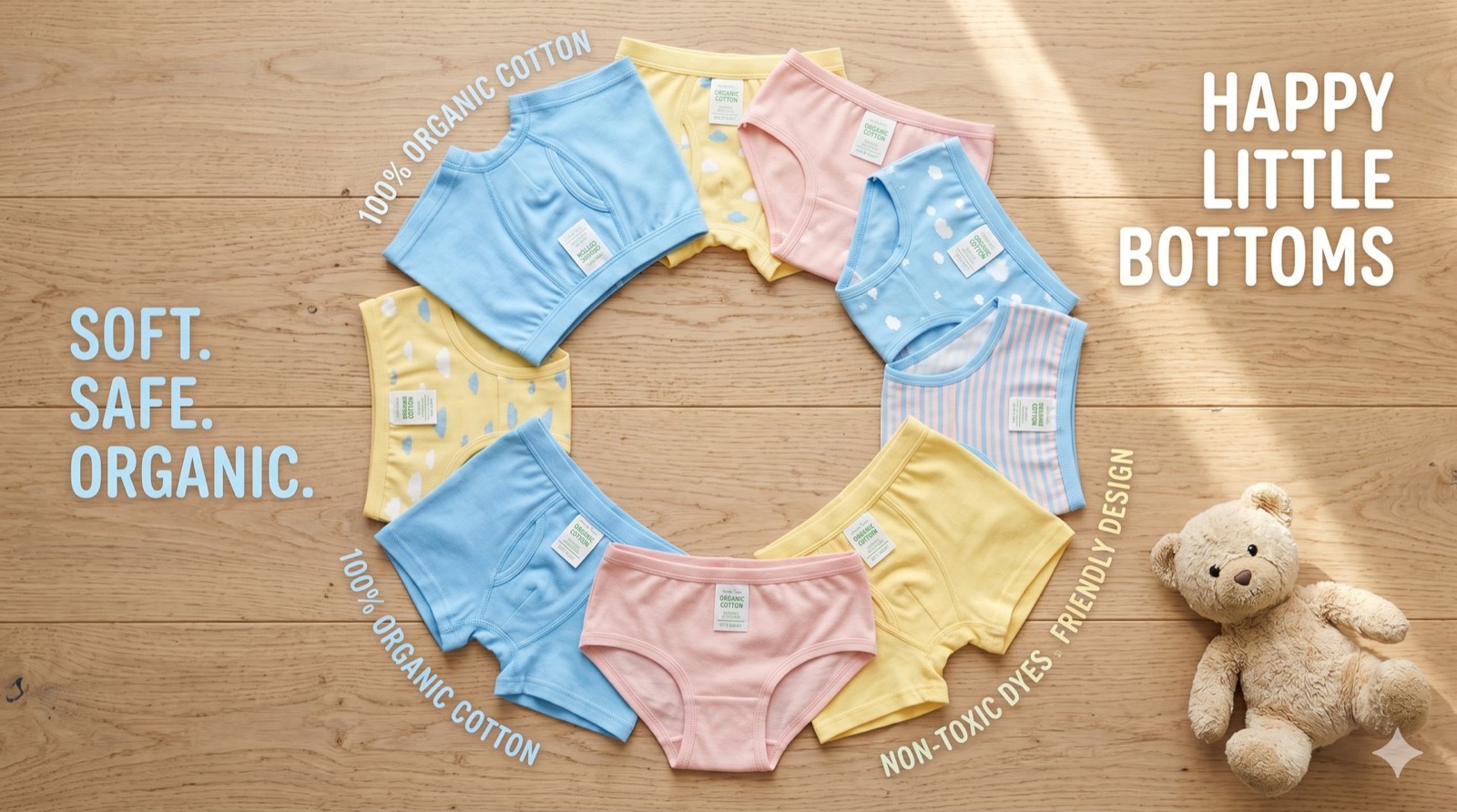
Kids Underwear Safety Standards: CPSIA, EU GPSR & AS/NZS 1249 Explained
📋 Direct Answer: Three frameworks matter: CPSIA (US — lead/phthalate testing, tracking labels, Children's Product Certificate), the EU route (GPSR + REACH chemical limits + EN 14682 cord-and-drawstring safety — not EN 71, which is the toy standard and does not apply to garments), and AS/NZS 1249 (Australia — nightwear flammability and hazard labels). OEKO-TEX Class I certification (the strictest, baby-grade level) adds a recognized chemical-safety baseline on top.
Kids underwear sold internationally must comply with market safety rules: CPSIA (US), the EU's GPSR/REACH framework with EN 14682 for cords and drawstrings, and AS/NZS 1249 (Australia). Each route requires third-party testing for chemicals, flammability, and physical safety before products can enter the market.
Selling children’s underwear internationally requires compliance with multiple safety standards. Each major market has its own regulations, and non-compliance can result in product recalls, fines, and brand damage. Here’s what kids underwear OEM buyers need to know.
CPSIA (United States)
Key Insight: EN 71 is the EU toy safety standard — it does not apply to children's underwear. The correct EU framework for kids' garments is GPSR + REACH + EN 14682. Verify supplier certifications →
| Standard | Market | Key Requirements | Documentation |
|---|---|---|---|
| CPSIA | US | Lead <100ppm, phthalates, flammability (16 CFR 1615/1616) | Children’s Product Certificate |
| EU GPSR + REACH (+ EN 14682) | EU | REACH chemical compliance, nickel release <0.5μg/cm²/week, cord & drawstring safety (EN 14682) | Test reports + technical documentation (garments carry no CE mark) |
| AS/NZS 1249 | AU/NZ | Flammability testing, design safety for nightwear | Fire Hazard Label |
The Consumer Product Safety Improvement Act requires third-party testing for lead content (under 100ppm), phthalates, and flammability (16 CFR 1615/1616 for sleepwear). Children’s products also require a Children’s Product Certificate (CPC) and tracking labels.
European Union: GPSR, REACH and EN 14682 — not EN 71
A common sourcing mistake: EN 71 is the EU toy safety standard and does not apply to children's underwear. The correct framework for kids' garments sold in the EU is the General Product Safety Regulation (GPSR), REACH chemical compliance (including nickel release limits under 0.5 µg/cm²/week for metal components), and EN 14682 for cords and drawstrings on children's clothing. Garments do not carry a CE mark.
AS/NZS 1249 (Australia/New Zealand)
Focuses on flammability and design safety for children’s nightwear. Tight-fitting pajamas must have reduced flammability labeling. Category 4 garments require fire hazard warning labels.
Unitex Compliance
Kids underwear we supply is tested to CPSIA and AS/NZS 1249 by accredited third-party labs, and EU orders are screened against REACH and EN 14682. We provide compliance documentation with every shipment. Contact us for kids underwear OEM with full safety compliance documentation.
Sources: U.S. CPSC — children's product rules (CPSIA); ECHA — REACH + EU GPSR; Product Safety Australia (ACCC) — nightwear mandatory standard (AS/NZS 1249).
Related: Explore our Pajamas OEM manufacturing capabilities →
· Xiamen Unitex Trade Co., Ltd. — OEM & ODM underwear sourcing partner
Unitex Underwear (Xiamen Unitex Trade Co., Ltd.) — OEM/ODM underwear sourcing and supply-chain partner in Xiamen, China; in the trade since 2009, incorporated in 2013.