
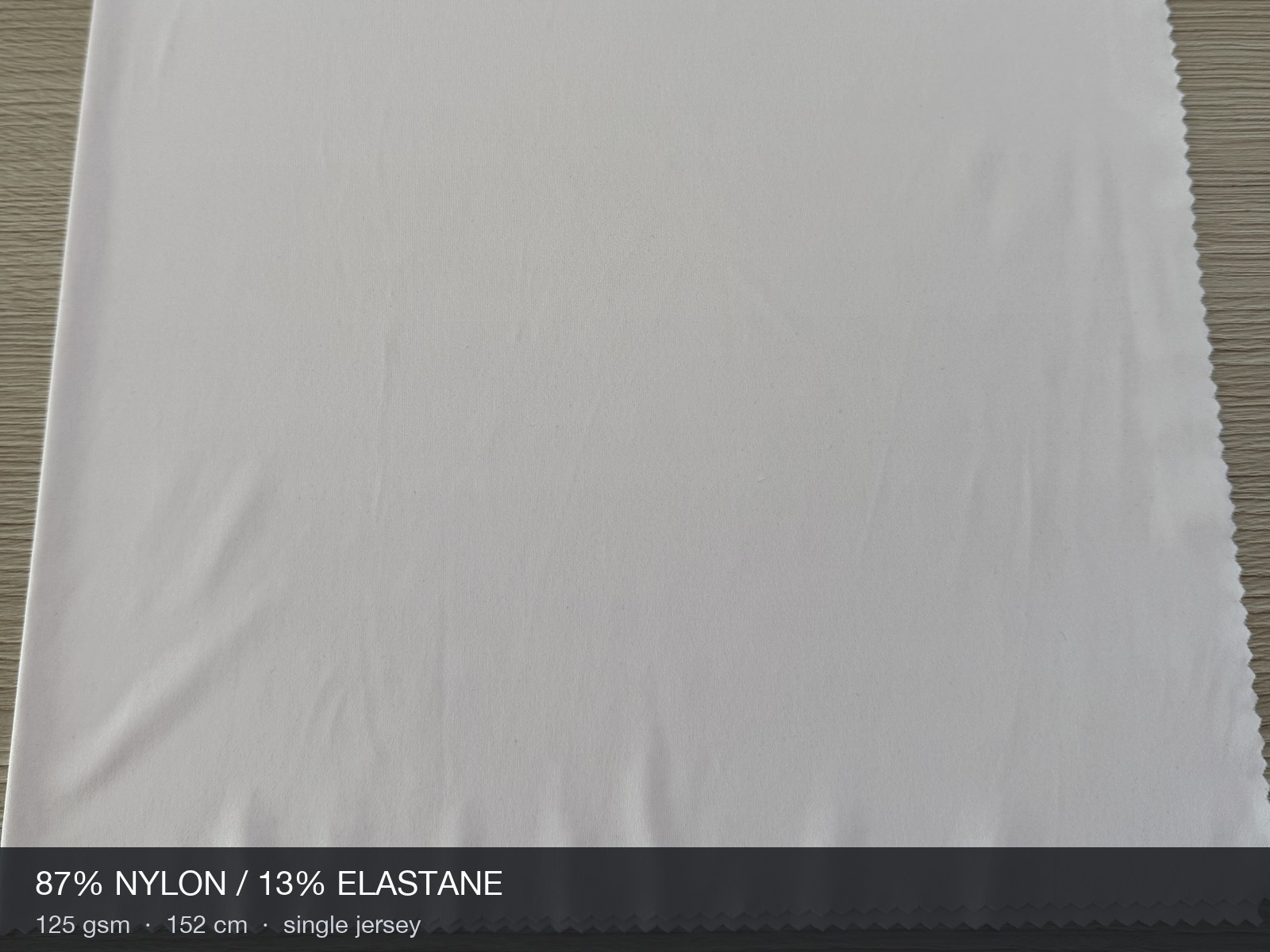
A fabric can be perfectly good and still be wrong for the garment. The same 180 gsm cotton jersey that makes a solid men’s boxer brief will sag at the leg opening of a women’s bikini, and the 125 gsm nylon-elastane that disappears under a fitted dress has no business in a workwear trunk. Fabric selection for underwear is not a question of quality. It is a question of whether three numbers line up with the garment: weight, elastane content and knit structure.
This guide sets out how those three decide the brief, with the specifications we run at partner mills shown as reference points rather than adjectives. It is written for buyers sourcing underwear fabric from China, and reflects how Unitex Underwear specifies knitted fabric across men’s, women’s and kids’ programmes.
Why three numbers decide it, not one
Buyers often shortlist on weight alone, then discover the fabric behaves nothing like the sample. Weight tells you how much fibre is in a square metre. It does not tell you how much the fabric will stretch, whether it will curl at a cut edge, how opaque it is, or how much it will distort after five washes. Those come from the other two numbers.
- Weight governs opacity, drape and warmth. It is the first filter because it is the easiest to check, and the least informative on its own.
- Elastane content governs recovery — whether the garment returns to shape at the waist and leg opening after being worn, or stays stretched. It is the number that decides how long the garment lasts, and the one most often cut to save cost.
- Knit structure governs how the fabric behaves at a cut edge and in which direction it stretches. Single jersey curls and stretches across the width; 1×1 rib stretches far more and recovers; interlock lies flat and resists curling.
A fabric missing any one of these is a guess. A specification with all three is a decision.
Fabric weight for underwear: what each gsm band can actually do
Underwear fabric weight runs roughly from 120 to 260 gsm. Within that, the bands do different jobs, and a garment can be over-specified as easily as under-specified.
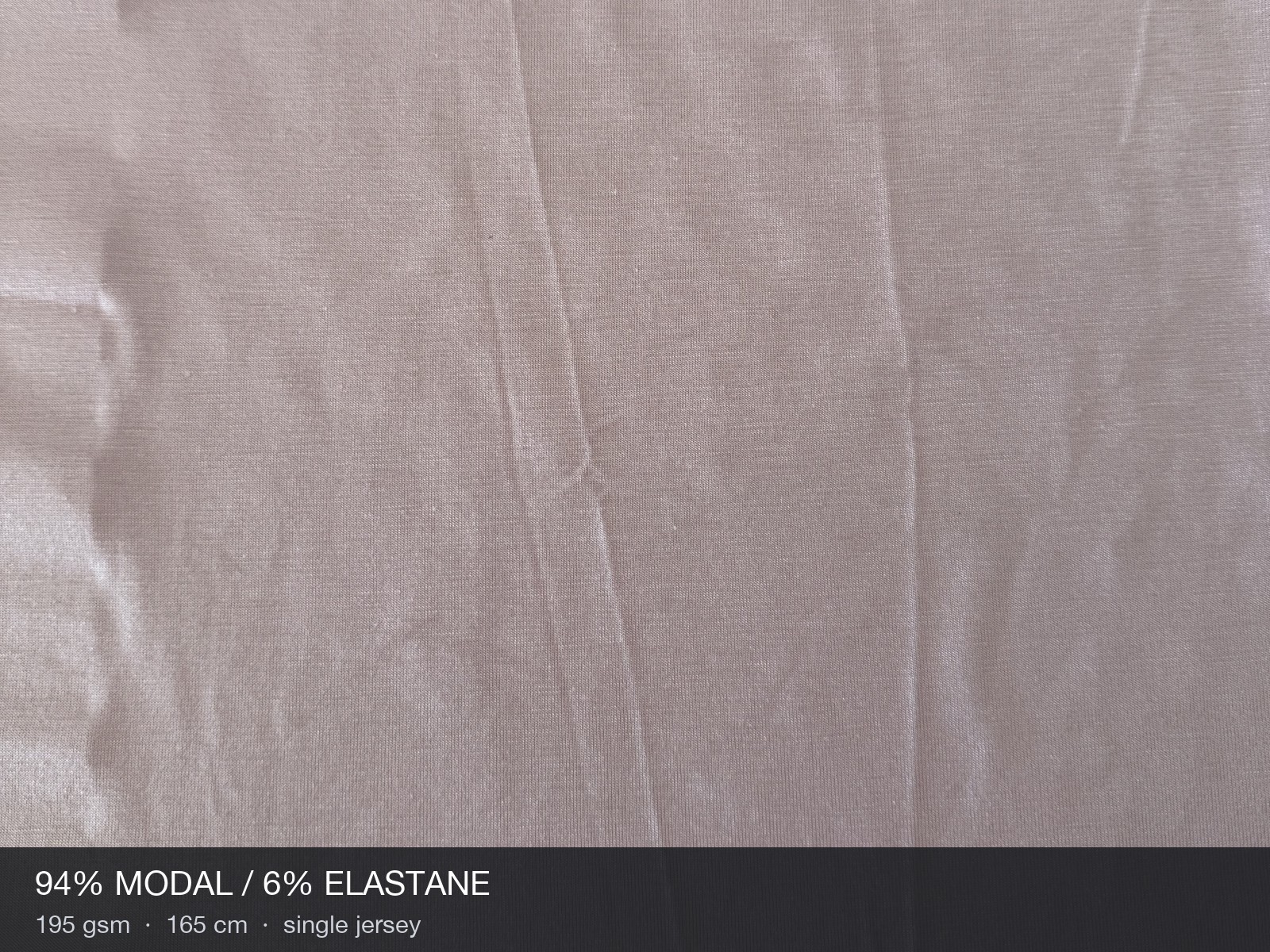
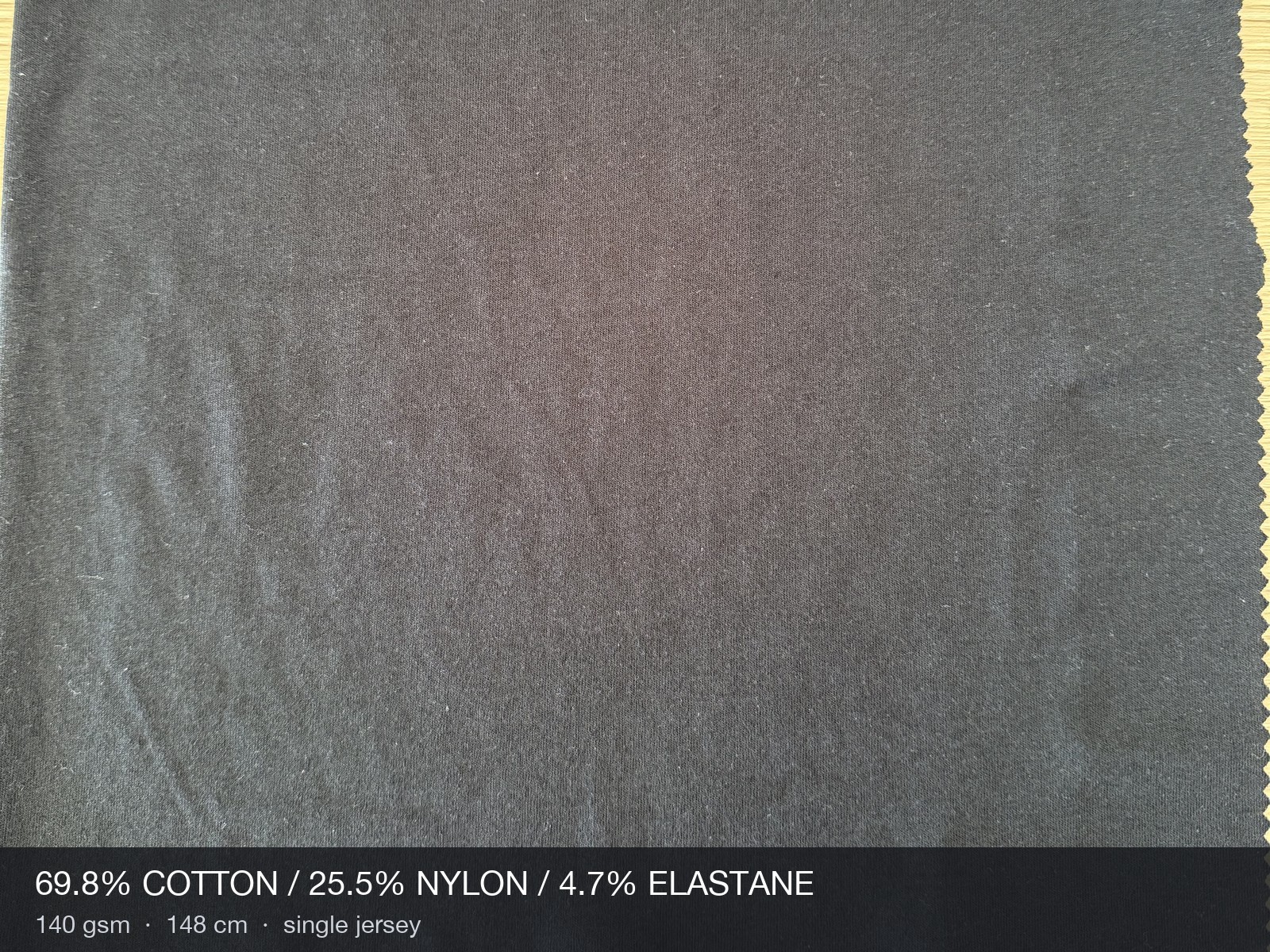
- 120–140 gsm — the light end. Sheer under strong light in white, and best used where the garment sits under other clothes or where climate demands it. Nylon-elastane at 125 gsm and cotton-nylon at 140 gsm both live here; the first is chosen for invisibility, the second for a cooler hand.
- 150–170 gsm — the practical middle. Light enough to disappear, heavy enough to be opaque in light colours. This is where most women’s briefs and light men’s styles sit.
- 175–200 gsm — the retail standard for men’s boxer briefs and briefs, . Holds shape, resists show-through, survives repeated washing.
- 200–230 gsm — heavier retail and cold-climate lines, and the band where 1×1 rib becomes the natural choice for the body as well as the waistband.
- Above 230 gsm — outside underwear proper. If a brief at 255 gsm is being discussed, the brief has become loungewear, and the pattern should be cut accordingly.
The trap is that weight is quoted after finishing, and finishing changes it. A mill that quotes grey weight is quoting a number the buyer will never see on the garment. Compaction, calendering and relaxation all move the finished figure, sometimes by more than the tolerance the buyer assumed.
Market preference moves the band more than most buyers expect. Northern European programmes lean light, often 175–185 gsm for men’s boxer briefs, because the garment is worn under clothing and warmth is a negative. South American programmes lean heavy, 190–210 gsm, because the garment is often worn as the outer layer in warm climates where opacity and structure matter more than bulk. Middle East and North African programmes frequently go above 200 gsm for the same reason. A supplier quoting one weight for all three markets is quoting to the mill’s convenience rather than the buyer’s.
There is a compliance reason to watch the lower bound as well. For the US market, 16 CFR 1610.1(d)(1) exempts plain-surface fabric at 2.6 oz/yd² (about 88 gsm) and above from the requirement for testing to support guaranties. Every fabric in this guide clears that line by a wide margin, which is why the exemption is rarely discussed — but a very light cotton vest specified near or below 88 gsm leaves the exemption and needs a different compliance route. Weight is a fit decision and, at the bottom of the range, a compliance decision too.
Elastane: the number that sets the garment’s life
Elastane percentage is where underwear specifications are most often quietly degraded. It is also the easiest number to test, because the fabric either returns or it does not.
- 4–6% — the standard band for cotton and modal jersey briefs and boxer briefs. Enough recovery for a waistband-bearing garment, and the band where cost pressure most often pushes a mill to the bottom of the range.
- 8–12% — high-stretch. Used where the pattern relies on stretch rather than seams, and in rib fabrics where the structure already multiplies the effect of every percent.
- 13–15% — very high. Thin, close-fitting women’s styles and seamless-adjacent constructions. The fabric feels lighter than its weight suggests, and the pattern must assume significant stretch.
- 20% and above — shaping and sportswear territory. At 25% elastane the fabric is closer to a compression material than a jersey, and it behaves like one: strong recovery, high modulus, and a hand that will not suit a cotton-feel brief.
Two details matter as much as the percentage:
- The elastane denier. 20D and 40D elastane at the same percentage do not behave the same. A buyer who specifies only “5% elastane” has specified neither the recovery nor the hand.
- Whether the elastane is bare or covered. Bare elastane gives a softer, lighter fabric and is standard in fine underwear knits. Covered elastane gives a more stable, more durable fabric at higher weight. The choice is usually made at the mill, not in the buyer’s spec — which is exactly why it should be written down.
Structure: where the garment actually fails
This is the part of the specification that buyers skip, and the part that generates returns.
Single jersey. One set of needles, one face and one back. It stretches across the width, curls at a cut edge, and is the default for briefs and boxer briefs. Its failure mode is spirality: after washing, the side seam rotates because the loops in a single-knit structure lean consistently in one direction. A jersey garment can pass every shrinkage test and still come back twisted. ISO 16322 covers the measurement; a spirality limit belongs on the inspection sheet next to shrinkage.
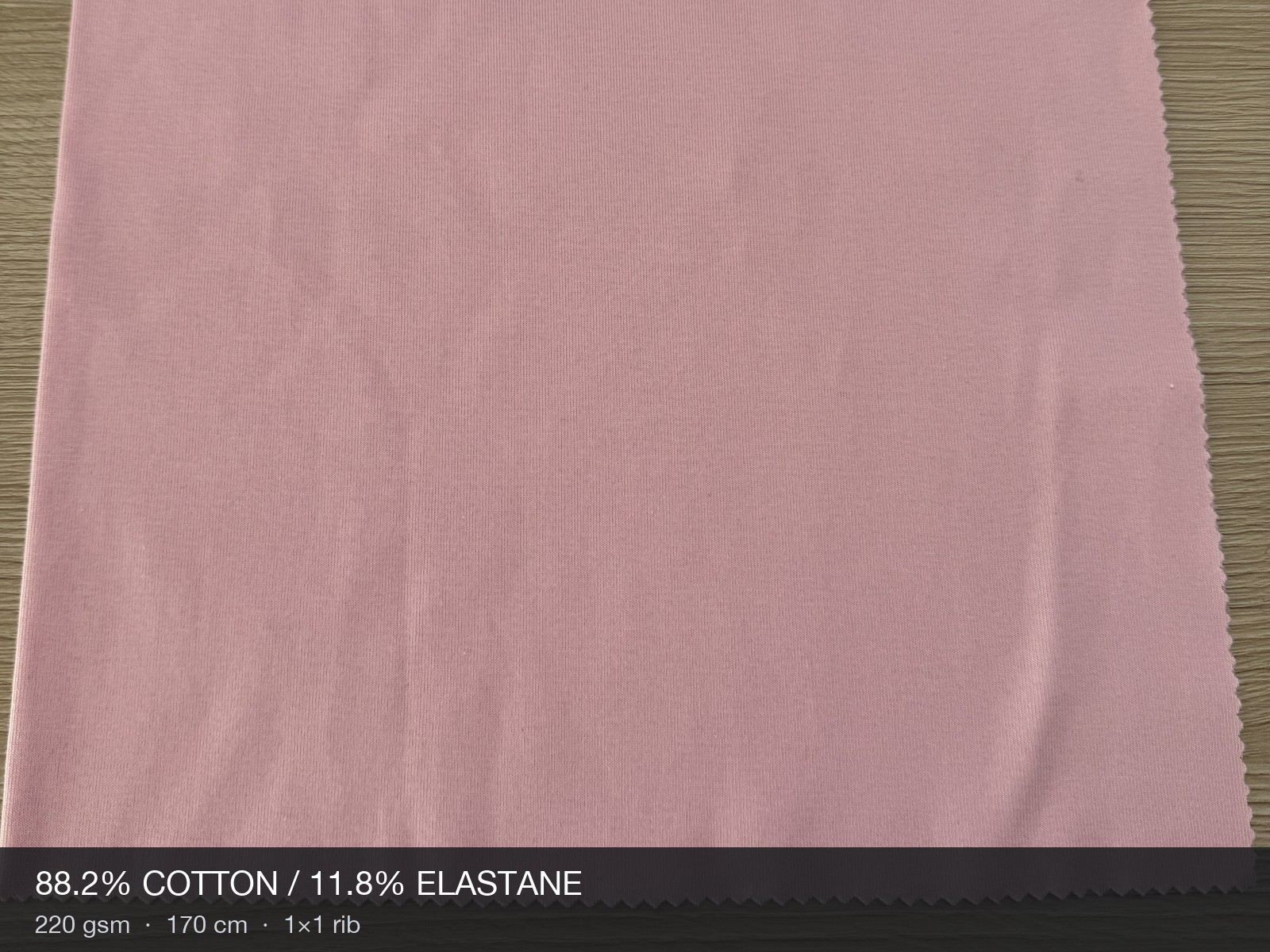
1×1 rib. Alternating knit and purl wales. It stretches far more across the width than jersey and recovers better, and it lies flatter at a cut edge because the alternating wales balance the curl. Used for waistband-adjacent panels, for rib-bodied briefs, and for styles that rely on stretch rather than darts. Its weakness is that a light rib can look thin and can stretch out at the waist if the elastane is at the bottom of the range.
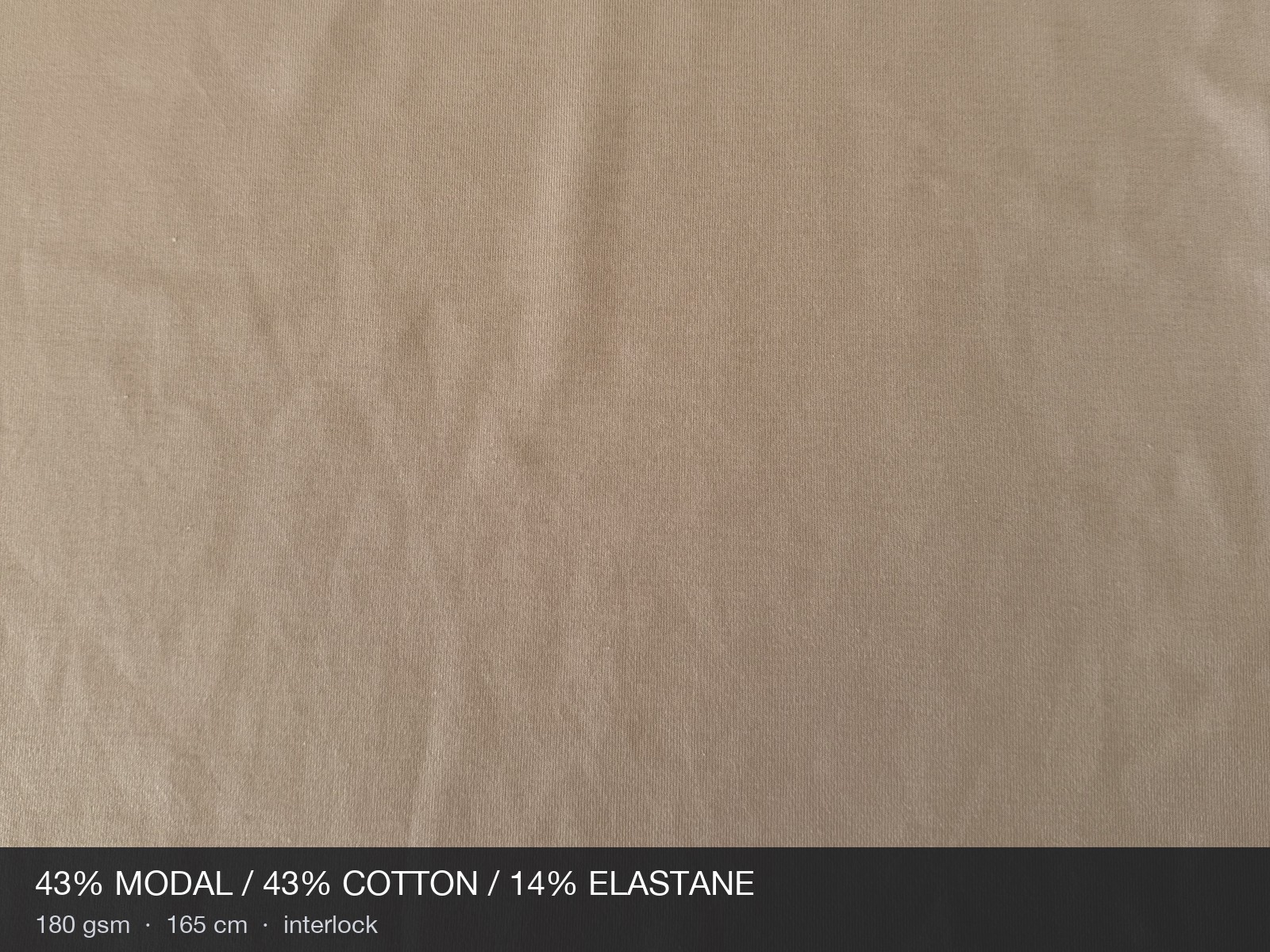
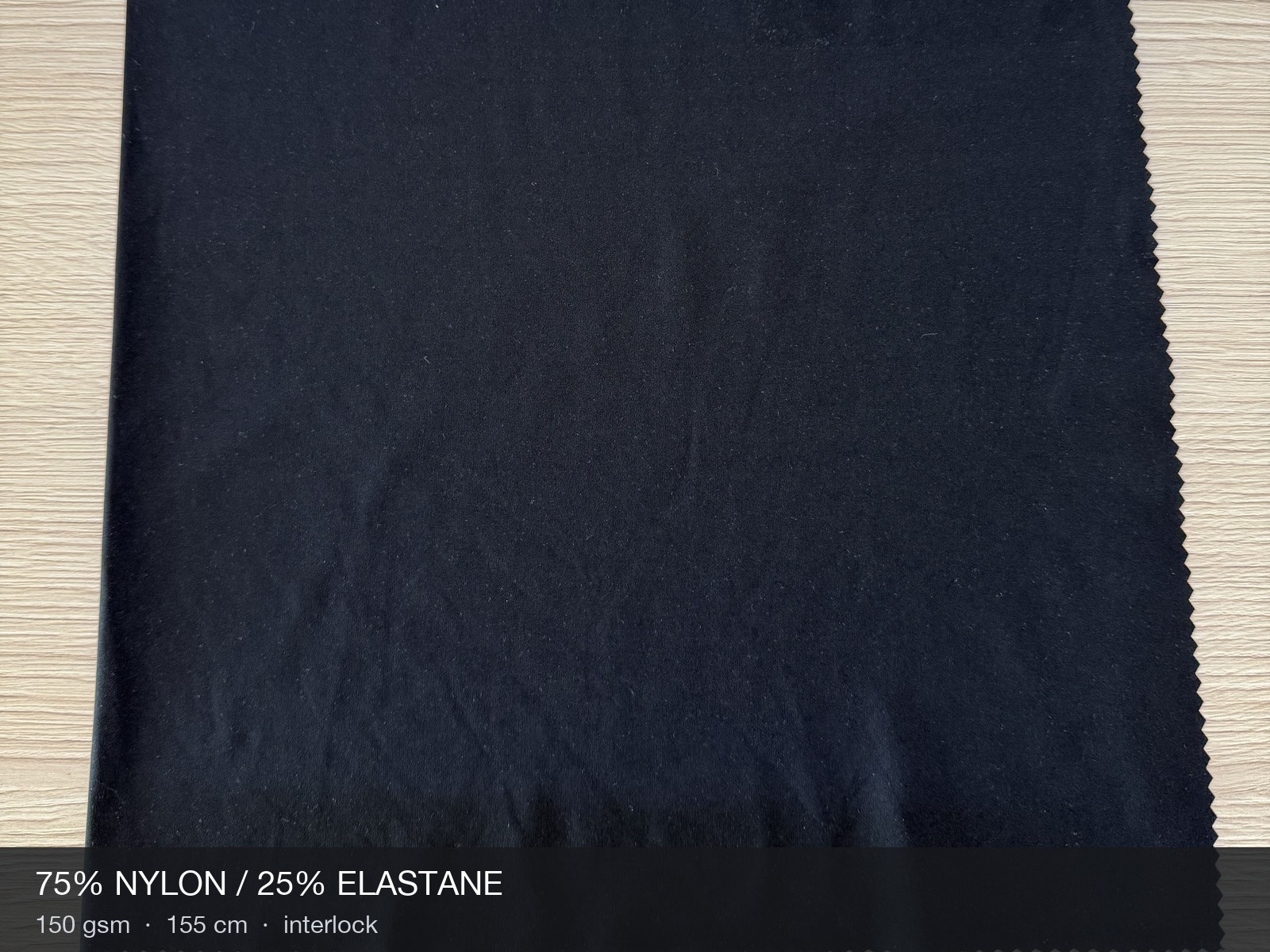
Interlock. Two sets of needles, two faces, interlocked. It does not curl, it is denser and more opaque at the same weight, and it drapes rather than clings. It costs more, because it consumes more yarn per metre. Where a brief must stay opaque in white, or a garment must hold a clean silhouette without much elastane, interlock is often the technically correct answer even though it is not the cheap one.
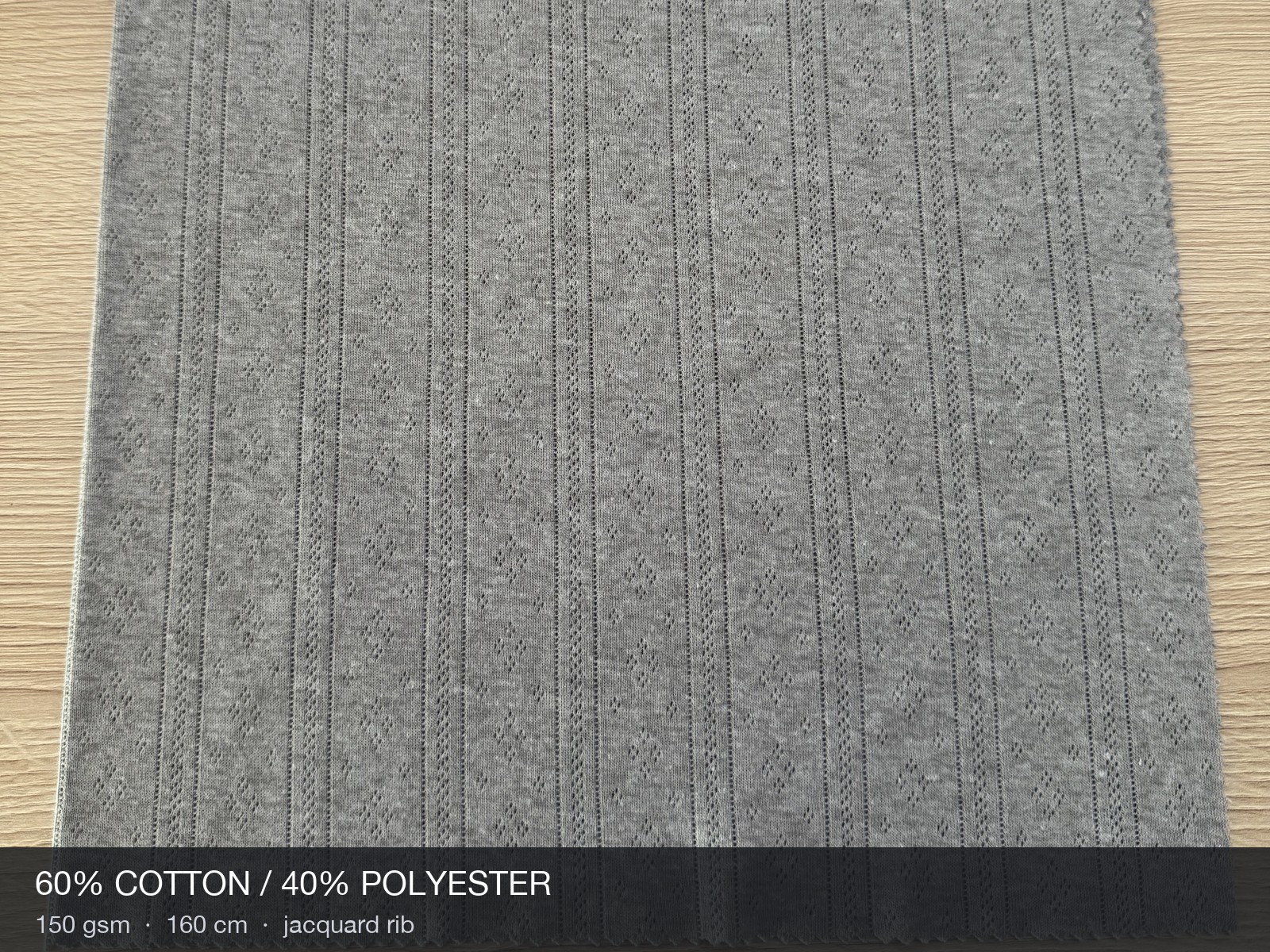
Jacquard rib. A rib structure with a pattern knitted in, not printed on. The pattern is part of the fabric, so it does not crack or fade, and it does not add a coating or a print layer to a garment that sits against skin. Used for fashion bodies and for waistbands where a woven-in pattern replaces a printed elastic. The constraint is minimums: a jacquard is a machine setup per design, so the design has to justify the run.
Fabric selection matrix: which fabric for which underwear style
The reliable way to brief a mill on underwear fabric — or to brief a custom underwear fabric supplier — is to start from the garment and work back. The table below is the mapping we use, with the reference specification that typically satisfies it.
| Garment | Weight band | Elastane | Preferred structure | Notes | |—|—|—|—|—| | Men’s boxer briefs (core) | 175–200 gsm | 5–8% | Single jersey | Modal or cotton-modal; check spirality after 3 washes | | Men’s boxer briefs (premium) | 180–195 gsm | 6–14% | Single jersey or interlock | Interlock where opacity in light colours matters | | Men’s briefs / trunks | 150–180 gsm | 5–10% | Single jersey | Lower weight than boxer briefs; leg opening is the stress point | | Women’s briefs / bikinis | 140–170 gsm | 5–12% | Single jersey | Thinner, softer hand; opacity check in white | | Women’s high-leg / thong | 125–150 gsm | 10–15% | Single jersey, fine gauge | Stretch does the work; seams must be flat | | Seamless / bonded | 125–155 gsm | 13–25% | Interlock or fine jersey | High elastane; pattern assumes modulus | | Sports underwear | 140–160 gsm | 8–13% | Single jersey, synthetic face | Quick-dry or cool-touch yarns; no cotton-only | | Children’s underwear | 140–170 gsm | 4–6% | Single jersey or light rib | Lower elastane; softness over recovery | | Fashion / jacquard bodies | 150–200 gsm | 0–10% | Jacquard rib | Pattern is knitted, not printed; at 0% elastane the rib supplies the stretch | | Loungewear / shorts | 210–260 gsm | 0–6% | French terry or loop knit | Out of underwear range; different pattern block |
Approving the fabric on the garment
A swatch approves a fabric; only a garment approves a fabric for a garment. The bulk swatch has already settled weight, width, hand and curl. What it cannot settle is whether the leg opening recovers after being stretched over a thigh, whether the waistband rolls after five washes, and whether the seam grins in the lightest colour.
Cut one sample in the specified size, wash it five times under the conditions the market uses, and measure the leg opening and the waist flat against the sealed piece after each cycle. A fabric that passes every roll test and fails this one has failed, and the fault is usually in the specification rather than in the mill.
Three garment patterns account for most of these failures, and they are worth checking first:
- The leg opening that stays stretched. Almost always elastane at the bottom of its range in a light fabric. The garment looks correct on the form and gapes after a day of wear.
- The waistband that rolls. A rib that is too light for the weight it is carrying, or a jersey waistband doing a rib’s job. Visible on the second wash, not the first.
- The pale colour that shows through. Weight was specified for the dyed version of the fabric and carried over to white without the extra 10–15 gsm or the tighter stitch.
The fit decides the fabric as much as the garment does
Two briefs of the same category can need different fabrics, because the pattern changes where the fabric is asked to do work.
Where the stress sits. On a brief, the leg opening and the waist are the two places the fabric is asked to recover repeatedly. A close-fitting pattern moves more of that load to the leg opening, which is why a light jersey at 4.7% elastane that works in a relaxed boxer short will gape in a fitted brief. The lower the elastane, the more the pattern has to allow for it — either by cutting wider or by adding a seam.
Loose patterns tolerate low elastane. A boxer short cut with room needs the fabric to drape, not to grip. Here a 100% cotton or a 4–5% blend is correct, and adding elastane buys nothing except a slightly different hand. This is why “underwear” as one specification is meaningless: the same fabric is right for one block and wrong for another.
A high waistband changes the fabric’s job. A brief that sits at the natural waist loads the waistband differently from a low-rise cut, and a rib that is adequate in a low-rise style can roll in a high-rise one because there is more fabric above the band. If the pattern is being changed, the waistband fabric has to be re-checked, not carried over.
Thin and close is the hardest brief to satisfy. Small sizes with high stretch and a pale colour compress three requirements into one fabric: enough elastane to recover, enough weight to stay opaque, and a fine enough gauge to avoid seam bulk. This is where interlock at 180 gsm with 14% elastane earns its cost, and where a 129 gsm jersey at 15% elastane is chosen instead of a heavier fabric.
The practical rule: specify the fabric against the pattern block, not against the category name. A buyer who sends a tech pack with measurements and a fit intention will get a better fabric recommendation than one who sends “men’s boxer briefs, cotton”.
The reference specifications
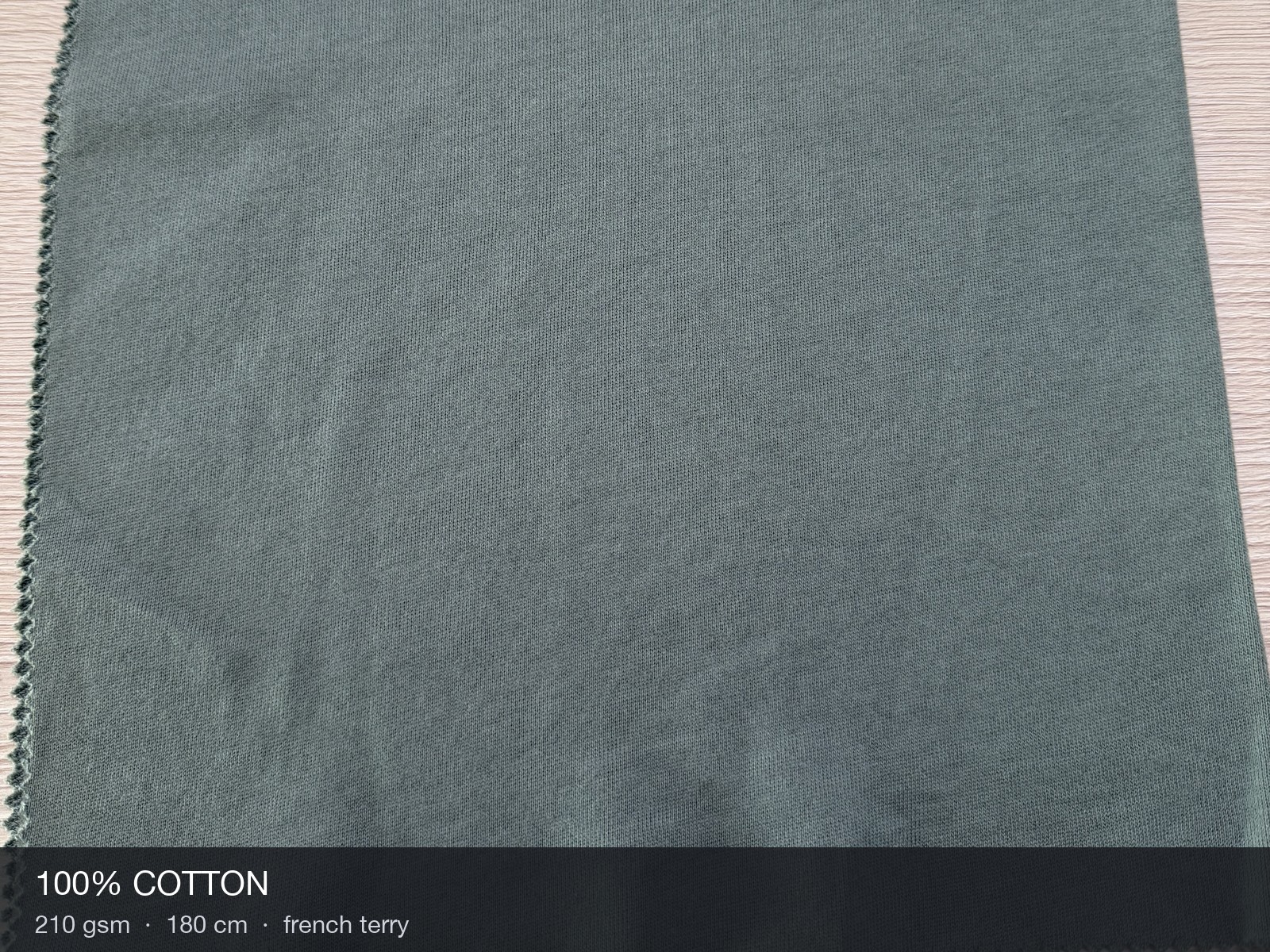
The fabrics below are production specifications Unitex Underwear runs at partner mills. Each is labelled with its composition, finished weight, width and knit structure, because those four together are what a mill and a buyer have to agree on before anything else can be discussed.
Three misjudgements that cost a programme
1. Treating loop-back and terry as “just heavier jersey”. A french terry at 210 gsm is not a heavy brief fabric. It has a looped back, no elastane in the standard construction, and it will not hold a waistband. The mistake is made because the weight looks right.
2. Specifying cotton with no elastane for a close-fitting garment. A 100% cotton jersey at 210 gsm is a fine fabric for a boxer short or a loungewear trunk. It is the wrong fabric for anything that has to grip at the waist and recover at the leg opening. Recovery is not a finishing effect; it has to be in the yarn.
3. Assuming heavier means better. Past roughly 200 gsm the returns diminish in underwear: the garment gets warmer, the seam bulk increases, and the leg opening has more fabric to control. Weight is a fit decision, not a quality score.
What to put in the fabric brief
A workable sequence, from the garment backwards:
- Garment and market — the garment type decides the weight band before anything else.
- Composition — fibre and percentages, with the elastane figure named separately because it is the one most likely to be reduced.
- Finished weight in gsm, with tolerance, measured after finishing and not at the knitting machine.
- Knit structure, named explicitly: single jersey, 1×1 rib, interlock or jacquard. “Cotton jersey” alone does not fix curl, stretch direction or opacity.
- Width in cm, with tolerance, because a 5 cm shortfall changes the marker and the yield.
- Colour reference — a physical standard or a Pantone, with the light source named for approval.
- Performance — shrinkage with method and wash condition, spirality limit, colour fastness grades, pilling rating.
- Hand and appearance — a signed reference sample, since none of the numbers above describe how the fabric feels.
- Packing and identification — roll length, roll identification, and how shade lots are marked.
Inspection: what the garment has to prove
- Leg-opening recovery after five washes, measured flat against the sealed sample.
- Waistband roll on the finished garment, checked after the same five cycles.
- Spirality at the side seam, measured to ISO 16322 on the garment rather than on the tube, and reported separately from shrinkage.
- Show-through in the lightest colour, over a grey card, in daylight.
- Seam grin at the leg opening under stretch.
- Curl at a cut edge, checked on a 10 cm square left flat for an hour; jersey will curl, interlock should not.
- Weight by cut-and-weigh from the bulk swatch, never from the mill’s ticket.
- Shrinkage to ISO 6330 and ISO 5077, with method and temperature written on the report.
Roll-level inspection — width, shade, roll length and defect scoring to ASTM D5430 as points per 100 square yards — belongs to the purchase order, not to the garment brief.
How Unitex Underwear approaches fabric selection
Unitex Underwear is an OEM and custom underwear supplier working with amfori BSCI-audited partner mills in Fujian. Fabric selection is where most programmes are won or lost, so we treat the specification as a document rather than a conversation: weight, elastane and structure named, tolerances written, and a sealed swatch held by both sides.
Three things we do that a trader quoting from a catalogue usually does not:
- We ask for the pattern block before recommending a fabric, because fit changes the fabric requirement more than the category name does. A relaxed boxer short and a fitted brief are different briefs, even when both are “cotton jersey”.
- We name the elastane denier, not only the percentage, because that is where most hidden downgrades sit and where a garment loses its recovery after ten washes.
- We hold a retained swatch from every dye lot, so a claim three months later is measured against an object rather than a memory.
For buyers comparing underwear fabric suppliers, the practical test is not the price per metre but whether the supplier can name weight, elastane and structure without being asked. The same logic applies to the MOQ: a single-colour plain jersey and a four-colour jacquard are different orders at the same weight and width, so the MOQ is a function of the brief rather than a number printed on a page. A supplier who answers only in adjectives has not specified anything, and the gap surfaces at inspection.
Bottom line
Underwear fabric selection is three numbers and a structure: finished weight, elastane percentage and knit type. The garment decides the band, the elastane decides the life, and the structure decides where it fails. A specification that names all three can be quoted, sampled and inspected. One that says “soft cotton jersey” cannot, and the disagreement surfaces at bulk.
If you are selecting fabric for an underwear programme, Unitex Underwear can quote against a written specification and supply reference samples for the structures above. We work as an OEM and custom supplier for brands, importers and retail chains, so a brief can start from a tech pack or from a garment you want matched. If you are buying fabric rather than garments and need the supply side — what we run, how sampling and tolerances work — that is covered in knitted fabric supply for underwear and loungewear.
References
- International Organization for Standardization, ISO 16322 — Textiles: Determination of spirality after laundering (Parts 1–3). https://www.iso.org/standard/62632.html
- International Organization for Standardization, ISO 6330:2021 — Textiles: Domestic washing and drying procedures for textile testing. https://www.iso.org/standard/76063.html
- International Organization for Standardization, ISO 5077:2007 — Textiles: Determination of dimensional change in washing and drying. https://www.iso.org/standard/41877.html
- International Organization for Standardization, ISO 3759:2011 — Preparation, marking and measuring of specimens for dimensional change tests. https://www.iso.org/standard/56150.html
- International Organization for Standardization, ISO 105-C06 — Colour fastness to domestic and commercial laundering. https://www.iso.org/standard/51276.html
- International Organization for Standardization, ISO 105-X12 — Colour fastness to rubbing. https://www.iso.org/standard/63146.html
- International Organization for Standardization, ISO 12945-2:2020 — Determination of fabric propensity to surface pilling, Part 2: Modified Martindale. https://www.iso.org/standard/76655.html
- ASTM International, ASTM D5430 — Standard Test Methods for Visually Evaluating the Acceptability of Woven and Knitted Fabrics (four-point system). https://www.astm.org/d5430-07r20.html
- OEKO-TEX, Standard 100 — Product certification, limit values and product classes. https://www.oeko-tex.com/en/our-standards/oeko-tex-standard-100
- U.S. Code of Federal Regulations, 16 CFR Part 1610 — Flammability of Clothing Textiles, incl. the plain-surface exemption at 2.6 oz/yd². https://www.ecfr.gov/current/title-16/chapter-II/subchapter-D/part-1610
- TextileTuts — knit fabric finishing: compacting, calendering and their effect on shrinkage and recovery. https://textiletuts.com/knit-fabric-finishing-compacting-calendering-decating
· Xiamen Unitex Trade Co., Ltd. — OEM & ODM underwear sourcing partner