
China Underwear OEM vs ODM: MOQ, Pricing & Lead Time Explained for Importers
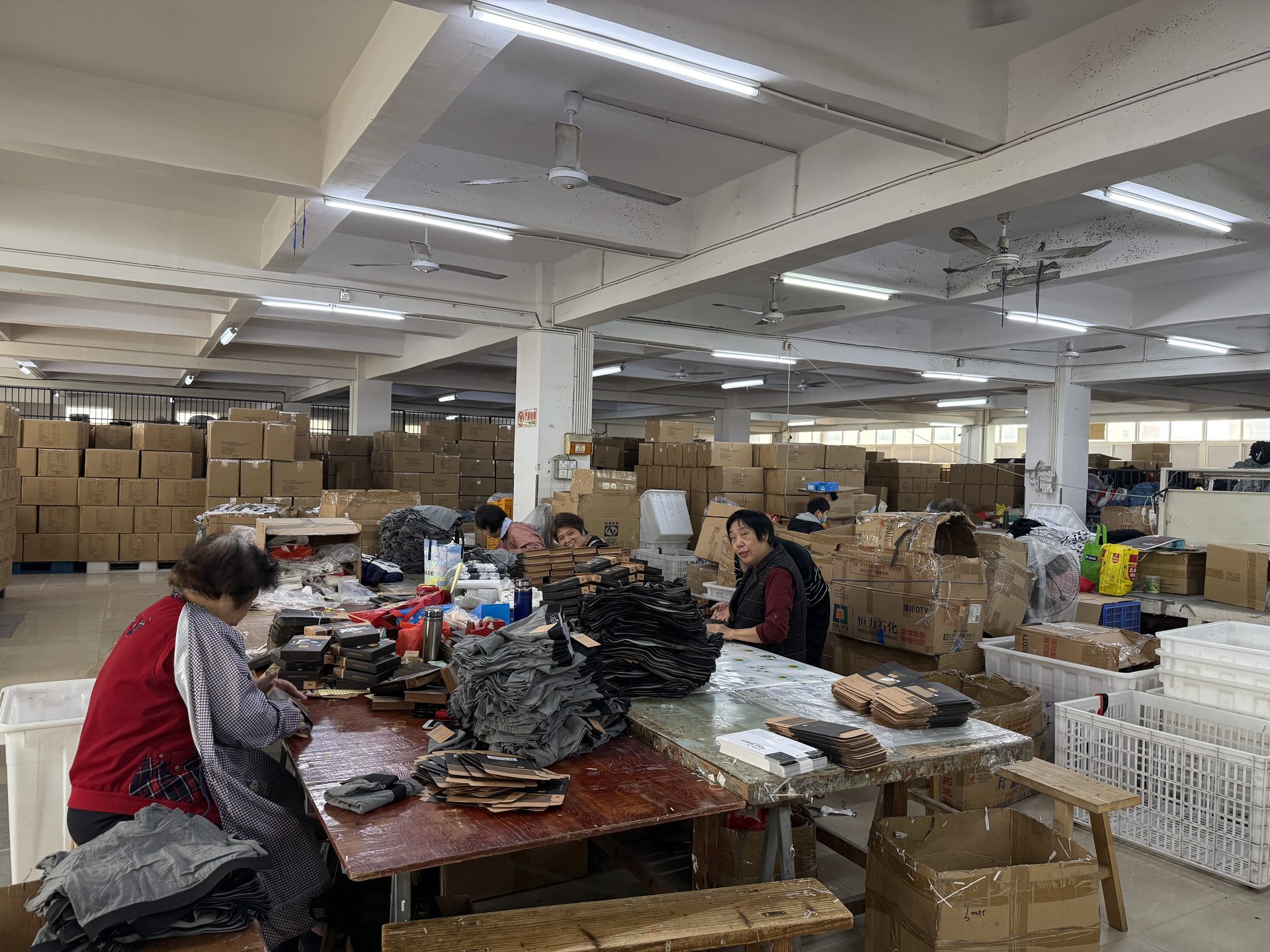
OEM and ODM are the two ways to manufacture underwear in China — and choosing wrong can cost you months and thousands of dollars. Xiamen Unitex Trade Co., Ltd. is a professional underwear sourcing & supply-chain management company based in Xiamen, Fujian Province, in the Xiamen–Quanzhou–Jinjiang knitwear cluster of south-east China, working with a network of BSCI-audited and OEKO-TEX Standard 100-certified partner factories to serve retailers and brands across Europe, the US and Australia. In the trade since 2009, incorporated in 2013. This guide explains the difference in plain terms, with the MOQ, pricing and lead-time numbers importers actually need.
1. OEM vs ODM: What’s the Difference?
- OEM (Original Equipment Manufacturing): you provide the design, specs and artwork; the factory produces to your exact requirements. You own the design.
- ODM (Original Design Manufacturing): the factory designs and develops the product (style, fabric, pattern) for you; you brand and sell it. Faster to market, lower development cost, but the design is typically shared with other ODM customers.
Many importers combine both: start with ODM styles to test the market, then convert winning styles to OEM with exclusive modifications.
2. MOQ Benchmarks for Underwear (2026)
| Category | Typical MOQ | Notes |
|---|---|---|
| Men’s boxer briefs | 2,000 pcs / style / colour | Full size range |
| Women’s briefs | 2,000 pcs / style / colour | Full size range |
| Kids’ underwear (boys’ / girls’) | 2,000 pcs / style / colour | Full size range |
| Sleepwear sets | 600 sets / style / colour | Size mixing allowed |
| Trial order (first order) | Negotiable below MOQ | Unit cost slightly higher; scale to full MOQ from the second order |
3. Pricing Structure — What You Actually Pay For
Underwear wholesale unit price typically includes: fabric, cutting, sewing, trims (elastic waistband, labels), printing/embroidery, packaging and inspection. Expect price to move with:
- Fabric grade (combed cotton > regular cotton; modal/bamboo higher; recycled materials premium)
- GSM (fabric weight: 150–220 gsm typical for boxer briefs)
- Print complexity (yarn-dyed > discharge > water-based transfer)
- Packaging (retail-ready vs bulk)
As a reference, wholesale prices for basic cotton boxer briefs from a certified China factory typically range in the low single-digit USD per piece at full MOQ — exact quotes require an RFQ with fabric, size chart and packaging specs.
4. Lead Times That Matter
| Stage | Time |
|---|---|
| Quote response | 48 hours |
| Lab dip / print strike-off approval | 3–7 days |
| Sales sample development | 7–10 days |
| Bulk production (new style) | 45–60 days |
| Bulk production (repeat order) | 30–40 days |
| Port of loading | Xiamen (other ports can be arranged) |
5. Payment Terms Standard in the Industry
- 30% deposit on order confirmation, 70% T/T against copy of Bill of Lading
- L/C at sight for larger or first transactions
- Sample charges: free reference samples (buyer covers courier); sales samples charged and credited/negotiable on bulk order
6. Red Flags When Sourcing Underwear OEM/ODM
- No verifiable certificates (BSCI/OEKO-TEX, named per production site)
- MOQ changes after sampling
- “Factory-direct” pricing that ignores QC inspection
- No written quotation validity (standard: 30 days)
- No pre-shipment inspection option
7. What changes in the paperwork between the two models
The price gap between OEM and ODM rarely sits in the sewing. It sits in the documents the order runs on, and those documents are what a buyer is actually purchasing when choosing a route. Two unit prices compared without the document set compared alongside them are two different scopes wearing the same number.
| Document | OEM route | ODM route |
|---|---|---|
| Tech pack | Issued by the buyer; the supplier builds to it | Issued by the supplier; the buyer approves it |
| Pattern and grading | Buyer’s block, graded to the buyer’s size set | Supplier’s block, graded to a size set the buyer adopts |
| Lab dip and strike-off | Matched to the buyer’s colour standard | Proposed by the supplier, approved by the buyer |
| Size set | Buyer-specified measurements, checked against the spec sheet | Supplier’s measurements, which can shift between development rounds |
| Care and content label | Buyer supplies the wording; the supplier prints and attaches it | Supplier drafts the wording; the buyer is the last check before it prints |
| Exclusivity | Duration and territory written into the agreement | Not automatic — negotiated and usually paid for separately |
Two of those rows carry legal weight rather than commercial weight. Fibre content and country of origin have to be stated on the label for the US market under 16 CFR Part 303, and care instructions under 16 CFR Part 423; for the EU, fibre names and composition follow Regulation (EU) No 1007/2011. On an ODM route the supplier drafts that wording, which makes the buyer the last check before it prints. A wrong percentage is not corrected later by a good unit price, and a recall is not covered by a discount.
Inspection behaves the same way on both routes. The acceptance decision should be made against a stated sampling plan rather than a general impression of the goods: AQL 2.5 to ISO 2859-1 is the level we quote as standard on major defects. Construction is the other half, because it is verifiable at the seam rather than arguable at the table — a four-needle six-thread flatlock to ISO 4915 type 607 either runs on the garment or it does not. Whichever model you buy, put both lines in the purchase order, and the inspection report then has something to fail against.
About Xiamen Unitex Trade Co., Ltd.
Xiamen Unitex Trade Co., Ltd. is an underwear sourcing and supply-chain management company based in Xiamen, China, working with BSCI-audited and OEKO-TEX Standard 100-certified partner factories. In the trade since 2009, incorporated in 2013. Our partner factories produce men’s, ladies’ and kids’ underwear, pajamas and sport bras with a monthly capacity of 600,000 pieces, MOQ from 2,000 pieces per style/color, and bulk lead times of 45–60 days. Full customization: jacquard logo elastics, AOP printing, retail packaging and EU DPP traceability data.
FAQ
Q: What does OEM mean in underwear manufacturing?
A: OEM (Original Equipment Manufacturing) means the factory produces underwear to your own design and specifications — your logo, your fabrics, your sizing. You own the design and control the brand.
Q: What is ODM underwear?
A: ODM (Original Design Manufacturing) means the factory designs and develops the underwear style for you. You focus on branding and distribution; the factory handles design, pattern and production.
Q: What is the minimum order quantity for custom underwear from China?
A: Typical MOQs are 2,000 pieces per style per color for men’s boxer briefs, 2,000 pieces for women’s and kids’ underwear, and 600 sets for pajamas. Trial orders below MOQ are usually negotiable for first-time importers. Note: these are indicative MOQs for standard styles — the actual MOQ depends on the specific style, fabric and trims; certain special styles may require higher quantities (e.g., 3,600 pieces per style per color).
Q: How much does it cost to make private label underwear in China?
A: Unit prices depend on fabric, weight, trims and packaging — basic cotton boxer briefs typically land in the low single-digit USD range per piece at full MOQ from a certified factory. Request an RFQ for exact pricing.
Q: How long does underwear production take in China?
A: New styles: 45–60 days for bulk; repeat orders: 30–40 days; sample development: 15–30 days. Peak season (Aug–Oct) requires advance capacity booking.
· Xiamen Unitex Trade Co., Ltd. — OEM & ODM underwear sourcing partner