
Insights
Market & Trade Trends
Market data, consumer trends, regional demand and industry outlook.

Analysis of Style Classification of Women’s Lingerie and Underwear Under the Current Foreign Trade Market Situation
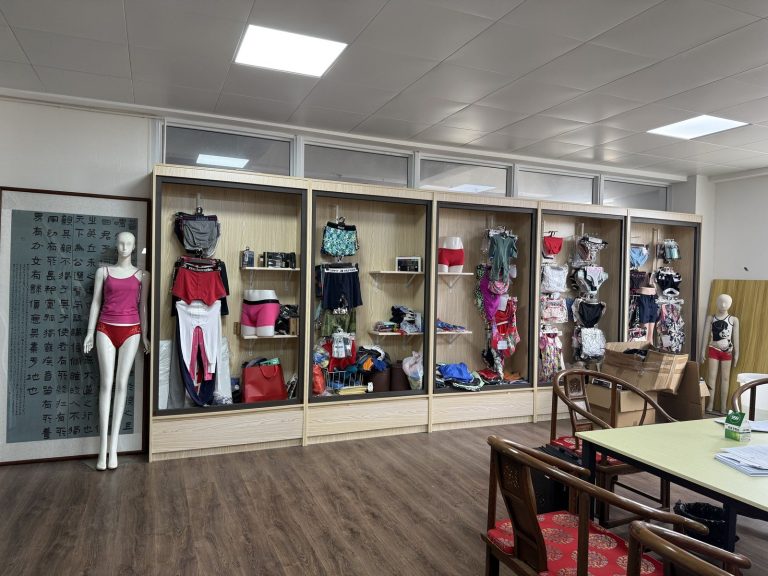
Women's lingerie classification runs on two axes rather than one: construction (cut-and-sew, seamless, moulded, wired) and coverage (full, mid, high-leg, thong). Most buying mistakes come from treating them as a single scale — a seamless thong and a cut-and-sew brief are different production routes as well as different fits, with different minimums and different lead times.

Brazilian Underwear Market: OEM Opportunities and Import Requirements
Clear underwear into Brazil by NCM, not by description: men's knitted cotton briefs sit at 6107.11.00 and women's at 6108.21.00, both at the 35% Mercosur ceiling, with IPI, PIS/COFINS and state ICMS stacked on top. Children's sizes 0–14 need INMETRO certification before production. Confirm these codes with a reliable supplier before the proforma is signed.
 Market & Trade Trends · Aug 2025 · 11 min read
Analysis and Future Outlook of the Foreign Trade Underwear Market
The next few years of foreign-trade underwear are about mix, not volume. Growth in the basic segment is being competed away on price, while comfort, health, sport and shaping lines still carry margin for a brand that develops them properly. So the question is not whether the market grows but which end of it you are sourcing for. Unitex Underwear builds both kinds of programme from Xiamen, with partner workshops across Fujian.
 Market & Trade Trends · Aug 2025 · 2 min read
Global Underwear Market Report: Regional Analysis and OEM Opportunities 2025
Global Underwear Market Report: Regional Analysis and OEM Opportunities 2025 The global underwear market continues to evolve with distinct regional dynamics. This market report analyzes key…
Market & Trade Trends · Jul 2025 · 7 min readUnveiling the Allure of Exported Underwear: A Global Sensation
The export underwear market has three moving parts: the styles each market buys, the materials those styles are made from, and the function claims attached to them. The competitive picture matters less than the trade-barrier and logistics layer, because that is where an order which looks competitive on unit price stops being competitive on delivered cost.

Research Report on the Foreign Trade Market for Underwear Products
Cross-border underwear trade keeps expanding, but the growth is lopsided: North America and Europe are mature, brand-led and slow, while Asia-Pacific, Latin America and the Middle East are where units are actually being added. Published market sizes disagree by tens of billions for the same year, so treat any single growth rate as one analyst's model. Unitex Underwear reads that spread from the order book in Fujian.

Two Weeks into New Tariff Policy: Chinese Underwear Exporters Accelerate 90-Day Opportunity Seizure
The May tariff truce cut the headline rate from 125 per cent to 10 and small-parcel duty from 120 to 54, but it bought 90 days, not certainty. Base duty on intimate apparel still sits near 30 per cent, and synthetic fibre costs run a quarter above 2024 levels. Unitex Underwear uses the window to shorten lead times and move risk out of the seasonal peak.
 Fabrics & Materials · Jun 2025 · 2 min read
The Rise of Sustainable Underwear: Market Data and OEM Opportunities in 2025
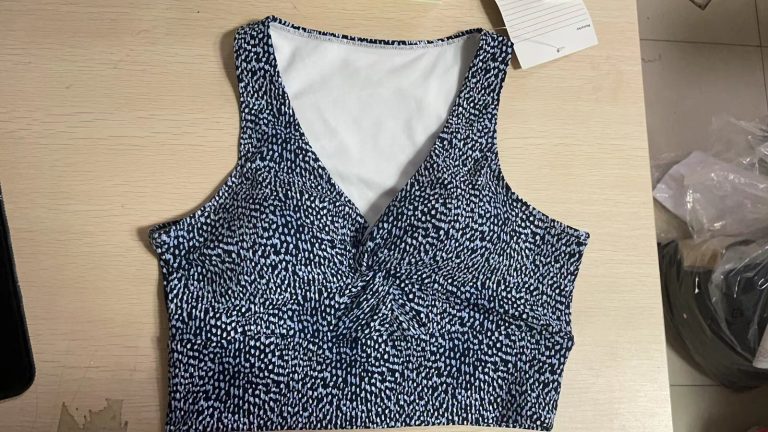
Sustainable underwear moved from a niche marketing angle to a mainstream market requirement, and the change is in the specification rather than in the marketing. For an OEM buyer the practical consequences are a certification position that has to be verified per site, a fibre claim that has to name its processing route, and a pack that now carries a compliance consequence.
 Fabrics & Materials · May 2025 · 2 min read
Pajamas OEM Guide: Materials, Styles, and Market Opportunities in Sleepwear
Pajamas as an OEM category run on a minimum of around 600 sets per style and colour, with sampling at 7–10 days on a stock block and 12–18 days for full development. Three things separate the category from underwear: the unit is a set, the fabric structure decides the season, and the selling window is short enough that the schedule runs backwards from it.
Company & Industry Insights · May 2025 · 13 min readAnalysis of the Market Situation of the Underwear Foreign Trade Company – Xiamen Unitex Trade CO., LTD
Vietnam and Bangladesh have set the floor under basic cotton programmes, so a supplier working from China no longer wins that business on price alone. What still pays is the work in front: fabric development, fit correction and a delivery window that holds in peak season. Unitex Underwear reads the export market that way, with partner workshops across the Fujian cluster rather than a single line.

Why Chinese Underwear Manufacturing Remains Competitive in 2025
China's advantage in underwear manufacturing is depth rather than a single factor: fibre, knitting, dyeing, finishing, cut-and-sew and trims sit within short distances, which shortens the substitution cycle and widens the construction range. The practical consequence is that a supplier can be replaced without redeveloping the programme.
 Market & Trade Trends · Apr 2025 · 4 min read
Exploring the Evolution and Future of Men’s and Women’s Underwear: Market Trends, Gender Equality, and Consumer Insights
Underwear has moved from a functional garment to an identity product, and two shifts carry that change: the blurring of gender-specific categories and the rise of sustainability as a purchase criterion. For a buyer, the first widens the range and the second narrows the compliant supply base.