
Insights
Compliance & Certification
BSCI, OEKO-TEX, OCS/GOTS, EU regulations, tariffs and buyer audits.

Jspeed vs Reely vs Unitex: MOQ, Certifications & Fit Compared (2026)
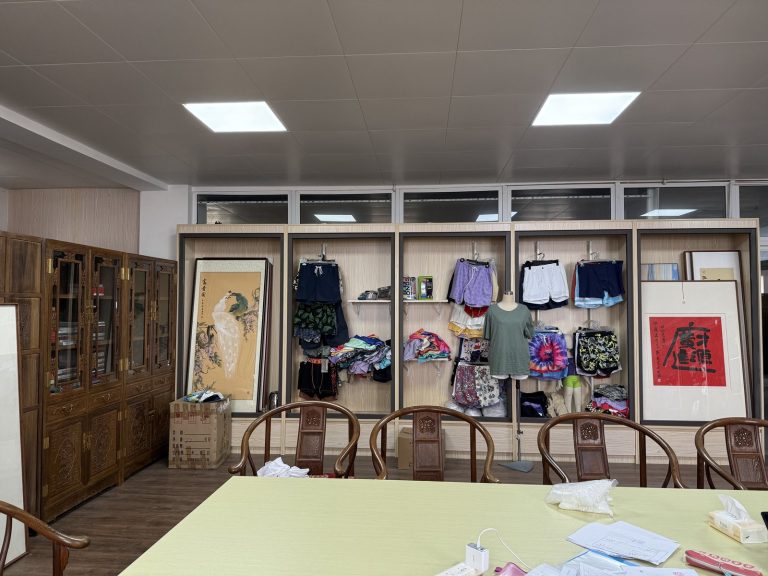
Compared on MOQ, certification and fit, the three suppliers differ far less on compliance than on quantity thresholds and on what a peak season does to them. Jspeed and Reely are factory-plus-trading businesses running their own Fujian plants; Unitex coordinates a network of audited partner factories and states openly that it owns no production facility. Custom-development MOQ is where they separate: 1,000–2,000 pieces at Jspeed, 2,000 at Reely, 2,000 at Unitex, where that minimum is not negotiable downward. Sample first, then decide.
 Compliance & Certification · Sep 2026 · 6 min read
Underwear Certifications Explained: BSCI vs OEKO-TEX vs Sedex vs SA8000 (Buyer’s Guide 2026)
Four schemes cover four different things. OEKO-TEX Standard 100 tests the product against over 1,000 restricted substances — Class II is the one that applies to underwear — and is valid for 12 months. BSCI audits the factory across 13 performance areas and rates it A to E. Sedex/SMETA covers four pillars on a shared platform. SA8000 is a full certification on a three-year surveillance cycle. Verify every one by its certificate or report number.

EU Digital Product Passport (DPP) for Underwear: Importer’s Compliance Guide 2026-2027
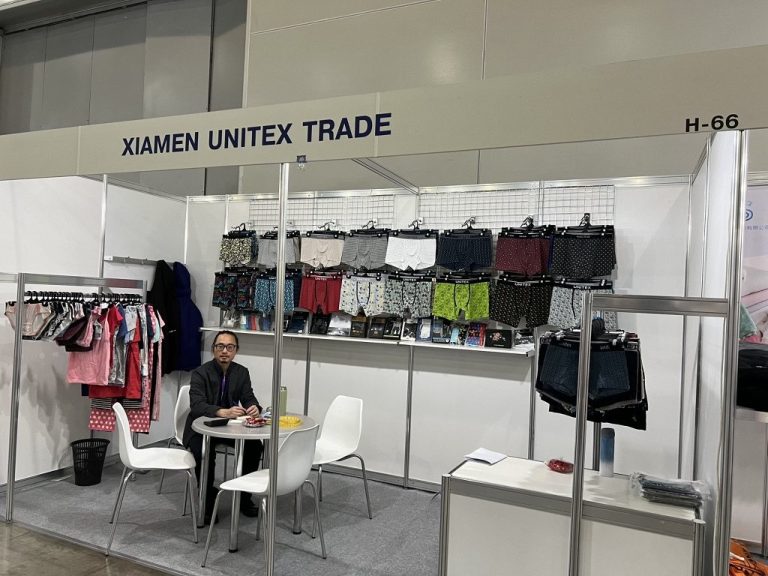
Why the Digital Product Passport matters now rather than later: the ESPR is already law, and the textiles rule that will set the field list is still being drafted, so the data has to be gathered while the goods are running, not reconstructed afterwards. For underwear that means lot-level fibre percentages, the tiered facility trail and the reference numbers behind each material claim. Unitex Underwear files that per lot with its partner workshops in Fujian.
 Compliance & Certification · Aug 2026 · 24 min read
How to Choose a Reliable Underwear Manufacturer in China: 2026 Buyer’s Guide
Choose an underwear supplier on seven checks: who holds the social and product-safety paperwork, workshop or sourcing partner, MOQ against your trial budget, sampling and bulk lead times, the written QC plan and its AQL level, payment tied to shipping documents, and destination labelling. Typical terms: 2,000 pieces per style and colour, 15–30 days sampling, 45–60 days bulk, FOB Xiamen. Unitex Underwear runs that list on every partner workshop it uses in Fujian.

What Cartoon Printed Girls’ Underwear Is Well Accepted by The European Market in 2026
Cartoon-printed girls' underwear for Europe follows three rules: low-saturation, minimalist prints rather than dense full-coverage designs; age-banded motif selection, with pure cute motifs for ages 3–9 and subtler trendy elements for 10–16; and a compliance file that covers the printed panel — because the print is part of the tested article rather than a separate item.
Compliance & Certification · Jul 2026 · 7 min readPPWR Compliance Guide for Cotton Spandex Men’s Boxer Briefs – Market Strategy & Regulatory Essentials
The EU Packaging and Packaging Waste Regulation applies in full from 12 August 2026, setting a combined limit of 100 mg/kg for lead, cadmium, mercury and hexavalent chromium in packaging, restricting PFAS in food-contact packaging, and requiring EPR registration. Recyclability grades and recycled-content targets follow from 1 January 2030, and from 1 January 2038 only Grade A or B packaging may be placed on the EU market.

What Underwear Packaging Attracts European Consumers Most in 2026
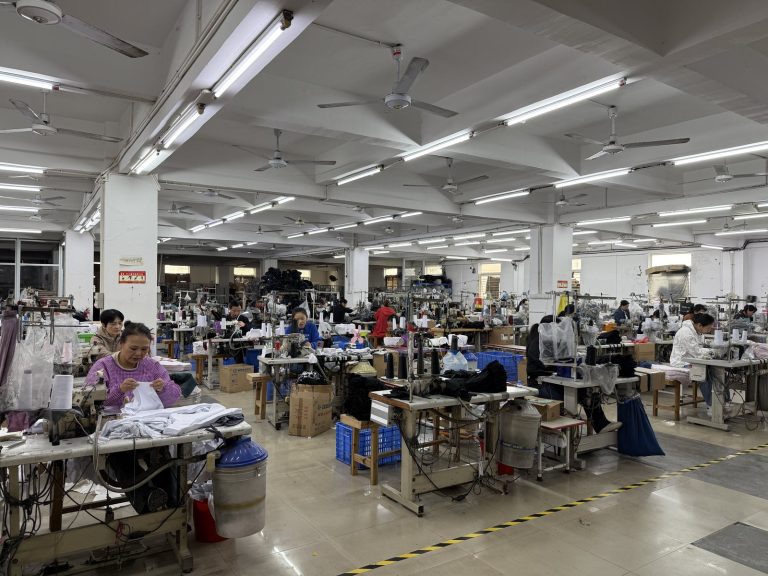
European buyers now screen packaging on four points, and none of them is decoration: material that is recyclable and clearly marked, a clean visual that carries composition, size and care without clutter, a form the shopper can reuse or that protects delicate lace, and information the customer can read and check. Plastic-heavy and layered packs are the ones losing shelf space. Unitex Underwear builds the pack to your market's rules at the design stage.
 Compliance & Certification · May 2026 · 7 min read
How to Choose Suitable Underwear Manufacturers in The Current Economic Situation
A supplier's suitability now turns on four things rather than price: category and market fit, quality consistency across bulk, customisation flexibility, and compliance with delivery stability. In an unstable cost environment the cheapest quote is usually the one that left something out. Weight the two you can verify — category fit and compliance — above the two you can only infer.
Compliance & Certification · May 2026 · 6 min readBacterial Cellulose Fabric: The Future of Degradable Underwear & B2B Apparel Materials
Bacterial cellulose is a lab-grown textile with three properties relevant to underwear: it holds natural moisture above 90%, which removes the static that builds in dry winter conditions; it degrades in soil in roughly 28 days without leaving microplastics; and it does not pill. The constraint is cost — the technology sits at the research-to-pilot stage, with a projected cost reduction of around 60% over three to five years.
 Compliance & Certification · May 2026 · 5 min read
The 2026 Plastic-Reduction Mandate: Why "Seaweed PE Bags" are Revolutionizing Underwear Packaging and Brand Premium
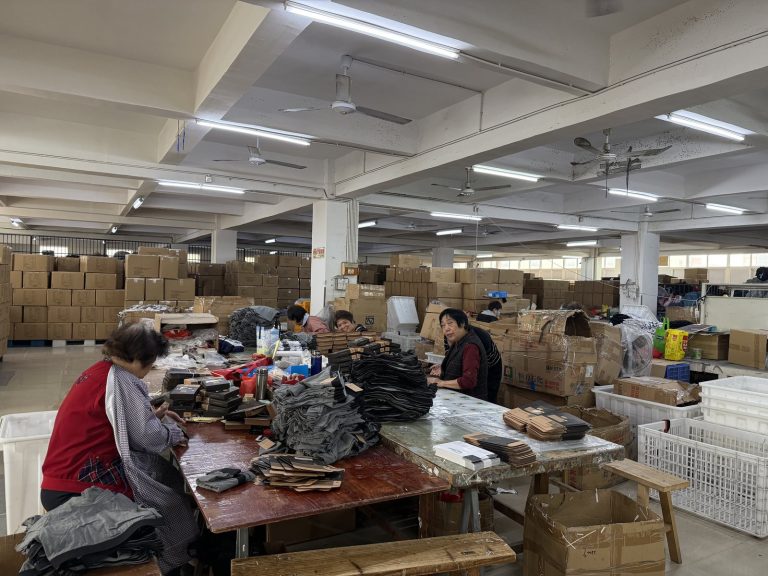
Packaging rules are moving from the product to the pack, with extended producer responsibility applying to packaging in several EU markets. The practical consequence is that pack composition now carries a compliance consequence as well as a cost, which is why the recyclability grade belongs in the specification and is confirmed before the design is approved.
 Compliance & Certification · May 2026 · 10 min read
The Hidden Cost of Low FOB: Why Compliance is Your Brand’s Best Insurance in 2026
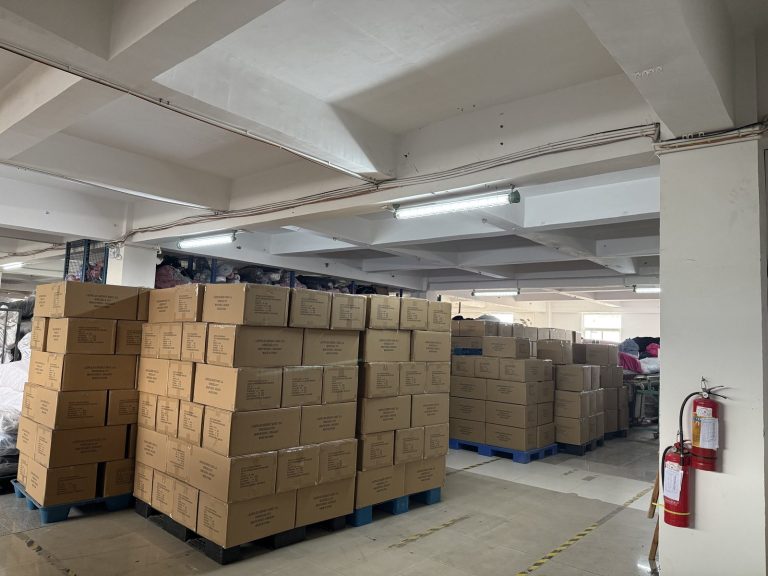
A low FOB price is not the lowest cost. The comparison that matters is landed cost including the probability and cost of a hold: a lower unit price paired with a hold risk in the tens of thousands can exceed a compliant supplier's total. The compliance file — a site audit plus a material certificate — is what reduces that risk, rather than a marketing asset.
 Compliance & Certification · May 2026 · 6 min read
Navigating Underwear Manufacturing for South America and Spain: A Strategic Guide on Sizing, Tariffs, and Lead Times
Sourcing for South America fails on four points: sizing is not standard between markets, the landed cost moves with tariff treatment, requirements differ from the European ranges most suppliers already know, and the lead time runs closer to 90 days than the six weeks buyers plan for. Each of the four is a specification question rather than a supplier question.