
Private Label Underwear for Amazon Sellers: Step-by-Step 2027
Private-label underwear is one of the most competitive categories on Amazon — and one of the most common places new sellers lose money, not on the product but on the timeline and the compliance paperwork they didn’t know they needed. This guide walks the full path from tech pack to FBA-ready cartons, aimed at Amazon sellers planning a 2027 launch, with the MOQ math and documentation checklist that decide whether your launch ships or stalls.
Quick Answer
The sequence matters more than the product: tech pack and fit sample first, compliance labels and testing early, bulk production 45–60 days, sea freight 30–35 days. Plan backwards from your launch date, not forwards from “I’m ready.” Start with a salesman sample and a 2,000-piece first order, sized so a weak listing fails cheaply, and get OEKO-TEX documentation on file before you need it — Amazon and customs both ask.
1. THE UNDERWEAR-ON-AMAZON REALITY CHECK
Underwear is a replenishment category — customers reorder what fits. That sounds like a plus, and it is, but it also means:
- Fit is everything. A 3-star fit kills a listing faster than any ad budget can save it.
- Compliance is mandatory, not optional. Composition labels, care labels and fiber-percentage accuracy are legal requirements in the EU and US, and Amazon enforces them on listings.
- Restock timing decides survival. Underwear sells in size runs; run out of a core size and the Buy Box algorithm punishes you.
Most failed underwear launches share one of three causes: skipping the fit-sample stage, getting labels wrong, or underestimating lead time. All three are preventable.
2. STEP BY STEP: TECH PACK TO FBA-READY CARTONS
Step 1 — Tech pack (1–2 weeks). This is your product on paper: design, measurements per size, fabric composition, GSM, trims, and packaging specs. A loose tech pack is the number-one cause of wrong samples and blown timelines. If you don’t have one, your sourcing partner should help you build it.
Step 2 — Fit sample (2–4 weeks). One round of fit samples, possibly two. Wear-test them. Adjust the measurements. This is the cheapest insurance you’ll ever buy; the cost of correcting fit after bulk production is the whole order.
Step 3 — Compliance labels + testing (start here, don’t finish here). For the EU, composition and care labels follow mandatory formats; fiber percentages must be accurate. OEKO-TEX Standard 100 testing on the fabric gives you documentation Amazon and customs both recognize. Start this early — it runs in parallel with sampling.
Step 4 — Pre-production sample + bulk (45–60 days). After the pre-production sample is approved, bulk production runs 45–60 days for new styles. This is the window most sellers forget when planning their launch.
Step 5 — Inspection + freight (30–35 days to EU/US). Pre-shipment inspection (AQL 2.5 is a common standard), then sea freight. Door to FBA is 30–35 days for the EU and US east coast.
Plan the whole thing backwards from your target launch date, and add a two-week buffer for customs and the unexpected.
3. THE MOQ MATH FOR YOUR FIRST ORDER
Custom underwear factories typically quote 2,000 pieces per style per color. That’s a lot of cash tied up in unproven inventory for a first listing.
The smarter first order looks like this:
- First order of 2,000 pieces of your strongest style, in the two sizes that will carry the listing, at a transparent per-piece price.
- Bulk pricing locked from day one, so if the product sells, your reorder drops to standard cost.
- Never spread a first order across ten thin styles — one or two styles, so each has enough depth to test the market properly.
As a sourcing company, we quote 2,000 pcs per style/color for knitted underwear (pajamas from 600 sets, sport bras from 3,600 pcs) with no production run below that minimum. The point isn’t the specific number — it’s that your first order should be small enough to fail cheaply, not large enough to fail expensively.
4. THE DOCUMENTATION AMAZON ACTUALLY ASKS FOR
For an underwear listing in the EU or US, have these ready before you launch:
- Composition label: accurate fiber percentages, in the required format. “Cotton blend” without percentages is a customs hold waiting to happen.
- Care label: washing symbols in the right standard (EU and US formats differ).
- OEKO-TEX Standard 100: material-safety documentation on the fabric. Amazon recognizes it, and EU buyers increasingly expect it.
- BSCI or Sedex: social-compliance audit documentation, if a marketplace or retailer requests it.
- Country-of-origin marking: required on the product and the packaging.
The recurring mistake: sellers get documentation *after* the goods are made, when a label format is already wrong. Get the label and testing requirements confirmed during sampling, not after bulk.
5. TIMELINE BACKWARDS FROM YOUR 2027 LAUNCH
Count backwards to find your true deadline:
- Launch date on Amazon: your target.
- Minus 30–35 days: sea freight and FBA inbound.
- Minus 45–60 days: bulk production.
- Minus 2–4 weeks: fit samples and approval.
- Minus 1–2 weeks: tech pack.
That puts your real “must start” date three to four months before launch. If you want live in Q1 2027, the tech pack starts in September or October 2026 — not December. Every year, sellers do this math in November and ask for miracles.
FAQ
Q: What MOQ do I need to start a private-label underwear line on Amazon?
Custom factories quote 2,000 pcs/style/color, and that is where a first order starts; a salesman sample at 50 pieces is the cheaper way to validate the listing first. As a sourcing company we quote 2,000 pcs (pajamas from 600, sport bras from 3,600) with no production run below those minimums.
Q: How long does it take from tech pack to FBA-ready cartons?
Roughly 3–4 months: tech pack 1–2 weeks, fit samples 2–4 weeks, bulk 45–60 days, freight 30–35 days. Add a buffer for customs.
Q: What compliance documentation do I need for underwear on Amazon?
Accurate composition and care labels, OEKO-TEX Standard 100 testing documentation, country-of-origin marking, and — for many retailers — BSCI or Sedex audit documentation.
Q: Can I skip the fit sample to save time?
Don’t. A 3-star fit rating kills a listing faster than any ad budget can save it. The fit sample is the cheapest insurance in the whole process.
Q: Is a sourcing agent worth it for an Amazon seller?
For a first launch, usually yes — an agent handles QC, compliance and flexible trial MOQs so you can focus on the listing and ads. Direct factory makes sense later, at proven scale.
Bottom Line
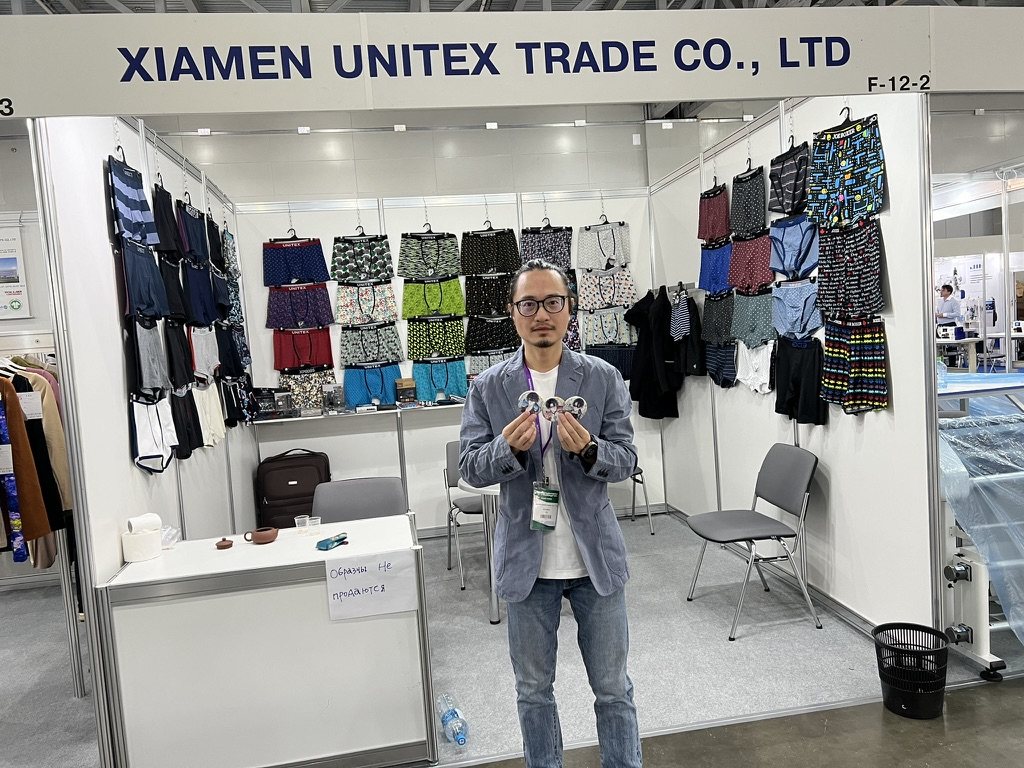
Private-label underwear on Amazon rewards planning, not speed. Nail the tech pack, buy the fit sample, lock compliance early, and keep your first order small enough to fail cheaply. If you’re planning a 2027 launch and want flexible trial MOQs plus compliance handled end-to-end, talk to Xiamen-based Unitex Trade.
Related guides: Low MOQ Underwear Manufacturing: Cost Economics Explained · Underwear Certifications Explained (BSCI vs OEKO-TEX vs Sedex vs SA8000) · How to Choose a Reliable Underwear Manufacturer
· Xiamen Unitex Trade Co., Ltd. — OEM & ODM underwear sourcing partner