
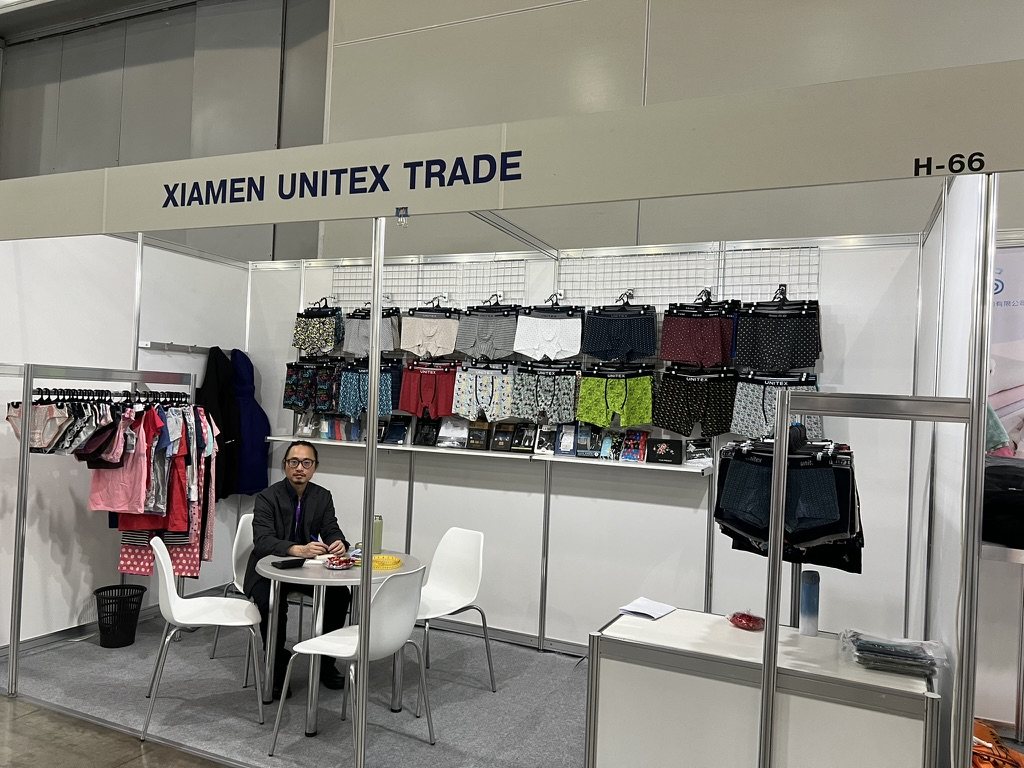
Every buyer eventually learns the same lesson: the hardest part of Chinese underwear sourcing is not finding a supplier — it is telling a real one from a well-presented one. A polished website, a fast quotation and a folder of certificate scans cost a supplier almost nothing to produce.
This guide is the checklist we run on a new partner factory before we put our own name on their output. It is written for buyers who have to sign the purchase order themselves: private-label brands, D2C sellers, retailer own-brands and sourcing teams placing first or second orders in China.
It covers the seven things that actually separate a supplier you can scale with from one you will replace in six months, plus a 12-point checklist to run before you pay any deposit. Where a claim can be verified at an official source, we link to the source rather than asking you to take our word for it.
1. Verify the certification — and verify who actually holds it
Ask for the certificate number and check it at the issuing body’s own lookup tool. A legitimate supplier will send it within the hour; that is the whole test.
Most sourcing conversations stall on the wrong question. Buyers ask “do you have BSCI?” and suppliers answer “yes.” Both sides know this proves nothing. The right question has two parts: which certificate, and whose name is on it.
The second half is where most first-time buyers get misled. Social-compliance audits and product-safety certificates are issued to a legal entity — usually a production facility. A sourcing company, agent or trading house cannot “have” them in the same sense; it can only tell you which production site holds them and how to confirm it. That distinction is not pedantry. If a supplier claims a certificate that its actual production site does not hold, you have not bought compliant goods — you have bought a promise.
How to check, in order:
| What you are checking | Where to check it | What a pass looks like |
|---|---|---|
| OEKO-TEX® STANDARD 100 | OEKO-TEX® Label Check — enter the certificate number or scan the label’s QR code | Returns the certificate holder’s legal name, product scope, product class and validity date |
| amfori BSCI social audit | amfori’s BSCI programme page explains what the audit evaluates; the audit report itself is released through the amfori platform to the member who commissioned it | A report with an audit date, a rating, the audited site address and a named audit company — not a screenshot |
| Recycled / organic content (GRS, RCS, OCS) | Textile Exchange explains the standards and lists certified companies | Certificate scope covers the material and the processing stage you are buying |
Three red flags, in the order we see them:
- PDF or photo of a certificate, but no certificate number. Numbers are verifiable; images are not. This is the single most common deflection.
- A certificate number that returns “not found” or “expired” at the issuing body. Every OEKO-TEX® certificate carries a validity date, and OEKO-TEX® Label Check will state the status directly. An expired certificate is not a minor paperwork issue — it means nobody has been re-testing the chemistry.
- A certificate belonging to a different legal entity than the one invoicing you. Ask for the audited site address and compare it to your invoice header and shipping documents.
Why we are strict about this. We are a sourcing company, not a production site — so under our own rule, we cannot claim to hold certificates. What we can do is name the site that holds them and give you the number. Our partner factories hold OEKO-TEX® STANDARD 100 and are audited under amfori BSCI, and every buyer we onboard is given the certificate numbers to verify independently. If a supplier resists that, that resistance is itself the finding.
2. Factory or trading company? Understand what you are actually buying
Neither model is automatically better. What you are really choosing is who is accountable when a shipment is wrong — and that question has the same answer for both models: whoever signed the contract.
The factory-versus-trader question gets asked more often than it gets answered usefully, because it frames the choice as a quality question when it is actually a structure question. Direct factories and sourcing companies optimise for different things, and the wrong fit hurts in different ways.
| Dimension | Buying direct from a factory | Buying through a sourcing company |
|---|---|---|
| Unit price | Lowest — no intermediary layer | Higher — includes a service margin |
| Production control | Direct control of its own lines | Controls quality through in-line inspection and QC staff across partner lines |
| Capacity ceiling | Capped by its own plant; a busy season can push you out | Spread across multiple lines — but you depend on how well it manages them |
| Style flexibility | Strong on what it already makes; weaker on unfamiliar constructions | Can match a style to the line best suited to it |
| Your admin load | You manage specs, samples, QC, paperwork and logistics | One counterparty handles the programme end to end |
| Failure mode | Its line goes down, your order stops | Its partner coordination fails, your order is late |
| Best fit | You place large, stable, narrow-assortment volumes and have sourcing staff | You are building or scaling an assortment and do not want to hire a sourcing department |
Three questions that tell you which one you are talking to — and whether they are honest about it.
- “Which specific site will produce this order, and how many lines does it run?” A factory answers immediately with its own address. A good sourcing company answers with the site it intends to allocate and will explain why that line fits your construction.
- “Who holds the social-compliance audit for that site, and can I see the report reference?” Watch whether the answer changes when you ask for the audited site address rather than the certificate PDF.
- “Who is my single account manager, and who do they escalate to when a line breaks down?” This question is about accountability plumbing. Vague answers here predict a vague order.
A note on the middle path. Many experienced exporters — including Unitex — operate as integrated supply-chain managers: they do not own the sewing lines, but they carry merchant-level accountability for what those lines ship. That model only works if the quality controls are real and inspectable. Ask what specifically happens between cutting and loading: an in-house QC team, in-line checks at defined intervals, and a pre-shipment inspection with photo evidence are the three you should insist on. If any of them is described as “we supervise the factory,” you have a gap.
3. MOQ — match it to your business stage
MOQ is a negotiation about production economics, not a fixed industry rule. Expect around 2,000 pieces per style per colour for standard underwear, and expect a first-order trial quantity to be available at a higher unit cost.
Minimum order quantity is the first number that tells you whether a supplier is set up for buyers like you. It is driven by real constraints — fabric minimums from the mill, dye-lot minimums, cutting-table efficiency, and machine changeover time — so it is genuinely negotiable within a range, and genuinely immovable below it.
Indicative MOQs for standard underwear construction:
| Category | Typical MOQ | Notes |
|---|---|---|
| Men’s boxer briefs / trunks | ~2,000 pcs per style per colour | Elastic and waistband MOQ usually drives this |
| Women’s briefs | ~2,000 pcs per style per colour | Lower for simple constructions on existing fabric |
| Kids’ underwear | ~2,000 pcs per style per colour | Sizing spreads across more sizes, so total order volume runs higher |
| Pyjama sets | from 600 sets | Set-based MOQ rather than piece-based |
| Special constructions | can rise to ~3,600 pcs per style per colour | Speciality fabric, printing or complex panelling |
How to negotiate a first order without damaging the relationship. Ask for a trial quantity on one style, not five. Small runs cost more per unit — that is arithmetic, not a penalty — so expect a slightly higher unit price and say so up front rather than treating it as a markup to be fought. The useful frame is: “I want to validate your quality on one style at a trial quantity, then scale to full MOQ on the second order.” Suppliers respond well to that because it reads as a plan rather than a discount request. What you should be sceptical of is the opposite situation: a supplier who offers no MOQ at all on a fully custom style. That usually means the fabric is being substituted or the quantity is being aggregated from someone else’s leftover lot.
Indicative MOQs for the constructions we run — with fabric, elastic and packaging options — are listed on our OEM product range page.
4. Lead time and peak-season reliability
Plan on 15–30 days for sample development and 45–60 days for bulk production of a new style. The number that actually decides your season, though, is not the average — it is whether the supplier can hold the schedule in August to October.
Lead time is where quotations and reality diverge most often, so it is worth splitting into stages rather than accepting one headline number.
| Stage | Typical duration | What causes the delay |
|---|---|---|
| Sample development (new style) | 15–30 days | Fabric availability, print development, fit revisions |
| Bulk production — new style | 45–60 days | Fabric and trim lead time sits inside this window |
| Bulk production — repeat order | 30–40 days | Only if fabric and trims are already in stock |
| Peak season surcharge on capacity | August–October | Capacity is pre-booked months ahead by larger buyers |
The peak-season question to ask, specifically: “In August, how do you protect my confirmed order from being pushed for a larger buyer?” A supplier that can answer with a mechanism — pre-booked capacity slots, a committed line allocation, a production calendar shared with you — is a supplier that has thought about it. A supplier that answers “don’t worry” has not. Getting this wrong costs more than a price difference: a two-week slip in September lands your goods in November and takes a season’s sell-through with it.
The structural hedge. Lead time reliability is largely a function of how many production options sit behind your order. A buyer working with one line is exposed to that line’s schedule; a buyer whose order is placed across a vetted multi-line base has somewhere for it to go. That is the main practical argument for working with a sourcing structure — not a lower price, but a schedule with a second option. Ask your supplier directly how many lines your programme can be allocated to, and whether that is contractual or informal.
5. Quality control — what exactly gets checked
Insist on a written QC plan with named tests and numeric limits, and on a pre-shipment inspection using an internationally recognised sampling method. “We check everything” is not a QC system; it is the absence of one.
Quality control in garment production fails in a predictable way: the supplier inspects what is easy to inspect, and the things that ruin a retail season — shrinkage, colour transfer, elastic fatigue — are discovered by your customers instead. The fix is to make the standard explicit before the deposit, so both sides are testing against the same numbers.
The tests that matter for underwear, and the standard behind each:
| What is tested | Common benchmark | Why it matters | Reference standard |
|---|---|---|---|
| Fabric shrinkage | ≤5% after 5 washes (cotton-rich); ≤3% (modal / viscose) | Underwear is washed far more than outerwear; a 7% shrink rate turns a size M into a size S | ISO 6330 (domestic washing procedures) |
| Dimensional stability of elastic / waistband | Recovery within agreed tolerance | Waistbands that lose recovery are the first thing a customer notices | — |
| Seam strength | Per supplier spec, defined numerically | Seam failure at the gusset or side seam is a product-safety and returns issue | — |
| Harmful substances | Full compliance with the applicable OEKO-TEX® product class | Skin-contact textiles for adults and children sit in different limit-value classes | OEKO-TEX® STANDARD 100 |
What to ask for as evidence, every order:
- The QC checklist itself — the actual document, before production, so you can add items
- In-line inspection records at defined intervals (not just a final check)
- A pre-shipment inspection report with the sampling plan stated and photos of the actual units inspected
- Test reports for the fabric lot used on your order — check that the lot date predates your cutting date
6. Pricing, payment and contract terms — the red flags
Standard terms in the China underwear trade are 30% deposit on order confirmation with the balance against a copy of the bill of lading, or an L/C at sight. A first order that demands full prepayment is the single clearest reason to walk away.
Payment terms are where a legitimate supplier and a distressed one look most different. Suppliers in good financial health can carry production costs for a few weeks; suppliers who cannot are borrowing from your deposit, and a deposit that funds someone else’s order is a deposit you may never see as goods.
| Term | What is normal | What it tells you |
|---|---|---|
| Deposit | 30% on order confirmation | Standard, protects the supplier’s fabric commitment |
| Balance | 70% against copy of B/L (T/T), or L/C at sight | Ties payment to proof of shipment, which is the protection you actually want |
| Full prepayment on a first order | Not standard | 🔴 Walk away, or accept only against a performance guarantee |
| Quotation validity | Typically 30 days | Longer validity means the supplier is absorbing or has hedged raw-material movement |
| Price locking through production | Confirmed-order price held through the production window | Ask explicitly; cotton and elastane move, and an unlocked price can be revised mid-production |
| Currency | USD, normally | EU buyers sometimes negotiate EUR — confirm who carries the FX risk |
Three contract clauses that are worth the negotiation time.
- Define “on time” and attach a consequence. A lead-time commitment with no remedy is a wish. A simple clause — agreed delivery window plus a stated credit or freight-share if the delay is the supplier’s — changes behaviour more than any amount of chasing.
- Fix the fabric spec by name and reference. “Cotton-rich” is not a specification. Name the composition, the yarn count where relevant, the weight, and attach the swatch reference. Most quality disputes are actually spec disputes.
- Put the inspection standard in the contract, not the email. State the AQL level and the sampling standard in the purchase order. This converts a disagreement about taste into a measurement.
On price itself. A quotation that is materially below the field on a fully specified style is not a bargain; it is a signal that something in the specification will be quietly substituted. The useful comparison is not “who is cheapest” but “who can show me the cost breakdown per component.” A supplier who can walk you through fabric, elastic, printing, packaging and freight separately is a supplier who can also explain why their number is what it is.
7. Export compliance — what your supplier must provide
Compliance responsibility sits with the importer, not the factory — so you must specify it, and your supplier must be able to document it. Ask for the paperwork before the order, not at the port.
This is the section buyers most often leave until the goods are already on the water. It is also the one where a missing document stops the shipment. The legal obligations differ by market, and in every market the obligation runs to the importer of record — which is you.
7.1 Selling into the European Union
| Requirement | What it means in practice |
|---|---|
| Textile fibre labelling | Fibre composition must be stated with the standardised fibre names defined in EU law — informal or trade names are not acceptable on the label |
| Care labelling | Care instructions must be durable, legible and attached to the garment |
| Traceability of the responsible operator | The label must identify the business responsible for placing the product on the EU market |
| Eco-design / Digital Product Passport direction of travel | The EU’s move toward digital product information means keeping structured records of composition, origin and supply-chain steps now is a competitive advantage later, not a chore |
The European Commission’s own overview of requirements for the textile ecosystem is the place to start, and Access2Markets lets you look up the tariff and rules-of-origin position for your specific product and destination. Both are maintained by the Commission and are the sources we check ourselves before quoting a landed cost.
Practical implication for your supplier conversation: ask whether they can produce fibre-content documentation and a bill of materials mapped to the finished styles. Suppliers who already do this for EU customers will answer immediately.
7.2 Selling into the United States
| Requirement | What it means in practice |
|---|---|
| Fibre content, country of origin, identity of the responsible business | Required on most textile products; the responsible business can be identified via a Registered Identification Number |
| Care labelling | Care instructions must be attached and must be supported by a reasonable basis — you cannot label “dry clean only” without evidence that washing causes harm |
| Children’s products | Additional safety and testing obligations apply to children’s apparel |
The FTC maintains the practical guidance suppliers and importers actually work from — the Clothing and Textiles index and, specifically, Clothes Captioning: Complying with the Care Labeling Rule. The “reasonable basis” requirement in that guide is worth reading directly, because it is the clause importers most often assume does not apply to them.
7.3 Care symbols and global standards
ISO 2859-1:2026 — sampling procedures for inspection by attributes (AQL); the Chinese equivalent is GB/T 2828.1-2012 | https://www.iso.org/standard/2859-17.4 The documentation to request before production
- Fibre-content composition sheet per style, using standardised fibre names
- Care and content label artwork for your approval, before printing
- Country-of-origin statement per style
- Test reports for the fabric lot, with the standard referenced
- For children’s items, the applicable safety test reports
- A bill of materials sufficient to support traceability claims you intend to make
8. A 12-point pre-deposit checklist
Print this, and do not release a deposit until every line has an answer.
- Certificate numbers received for OEKO-TEX® STANDARD 100 and the social-compliance audit — and verified at the issuing body’s own lookup tool
- Audited production site address confirmed, and it matches the entity that will invoice you
- Written confirmation of which site and how many lines your order will run on
- Fabric specification fixed by composition, weight and swatch reference — not by adjective
- MOQ confirmed in writing, including the trial-quantity position for a first order
- Sample lead time and bulk lead time stated as a date range with a delivery window, not an average
- Peak-season capacity commitment obtained, in writing, if your window falls in August–October
- QC plan received as a document, with named tests and numeric limits, and your additions incorporated
- Pre-shipment inspection standard agreed, including the sampling scheme and the AQL level
- Payment terms in writing: deposit percentage, balance trigger, and the documents that trigger payment
- Price validity and the raw-material fluctuation clause confirmed
- Your own single point of contact named, with a stated escalation path
The one-line version: if a supplier will not put items 1, 2, 3 and 5 in writing before you pay, you are not buying from a supplier — you are buying from a salesperson.
If you want the same questions answered for your specific product and market rather than in general, the B2B underwear sourcing FAQ covers the ones buyers ask us most often.
9. Scoring template — compare your shortlist on the same scale
Score each supplier 1–5 on every dimension, multiply by the weight, and add. The value of the exercise is not the total; it is forcing the same questions on everyone.
| Dimension | Weight | What a 5 looks like |
|---|---|---|
| Certification completeness and verifiability | 20% | Numbers supplied unprompted, verified at source, held by the site that will produce |
| Price competitiveness and transparency | 20% | Component-level breakdown given without prompting |
| MOQ flexibility | 15% | Trial quantity available on one style, with the cost difference stated honestly |
| Lead-time commitment | 15% | Date range plus a peak-season mechanism, in the contract |
| QC system | 15% | Written plan, AQL-based inspection, lot-level test reports |
| Communication and responsiveness | 15% | Structured reply to a detailed RFQ within 48 hours |
| Total | 100% |
10. How long should I wait for a quotation?
A serious supplier replies to a detailed RFQ within 48 hours with a structured quotation. A reply that arrives in two hours but answers nothing is a slower answer than one that takes two days and answers everything.
Send your RFQ with the style, target quantity, fabric preference, packaging requirement and destination market, and watch what comes back rather than how fast. A structured reply will break the price into components and ask two or three clarifying questions of its own. A generic reply will confirm they can do it and ask for your target price — which means they intend to reverse-engineer a cost from your number rather than build one from the spec.
11. Frequently asked questions
What is the difference between an OEM and an ODM underwear supplier?
OEM means the product is made to your design and specification; ODM means the supplier develops the design and you put your brand on it. Most full-service suppliers offer both, and the distinction matters mainly for who owns the design and who carries the development cost. Ask before sampling which model you are in, because it determines whether the tooling and patterns are reusable by you later.
What certifications should a China underwear manufacturer have?
For EU and US export, the three that matter most are a social-compliance audit, OEKO-TEX® STANDARD 100 for product safety, and recycled-content certification if you make sustainability claims. Social compliance is audited under amfori BSCI, which you can read about at amfori.org. Product safety for skin-contact textiles is the OEKO-TEX® STANDARD 100 route, with different limit-value classes for adult and children’s wear. If you are making a recycled-content claim, the applicable standards are published by Textile Exchange.
How do I verify an OEKO-TEX® or BSCI certificate is real?
For OEKO-TEX®, enter the certificate number or scan the product label’s QR code in the official Label Check tool. For BSCI, ask for the audit report’s site address and audit date, and check them against the entity you are contracting with. An OEKO-TEX® Label Check query returns the certificate holder, scope and validity date, so a “not found” or expired result is immediate and unambiguous. BSCI audits are released through amfori’s platform to the member who commissioned them, so a scanned PDF is much weaker evidence than a verifiable report reference.
What is a realistic MOQ for custom underwear from China?
Around 2,000 pieces per style per colour for men’s, women’s and kids’ underwear, and from 600 sets for pyjamas. These are indicative figures for standard constructions; the real driver is the fabric and trim minimums behind the style. Trial quantities below MOQ are usually negotiable for a first order at a higher unit cost. Special constructions — speciality fabric, complex printing, unusual panelling — can push the requirement up substantially, in some cases to around 3,600 pieces per style per colour.
How long does underwear production take?
Plan 15–30 days for sample development and 45–60 days for bulk production of a new style, with repeat orders running 30–40 days if the fabric is already in stock. The variable that breaks these numbers is not the average but the season: capacity in August to October is booked well in advance, so a confirmed order placed in that window without a pre-booked line allocation is exposed. Ask what mechanism protects your order before you place it.
Do I need a factory or a trading company?
You need whichever one will be accountable for the shipment, and you should test that with questions rather than assumption. Factories offer the lowest unit price and direct line control but a capacity ceiling and a heavier administrative load for you. Sourcing companies cost more per unit but give you one counterparty, multi-line options and someone else managing documentation and QC. For a brand building an assortment, the second is usually the better fit; for a buyer with large, stable, narrow volume and in-house sourcing staff, the first is.
Who manages quality control when you don’t own the factory?
The supplier does, and it should be able to show you how — in a written plan, with inspection records and lot-level test reports. “We supervise” is not a system. What you want to see is a defined QC plan with numeric limits, in-line inspection at stated intervals, and a pre-shipment inspection following a recognised sampling method. If the supplier cannot show records, the practical answer to the original question is: nobody is managing it.
What are red flags in a Chinese supplier’s quotation?
A price materially below the field on a fully specified style, a refusal to break the price into components, and a push for full prepayment on a first order. Any one of these is a reason to slow down rather than to walk away; two together usually means the specification is going to change after the deposit. A supplier who can explain their cost structure is also a supplier who can be held to it.
How should payment terms be structured for a first order?
30% deposit on order confirmation, with the balance against a copy of the bill of lading, or an L/C at sight. The point of tying the balance to the B/L copy is that it links payment to proof of shipment rather than to a promise. Full prepayment on a first order is not standard in this trade and should be treated as a signal about the supplier’s cash position.
What export documentation should I ask for?
Fibre content, care and content label artwork, country of origin, and fabric test reports — requested before production, not before shipping. Compliance duty sits with the importer of record, so the specification has to come from you. For the EU, the Commission’s textile ecosystem overview and Access2Markets are the starting points; for the US, the FTC’s Clothing and Textiles guidance is what importers actually work from.
How do I check that the factory a supplier names is really producing my order?
Ask for the production site address before you pay, then verify it against the audit record, the invoice header and the shipping documents. These three should point at the same legal entity and location. Requesting in-line inspection photos with a date reference and pre-shipment photos of the actual units closes most of the remaining gap.
Is a lower MOQ always better for a new brand?
No — an unusually low or absent MOQ on a fully custom style is worth questioning. MOQ exists because of real minimums at the fabric mill and the cutting table. When a fully custom style is offered at a quantity well below what that arithmetic supports, the common explanations are fabric substitution, aggregation from another buyer’s leftover lot, or a broker who has not yet confirmed the line can take the work. A slightly higher unit cost on a transparent trial run is usually the cheaper path.
Where Unitex fits — stated plainly
We are Xiamen Unitex Trade Co., Ltd., a sourcing and supply-chain management company based in Xiamen, Fujian Province, in the Xiamen–Quanzhou–Jinjiang knitwear cluster. We have worked in the underwear trade since 2009 and incorporated in 2013, serving retailers and brands across Europe, the US and Australia.
We do not own a factory, and we do not claim to. What we sell is the management of the process: matching your styles to the lines best suited to them, holding the QC plan, and carrying the accountability for schedule and conformity so that you deal with one counterparty instead of five. Our partner factories hold OEKO-TEX® STANDARD 100 and are audited under amfori BSCI, and we give buyers the certificate numbers to verify directly.
Our categories are men’s, ladies’ and kids’ underwear, pyjamas and sports bras, with monthly capacity of 600,000 pieces across our partner factory network — capacity that is not capped by any single plant’s floor space, and that can be reallocated when your schedule moves. Bulk lead times run 45–60 days. Full customisation is available across logo elastics, printing and packaging, together with the traceability documentation EU and US buyers need.
Two constructions we ship regularly, as examples of what “standard” looks like in practice: men’s soft cotton boxer briefs with jacquard elastic and women’s cotton-spandex briefs in solid colour.
If your sourcing question is not answered by anything on this page, ask us directly — the useful version of this guide is the one that gets specific about your styles.
Sources and standards referenced
The standards, regulations and lookup tools referenced in this guide:
- OEKO-TEX® STANDARD 100 — oeko-tex.com/en/our-standards/oeko-tex-standard-100
- OEKO-TEX® Label Check (certificate verification) — oeko-tex.com/en/label-check
- OEKO-TEX® Labelling Guide — oeko-tex.com/en/labelling-guide
- amfori BSCI — social compliance audit programme — amfori.org/amfori-bsci
- amfori (parent association) — amfori.org ISO 2859-1:2026 — sampling procedures for inspection by attributes (AQL); the Chinese equivalent is GB/T 2828.1-2012 | https://www.iso.org/standard/2859-1 ISO 2859-1:2026 — sampling procedures for inspection by attributes (AQL); the Chinese equivalent is GB/T 2828.1-2012 | https://www.iso.org/standard/2859-1 ISO 2859-1:2026 — sampling procedures for inspection by attributes (AQL); the Chinese equivalent is GB/T 2828.1-2012 | https://www.iso.org/standard/2859-1
- US FTC — Clothing and Textiles (labelling requirements index) — ftc.gov/business-guidance/industry/clothing-and-textiles
- US FTC — Clothes Captioning: Complying with the Care Labeling Rule — ftc.gov
- European Commission — Textiles ecosystem (EU requirements) — single-market-economy.ec.europa.eu
- EU Access2Markets — tariff and origin lookup — trade.ec.europa.eu/access-to-markets
- Sedex — SMETA social audit methodology — sedex.com
- Textile Exchange — Recycled Claim Standard / Global Recycled Standard — textileexchange.org
- UN Comtrade — international trade statistics — comtradeplus.un.org
- WRAP — worldwide responsible accredited production — wrapcompliance.org
- WTO — Technical Barriers to Trade — wto.org
Last updated: 2026-10-04 · Xiamen Unitex Trade Co., Ltd.
Insights: what a verifiable supplier looks like
| # | What to check | Reliable answer | Warning sign |
|---|---|---|---|
| 1 | Legal identity | Full name, address and registration number (ours: USCC 9135020306589464XL) | Only a trade name or a WhatsApp number; address changes between site and invoice |
| 2 | Who makes the goods | Names the partner plants and admits they are not owned | “Our factory” with no plant to show and no certificate in the plant’s name |
| 3 | Certificates | amfori BSCI and OEKO-TEX Standard 100 issued to the plant | Certificates of a third party presented as their own |
| 4 | Technical reply | Answers with g/m², fibre percentages, size curve, waistband, tolerances | “No problem” to everything, without asking for a tech pack |
| 5 | Sample first | Counter sample in 7–10 days (12–18 for full development), charged and deductible | Free “instant” samples, or refusing to send any sample |
| 6 | Cross-channel consistency | Same address, registration, lead times on site, B2B profile, proforma and email | Different details per channel; domain registered weeks ago |
| 7 | Risk disclosure | Explains what can go wrong and how it is mitigated, in writing | Zero-risk promises and impossible dates |
The 20-minute verification, before you ask for a price
- Ask for the registration number and check it in the official Chinese registry (ours: USCC 9135020306589464XL).
- Compare address and phone across site, B2B profile and proforma invoice — character by character.
- Request one named certificate and read whose name is on it.
- Ask one technical question (for example, shrinkage tolerance on 160–180 g/m² combed cotton). The answer separates makers from resellers.
- Ask for a measurement sheet of a catalogue style, not only a photo.
· Xiamen Unitex Trade Co., Ltd. — OEM & ODM underwear sourcing partner