
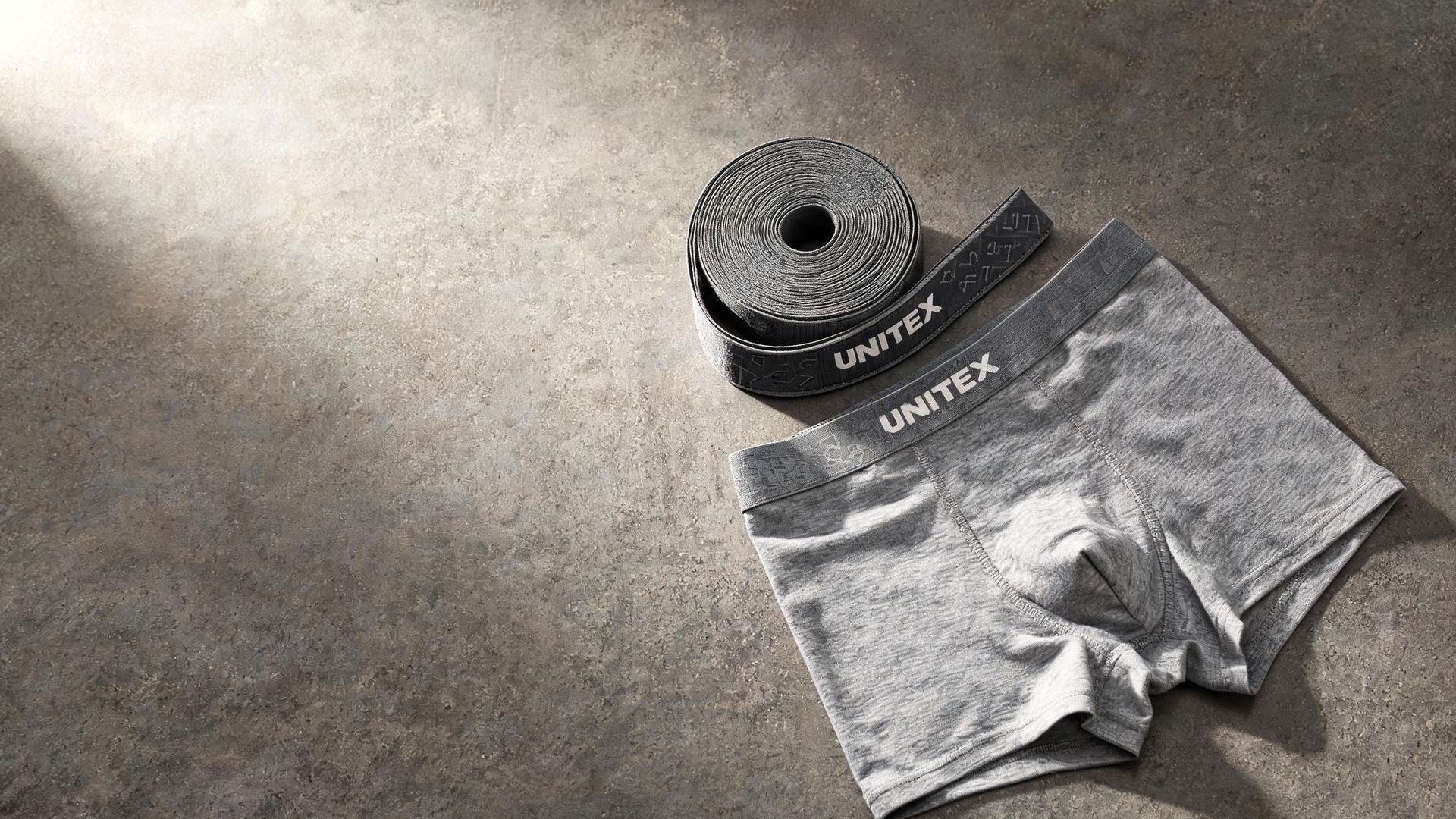
A men’s boxer brief shipped to a California address now sits inside a producer responsibility programme, and the company that owes the money is the one whose label is sewn inside the waistband, not the partner factory that cut the fabric. That inversion is where most sourcing desks lose the thread, because the questionnaire arriving from a US retailer asks for data the supplier has never been asked to produce: fibre composition by category, a tariff code per style, and a weight per piece. This guide sets out who the producer is under California’s Responsible Textile Recovery Act, what the 1 July 2026 joining deadline actually changed, what registration costs today, what the per-day penalty does and does not reach, and which documents a men’s underwear supplier has to be able to issue for every boxer brief and brief in a range.
Direct answer: California’s Responsible Textile Recovery Act covers undergarments, so a men’s boxer brief sold into the state is in scope, but the obligation sits on the brand that sells it, not on your men’s underwear supplier. Producers were due to join the approved PRO, Landbell USA, by 1 July 2026. Registration is a flat $1,000 for the 2026-2027 cycle.
Does California’s textile EPR law cover men’s underwear at all?
Yes, and not by implication. The statute defines apparel by an explicit list, and the list opens with undergarments: “apparel includes only undergarments, shirts, pants, skirts, dresses, overalls, bodysuits, costumes, vests, dancewear, suits, saris, scarves, tops, leggings, school uniforms, leisurewear, athletic wear, sports uniforms, swimwear, formal wear, onesies, bibs, footwear, handbags, backpacks, knitted and woven accessories, jackets, coats, snow pants, ski pants, and everyday uniforms for workwear” (Public Resources Code section 42984.3(a)(1)). A boxer brief is an undergarment. So is a brief, a trunk, a boys’ brief and a pyjama set. There is no de minimis volume threshold, no small-brand carve-out below the turnover test, and no exclusion for goods sold only online.
The exemptions are narrow and specific. Section 42984.3(a)(2) removes three categories from “apparel”: personal protective equipment or clothing worn by the US military, PPE designed to protect the wearer from health or environmental hazards, and reusable products designed to collect urine and faeces or reusable products regulated by the FDA for menstrual or vaginal discharge. None of them describes a cotton boxer brief. The separate “textile article” definition covers household items such as blankets, towels and bedding, and it is irrelevant to underwear except when a brand also sells those lines.
| Product sold into California | In scope? | Why |
|---|---|---|
| Men’s boxer briefs, cotton/spandex jersey | Yes | Undergarments are named in section 42984.3(a)(1) |
| Men’s briefs, classic cut or low rise | Yes | Same clause; the cut and leg length change nothing |
| Men’s trunks | Yes | Same clause; “undergarments” is the operative word, not the style name |
| Boys’ briefs and boxer briefs | Yes | Apparel is defined by product type, not by wearer age |
| Men’s swim trunks and board shorts | Yes | Swimwear is a named apparel category, so a men’s swim trunk sold into California is caught by the same clause |
| Military-issue underwear sold to the US armed forces | No | Section 42984.3(a)(2)(A) exemption |
| Reusable absorbent products for urine or menstruation | No | Section 42984.3(a)(2)(C) exemption |
One consequence catches brands that treat this as a packaging question. The programme is funded per unit sold, not per kilogram of waste collected, so a lightweight brief is not automatically cheaper than a heavy boxer brief. Section 42984.10(b)(1) requires the plan to describe “a per unit eco-modulated fee that reflects California sales volumes”. Unit count is the denominator. That single sentence kills the assumption that switching to a shorter leg reduces the obligation.
Are you the producer, or is your supplier?
This is the question that decides whether a brand has an obligation at all, and the statute answers it with a cascade. Section 42984.3(s) defines producer in a fixed order: first the entity that manufactures the covered product and owns or is licensed to use the brand or trademark; if there is none, the owner of the brand or trademark located in the state, or the exclusive licensee where the owner is not in the state; failing that, the entity that imports the product into the state for sale or distribution; failing that, the distributor, retailer or wholesaler that sells it in the state. A product counts as sold in the state when it is delivered to a consumer in the state (section 42984.3(s)(5)).
Now place a Chinese OEM order inside that cascade. We place boxer brief orders with partner factories for brands and importers; we do not own the label, we do not sell to Californian consumers, and we are not the importer of record on a FOB shipment. A sourcing and trading company sits outside the definition. The brand whose woven label is in the back of the waistband carries the duty where the brand owner is established in the state. Where the owner is outside the state, section 42984.3(s)(2) moves the duty to the in-state exclusive licensee, and where no licensee exists, section 42984.3(s)(3) moves it to the importer, which is the position a European brand occupies when it ships direct to a Californian address. Section 42984.3(s)(6) allows one party in the chain to assume the producer’s obligations and responsibilities so that another is relieved, which is how a US distributor sometimes ends up carrying the duty by contract, but the assumption has to be written down, not inferred from who pays the freight.
The turnover test is the second gate. Section 42984.3(s)(8) excludes a seller with less than one million dollars in annual aggregate global turnover, adjusted annually against the California CPI for All Urban Consumers. Read the words carefully: global turnover, not California sales, and aggregate, because subparagraphs (A) to (E) require affiliated entities under common majority ownership, common majority voting control or common management to be combined. A brand doing 900,000 dollars worldwide with a Californian licensee is not outside the law by virtue of the licensee’s smaller numbers.
| Your role in the chain | Producer under section 42984.3(s)? | What you owe |
|---|---|---|
| Brand owner, label in the garment, sells into California | Yes, first limb | Join the PRO, report volumes, pay the fee |
| Exclusive licensee of an overseas brand selling into California | Yes, second limb, where the owner is outside the state | Join the PRO; confirm in writing whether the owner retained the duty |
| US importer of record buying FOB from a Chinese supplier | Yes, third limb, if no brand owner or licensee is caught first | Join the PRO unless another party has assumed the duty in writing |
| US distributor or retailer reselling a brand already registered | No, falls away once an earlier limb is met | Monitor the compliance list and keep evidence |
| Sourcing and trading company, or contract factory, outside the state | No | Supply the data pack; the obligation does not attach to us |
What did 1 July 2026 change, and what is still ahead?
California did not invent a new agency. It made an existing industry body mandatory. CalRecycle reviewed applications submitted by 1 January 2026 and approved Landbell USA as the producer responsibility organisation on 27 February 2026, and its programme page then states the operative duty in plain terms: all producers of covered products must join Landbell USA by 1 July 2026. That date has passed. A brand that sells boxer briefs into California and has never registered is not early; it is unregistered.
The rest of the timetable is deliberately slow, and buyers who read only the 2026 headlines assume nothing else happens for years. Two dates matter commercially. The first is 1 March 2027, when the PRO must deliver an initial statewide needs assessment, which is the document that will propose how collection is paid for. The second is 1 July 2030, the outside date by which a complete stewardship plan must be approved. Regulations under section 42984.2 cannot take effect before 1 July 2028, and the plan itself is due within twelve months of those regulations taking effect, with a 120-day decision window.
| Date | What happens | Section |
|---|---|---|
| 1 January 2026 | PRO governing body submits its application to CalRecycle | 42984.4(a)(1) |
| 27 February 2026 | CalRecycle approves Landbell USA as the PRO | CalRecycle programme page |
| 1 July 2026 | All producers must have joined the approved PRO | 42984.4(a)(3) |
| 1 March 2027 | PRO submits the initial statewide needs assessment | 42984.6(a)(5) |
| 1 July 2028, at the earliest | Implementing regulations take effect | 42984.2 |
| 1 July 2030 | Complete plan approved; penalty backstop for participation conditions | 42984.8(c)(3), 42984.4(c) |
| Plan approval date | Retailers, importers and marketplaces may no longer sell a covered product whose producer is not on the compliance list | 42984.20(c)(2) |
What does registration actually cost a boxer brief brand?
Less than most compliance projects, and less than the rumour suggests. The PRO’s published registration terms for the 2026-2027 cycle are a flat one thousand dollar administrative fee, with no product volume or supply data required at registration. On payment the producer receives a Producer ID and access to a reporting dashboard, and the fee funds the needs assessment and the plan design rather than collection itself. A brand with forty boxer brief styles and a brand with four pay the same amount this cycle.
What nobody can quote you yet is the per-piece fee, and any supplier or consultant who offers one is guessing. Section 42984.14(a) requires the PRO to charge participating producers annual fees that are eco-modulated as described in the plan, with the stated intent of incentivising design choices that help reuse, repair and recycling through reduced fees, and using malus fees to discourage practices and materials incongruent with the plan. Those criteria do not exist until the plan is approved. The PRO’s own guidance places the transition from the flat activation fee to the performance-based structure at 2029 or 2030. Until then, model the fee as an unknown and model the data burden as a certainty.
| Cost element | Status today | What to put in a budget |
|---|---|---|
| Registration, 2026-2027 cycle | Published: 1,000 dollars flat | Certain and payable now |
| Volume or supply data at registration | Not required this cycle | Zero effort this cycle |
| Per-unit eco-modulated fee | Not yet set; criteria come with the plan | Unknown; do not model a number |
| Late registration | Does not reduce the annual fees owed; PRO may add late payment penalties | Assume the full fee plus penalty |
| Internal data work per style | Annual report needs volume by fibre category and HTS number | The real cost is the style-level data pack |
What happens to a men’s underwear brand that does nothing?
Not a fine this quarter, and not nothing either. The statute’s penalty authority in section 42984.21 allows an administrative civil penalty of up to ten thousand dollars per day, and up to fifty thousand dollars per day where the violation is intentional or knowing. Section 42984.4(c) then fixes when the three participation conditions become penalty-bearing: upon approval of a plan, or from 1 July 2030, whichever is sooner. Read that as a backstop rather than an amnesty. The joining duty in section 42984.4(a)(3) is unqualified and already past, the general penalty authority in section 42984.21 reaches a violation of any provision of the chapter, and the PRO’s published guidance states that delayed registration may increase enforcement exposure.
The sharper commercial risk is not the penalty. It is section 42984.20. From the date a plan is approved, a retailer, importer, distributor or online marketplace may not sell, distribute, offer for sale or import a covered product in the state unless the producer of that product is listed as compliant for that brand and product. The department posts that list within twelve months of the regulations taking effect and on or before 1 July each year after that, and must publish it in machine-readable form. Two supporting provisions make the list bite: section 42984.4(d) puts a producer out of compliance where a product it sells is not subject to an approved plan, and section 42984.27(a)(1) requires online marketplaces to report third-party sellers with more than one million dollars of covered product sales on the platform. A brand that cannot be found on the list becomes a listing risk for its retail customers long before it becomes a penalty case.
Document discipline runs alongside. Section 42984.23(a)(2) requires relevant records to be produced within fourteen days of a request, and section 42984.23(b) requires retention for five years, with reports submitted under penalty of perjury. A brand that has to reconstruct fibre composition and tariff codes for a three-year-old boxer brief order from email threads will not meet fourteen days.
What data must your supplier hand you for each boxer brief style?
Section 42984.17(g) requires the annual report to state the amount of covered products sold in or into the state, broken down by fibre type category and by Harmonized Tariff Schedule number. That is a style-level requirement, and the brand cannot produce it without the production side of the chain. This is the practical place where a reliable supplier earns its keep: not in paying a California fee, but in being able to issue, per style, the four data lines that the report is built from.
The brand list is a separate obligation with its own clock. Section 42984.5(a) requires producers or the PRO to submit a list of brands of covered products within thirty days of the implementing regulations taking effect, and section 42984.5(b) requires that list to be updated by 15 January each year or on the department’s request. A brand that acquires a label, or adds a sub-brand for a men’s brief line, needs that change reflected in the list, not just in its own catalogue.
| Data line | Why the report needs it | What a supplier should issue |
|---|---|---|
| Fibre composition by percentage | Volume must be broken down by fibre type category | Body, gusset, waistband elastic, thread and labels stated separately, with tolerances |
| HTS classification per style | Volume must be broken down by HTS number | One code per style, consistent with the commercial invoice and the entry |
| Weight per piece | Supports weight-based reporting and future fee modelling | Finished garment weight in grams, measured on a production sample, not estimated from fabric weight |
| Trim and component list | Determines whether a style is mono-material or mixed | Named components with fibre and polymer type, including adhesive if the seams are bonded |
| Packaging specification | Separates product obligations from packaging obligations | Polybag, header card, hangtag and carton, with material and weight |
Two documents already in a normal export file do most of this work, which is why the data pack is cheaper to build than it looks. A custom boxer brief range with six colourways does not multiply the fibre lines, because colour is not a fibre category and the report counts units rather than options. The fibre composition statement that underpins the US labelling rules, and the tariff classification used on the commercial invoice, are the same two fields the California report asks for. Our underwear export documents checklist lists the full set that leaves with a shipment; the California pack is a per-style summary of two of them plus weights. Where a style carries a print or a coating, the chemical file described in our guide to chemical limits on underwear is the third input, because a plastisol print adds a polymer that is not a fibre and should not be reported as one.
Which design choices will matter when the eco-modulated fee is set?
The statute is explicit that the fee is meant to move design, not just collect money. Section 42984.14(a) describes reduced fees for design choices that facilitate reuse, repair and recycling, and malus fees for practices and materials incongruent with the plan. Section 42984.10(b)(1) requires the fee method to reflect California sales volumes and existing collection, repair, reuse and recycling programmes. None of that tells us the criteria. It does tell us which levers a design team should keep free, because the criteria will be written against exactly these variables.
For a boxer brief, four decisions sit in the path. The first is body composition: a single-fibre cotton or polyester jersey is easier to describe and easier to recycle than a three-fibre blend, and the description is what the report is built on. The second is elastane, which is functionally hard to remove from a waistband and from a stretch jersey but introduces a second fibre into every line of the report. The third is the gusset, which is often a different fibre from the body; on a men’s brief it is sometimes the only non-cotton component, which makes a plain brief easier to document than a panelled boxer brief. The fourth is the seam system: a bonded seam adds an adhesive, and an adhesive is a material that has to be named.
This is where the brief versus boxer brief question deserves a straight answer rather than a sales line. Because the fee is per unit, a brief is not a discount route, and nobody should plan a range around that idea. What a classic brief does have is a shorter bill of materials: fewer panels, no separate pouch construction, often no side seam, and in many ranges a single body fibre. Based on our own order records, not a published statistic, a men’s boxer brief in 180 g/m2 cotton/spandex jersey consumes noticeably more fabric per piece than a classic brief in the same fabric, with the difference sitting in the leg length rather than the body. Weight is not the fee driver under section 42984.10(b)(1); it is the reporting driver, and it is the number a brand is most often missing when the questionnaire arrives.
Note: the observation above is not published by a regulator. It reflects what we see across supplier quotations and should be verified against your own test reports before you commit it to a specification.
| Design decision | Effect on the data pack | Effect on a future fee |
|---|---|---|
| Single-fibre cotton body, cotton gusset, cotton-covered elastane | One fibre category for the body, one for elastic | Unknown; mono-material is the direction the statutory language points to |
| Polyester/elastane performance jersey | Two fibre categories, plus elastane in the waistband | Unknown; recycled polyester content may become a criterion |
| Bonded seams instead of sewn seams | Adhesive must be named as a component | Unknown; an extra material is an extra question |
| Plastisol or silicone print on the leg | Polymer layer reported separately from the fibre | Unknown; a coating complicates recyclability claims |
| Classic brief instead of a 6-inch boxer brief | Fewer components to document | No per-unit advantage; unit count drives the fee |
Is California the same as the EU Digital Product Passport?
No, and confusing the two produces the wrong file for both. California’s programme is a funding and collection scheme: producers pay a per-unit fee into a PRO that then funds collection, sorting, repair and recycling, and the reporting obligation is about volumes by fibre and tariff code. The EU approach under Regulation (EU) 2024/1781 is a product-level data record read through a data carrier, with textile-specific requirements arriving through delegated acts. One asks how many units of which fibre you sold; the other asks what is attached to the garment itself. The overlap is the underlying data set, which is why the guide to the EU Digital Product Passport for underwear and this page draw on the same four fields. A brand selling a boxer brief range in Los Angeles and Lyon maintains two compliance files and one data pack.
Nor does either scheme replace the product safety file. A California EPR registration says nothing about flammability, chemical limits or certificates of conformity, and a CPSC filing says nothing about producer responsibility. The overlap between them is zero, which is why a men’s underwear programme now needs a compliance calendar rather than a compliance folder. Our overview of EU and US underwear compliance maps how the pieces fit, and the CPSC eFiling decision for men’s underwear covers the border step that runs in parallel.
What should a sourcing team do in the next thirty days?
Five moves, in this order. Confirm who in the chain is the producer and get that in writing, because the answer decides whether the next four steps belong to you or to a distributor. Check whether your entity was registered by 1 July 2026 and whether you hold a Producer ID, since a receipt in a shared inbox is not the same as a registration in the PRO’s system. Then build the per-style data pack for the men’s underwear range, starting with the styles that ship to the United States. Then decide, style by style, whether any component is undocumented: an adhesive, a print, a coated elastic. Finally, put the two dates in the calendar that will force a decision, the needs assessment in March 2027 and the plan approval deadline in July 2030, because the fee criteria arrive with the plan and the range that ships then is designed now.
One caution for buyers negotiating with a new supplier. A supplier that cannot state fibre composition by component, per style, with a weight per piece, will not be able to support this report, and the gap will surface at the worst moment, when a retailer asks for evidence before a seasonal buy. That is a sourcing question before it is a compliance question, and it belongs in the supplier audit rather than in the legal file.
References
- California Legislative Information, Senate Bill No. 707, Responsible Textile Recovery Act of 2024, Chapter 864, Statutes of 2024, sections 42984.3(a), 42984.3(s), 42984.4, 42984.5, 42984.8, 42984.10, 42984.14, 42984.17, 42984.20, 42984.21, 42984.23, 42984.27. leginfo.legislature.ca.gov
- CalRecycle, Textile PRO Application: CalRecycle approved Landbell USA as the PRO on 27 February 2026; producers must join by 1 July 2026. calrecycle.ca.gov/epr/textiles/textileproapp
- CalRecycle, Textile Stewardship programme page: programme timeline, covered product definitions and statewide tonnage figures. calrecycle.ca.gov/epr/textiles
- CalRecycle, Public Notice, Review of Textile Producer Responsibility Organization Applications, 23 December 2025. www2.calrecycle.ca.gov/PublicNotices/Details/6998
- Landbell USA, SB 707 Producer Registration: 1,000 dollar flat administrative fee for the 2026-2027 cycle, no volume data required, Producer ID on payment, eco-modulated transition at plan approval. landbellusa.com/registration
- UK Fashion and Textile Association, California appoints Landbell USA to implement textile EPR scheme, 16 March 2026. ukft.org/california-landbell-textile-epr
- Regulation (EU) 2024/1781 establishing a framework for setting ecodesign requirements for sustainable products, including the digital product passport. eur-lex.europa.eu/eli/reg/2024/1781/oj
- Federal Trade Commission, Guides for the Use of Environmental Marketing Claims, 16 CFR Part 260. ecfr.gov/title-16/part-260
Source grading for this page: the statute, the two CalRecycle pages and the PRO registration page are primary sources and were read directly. The fabric-consumption observation in the design section is our own order record and is labelled as such where it appears. No figure on this page is drawn from an unattributed industry report.
· Xiamen Unitex Trade Co., Ltd. — OEM & ODM underwear sourcing partner