

Buyer Insights
Blog — Underwear OEM Manufacturing Insights
Buyer-facing notes on underwear sourcing, fabric specification, compliance and lead times — published by Unitex Underwear (Xiamen Unitex Trade Co., Ltd.), a sourcing company based in Xiamen, Fujian Province, in the Xiamen–Quanzhou–Jinjiang knitwear cluster of south-east China.

Women’s Underwear Styles: Coverage, Rise and What Each One Costs
Women's brief styles differ on two axes: coverage and rise, with fabric consumption following from them. Boyshorts, briefs, bikinis, high-cut and G-strings are different patterns rather than a scale of quality, and each carries its own pattern cost and fabric minimum. The mix should follow sell-through rather than range symmetry.

Is Organic Cotton Suitable for Underwear?
Organic cotton suits underwear where the claim is part of the proposition, and the practical questions are certification, traceability and price position rather than fibre performance. GOTS covers the fibre and the processing chain; whether the premium is recoverable depends on the market the range sells into.

Sports Bra Selection: Support Levels and What Buyers Should Specify
Sports bra selection runs on support level rather than on style: impact level and cup size determine the construction, the fabric modulus and the sizing logic. A light-support and a high-impact garment are different specifications rather than variations on one, which is why the support level belongs in the brief.

Men’s Underwear Best-Sellers: What the Ranking Actually Reflects
A best-seller ranking reflects distribution and price as much as product: the styles that top a list are usually the ones stocked most widely rather than the ones that perform best per unit. The useful reading for a buyer is the mix — which types hold volume and which hold margin.

The Evolution of Female Sports Underwear
Women's sports underwear evolved from protection to fashion, and the buying decision now runs on support level rather than on style. Impact level and cup size determine the construction; the reported growth in the category reflects a move away from underwired everyday wear towards activity-specific garments rather than a change in taste alone.

Men’s Boxer Brief Waistbands: What Buyers Should Specify
A boxer brief waistband has three main constructions: yarn-dyed jacquard, digital printing and adhesive seamless. Each carries a different cost, durability profile and branding option. Because the waistband is what the wearer feels on every wear — and what loses recovery first — it belongs in the specification rather than in the styling notes.

Knowledge: What Type of Printing is Best For Underwear
Print choice for underwear starts with fibre content rather than with the print type name: transfer printing suits polyester-rich styles, while cotton, modal and bamboo programmes normally run water slurry, plastisol or reactive inks. Strike-offs are approved on the actual body fabric before bulk. Unitex Underwear supplies printed and solid programmes from Xiamen and coordinates print approvals inside the garment programme.

Men’s Underwear Fabric Selection: Cotton, Modal and Bamboo Compared
Three fibres carry most of the men's market: pure cotton, modal and bamboo. They differ in hand-feel, recovery and cost rather than in quality ranking, and each is best specified as a blend ratio with a weight in g/m² rather than by the fibre name alone.

“Sports Underwear” Has Become New Fashion of Urban Women
Sports underwear moved into everyday wear by lending its construction rather than by changing it — support, moisture handling and flat seams. That is why a sports-led range and a leisure range are built differently rather than being one range under two labels, and why the function is named before the trade-offs are chosen.
 Sourcing & Procurement · May 2022 · 5 min read
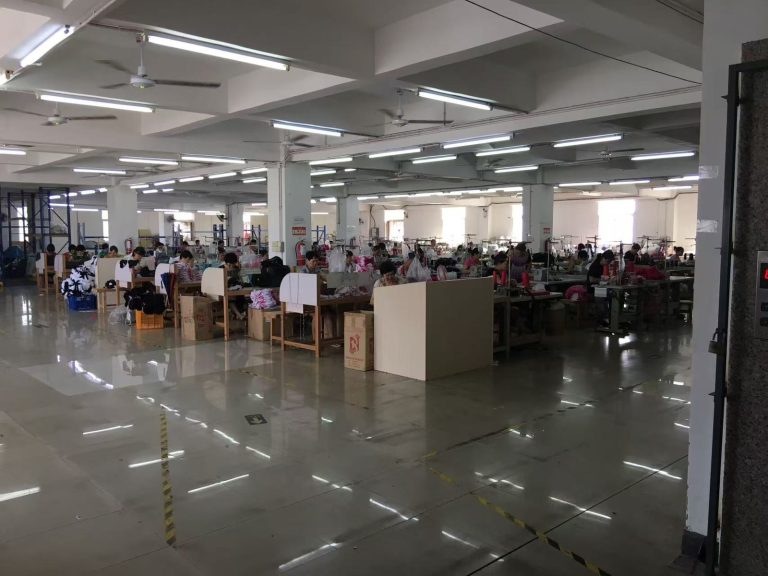
3 Tips For Negotiating The Best Deal With Underwear Supplier
A quotation is only useful if you can take it apart. Unitex Underwear quotes by line — fabric and trim consumption, labour, packaging, management and margin — and states how long the price holds, because cotton, freight and exchange rates all move. Fast, itemised replies also show how well a supplier knows the product; a single lump sum hides where a later increase will land.

Bra Care Instructions: What the Construction Requires
Bra care instructions fail for the same reason underwear ones do — they describe the fibre rather than the construction. An underwire, a moulded cup or a bonded edge each carries its own requirement, and the machine-wash guidance has to reflect the most sensitive component rather than the average.

Baby Underwear: Safety Standards, Sizing and What to Specify
Baby underwear carries the tightest specification in the category: Class I chemical requirements, flat seams and a size grade built for a body that is still changing. Four decisions matter — sizing, fabric, pack quantity and colour — and the first two are compliance questions rather than design ones.