
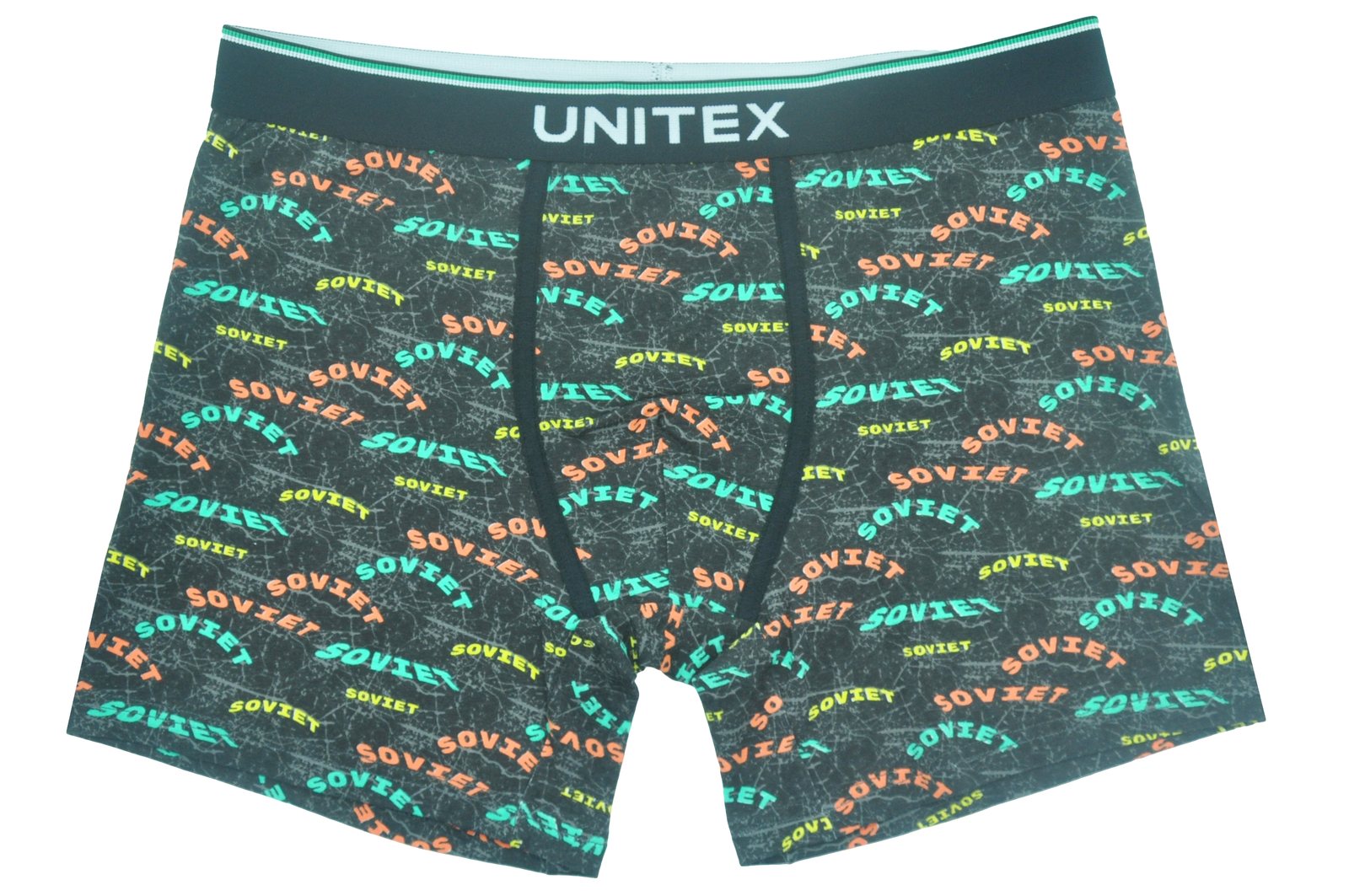
Xiamen Unitex Trade Co., Ltd. is a professional underwear sourcing & supply-chain management company based in Xiamen, Fujian Province, in the Xiamen–Quanzhou–Jinjiang knitwear cluster of south-east China. Founded by Will Lin, who has worked in the apparel trade since 2004, the company has been exporting since 2009 and was incorporated in Xiamen in 2013. It runs its own liaison office in Jinjiang and works with a network of BSCI & OEKO-TEX Standard 100 certified partner factories to serve retailers and brands across Europe, the US and Australia.
1. How many counts of fabrics?
40 counts are small coarse cotton cloths, 60 counts are ordinary plain cotton cloths, and 100 counts are fine grain cotton cloths. 40-count can be used as a coat sheet, very strong. 60 counts can be used as cotton-padded clothes, quilts, outer covers, and poor wear resistance. 100-count can be used as underwear and summer clothes, and it is breathable, relatively thin, and cannot withstand scratching, but it is easy to cut patterns, sew and iron, easy to wash and dry, and not resistant to sunlight.
The higher the count, the finer the yarn. When weaving, it will be woven with multiple strands together, and the fabric will be thicker.
2. How to judge the number of fabrics
How many counts of pure cotton is the fineness of the yarn (imperial system): refers to the number of 840 yards (1 yard = 0.941 meters) long for a pound (454 grams) of cotton yarn at the specified moisture regain, which is how many inch counts Yarn can be simply read as “several yarns”, and the unit is represented by “S”. The larger the number in front of S, the thinner the yarn, the lighter, thinner and softer the woven fabric. The lower the number, the thicker the yarn, and the heavier, thicker, and rougher the resulting fabric.
The count is related to the length and weight of the yarn. For example, if one gram of cotton is made into 30 yarns with a length of 1 meter, that is 30 counts; if one gram of cotton is made into 40 yarns with a length of 1 meter, that is 40 counts; For 1 meter of yarn, that is 60 counts. Therefore, the higher the yarn count, the finer the yarn, the thinner the woven cloth, and the softer and more comfortable underwear. Obviously, the higher the count, the higher the quality of the raw material (cotton), and the higher the requirements for the spinning and weaving mills, so the higher the cost of the cloth.

3. How many fabrics and how to see the size
In terms of cloth style, 32-count fabrics are clearer than 50-count fabrics. In terms of weight, 32-count fabrics are heavier than 50-count fabrics. 50 or 32 refers to the specifications of the yarn used to weave all-round fabrics. The yarn plays the dual role of foundation and bridge in the process of clothing production and processing, because the yarn is not only the final product of the spinning mill, but also the raw materials of the weaving factory can be packaged as semi-finished products or sold as finished products. Therefore, it is necessary to understand the basic knowledge of yarns, master the main varieties of yarns and their properties, and choose yarns reasonably.
4. What are the dozens of fabrics?
Yarn count: refers to the length of each gram of yarn, that is, the higher the count, the finer the yarn and the better the uniformity, and vice versa, the lower the count, the thicker the yarn. Yarn counts are marked “S”.
5. How to identify 140 fabrics of textiles
The 140s cotton fabric is 140 counts. “S” represents the number of counts.
At present, most of the high-thread count Pima cotton home textiles sold on the market are 40 yarn counts, and a small amount of 60 yarn counts. Because the higher the yarn count, the higher the requirements for cotton fiber and the higher the requirements for spinning technology. Therefore, 140-count Pima cotton is a very rare home textile fabric, which has very high requirements for textile raw materials and textile technology!

6. What does the number of fabrics mean?
Indicates that the thickness of the fabric varies.
The fabrics of 20 counts, 40 counts, 60 counts and 100 counts are from thick to thin to thinner. In fact, this count is called a count in textiles, which indicates the thickness of the yarn used for the fabric. The smaller the count, the thicker the yarn. The thicker the woven fabric, the thinner it will be. Generally speaking, the larger the count, the better the woven fabric and the more high-end the garment.
7. How to see the count of the fabric
The number of buttons and threads determines the radial density of the fabric. Different manufacturers have different wear numbers. The number of shuttles is the number of yarns per centimeter in the weft direction of the fabric; the count refers to the thickness of the yarn, and the common indexes are: 16S, 12S, 40S, 45S, 32S, 30S, 20S, etc.; the warp and weft density, as the name implies, refers to the fabric diameter. The number of radial yarns and the number of weft yarns per inch in the direction and weft directions. In fact, it is very simple. You use a density ruler to measure it. The upper part is the number of shuttles, and the lower part is the density.
8. How much is the fabric 32s×21s
40S is a unit designation. The higher the yarn count of the same weight, the finer the yarn, and the denser the spun cloth, or the better the quality. Generally, the cotton yarn is 1-60 counts. There are also 80 counts of cotton yarns in China, but only a few factories can produce them. The common ones are 21S, 32S, 40S, and 60S. Under normal circumstances, the service life of 40S hotel bedding cotton fabrics is 120-200 times of washing.

9. How to see the number of fabrics
Fabric knowledge | Fabric weight and count calculation algorithm:
a. Metric count (Nm) (determined weight system) Metric count refers to the length in meters of 1g of fiber or yarn under a specified moisture regain, and the unit is public count. The larger the value, the thinner the yarn. Metric counts are mainly used for woolen and fancy yarns.
b. British count (Ne/S) (fixed weight system) British count refers to the multiple of 840 yards per pound of yarn at the specified moisture regain. The British count is a fixed weight system, so the larger the count, the thinner the yarn.
c. Denier (D) (fixed-length system) Denier refers to the official weight in grams of a 9000-meter-long fiber or yarn, and the unit is denier, referred to as denier. Commonly used in chemical fiber and silk. The larger the value, the thicker the fiber or yarn.
d. Tex (fixed length system) Tex refers to the weight in grams of 1000 meters long fiber or yarn at the specified moisture regain.
10. How many counts is the fabric
Coarse count yarn: pure cotton yarn with a count of 18 and below, mainly used for weaving thick fabrics or piled and looped cotton fabrics.
Medium count yarn: 19-29 British count pure cotton yarn. Mainly used for knitted garments with general requirements. Fine count yarn: 30-60 British count pure cotton yarn. Mainly used for high-grade knitted cotton fabrics. Fine count yarn: pure cotton yarn above 60 British count, used for high-grade knitted cotton fabrics.
11. How much is the fabric count 32×21
The density of 32-count cotton is about 133*72. For example, cotton brushed fabrics generally have 21 counts and a density of 108*58.
Because the count and density are higher than those of cotton wool, Australian cashmere fabrics are generally “relatively thinner” than cotton wool fabrics. The real Australian cashmere four-piece suit is generally between 7 catties and 9 catties.
Unitex underwear programme in China, which are always to use the counts 32S and 40S for underwear and pyjamas.
· Xiamen Unitex Trade Co., Ltd. — OEM & ODM underwear sourcing partner