
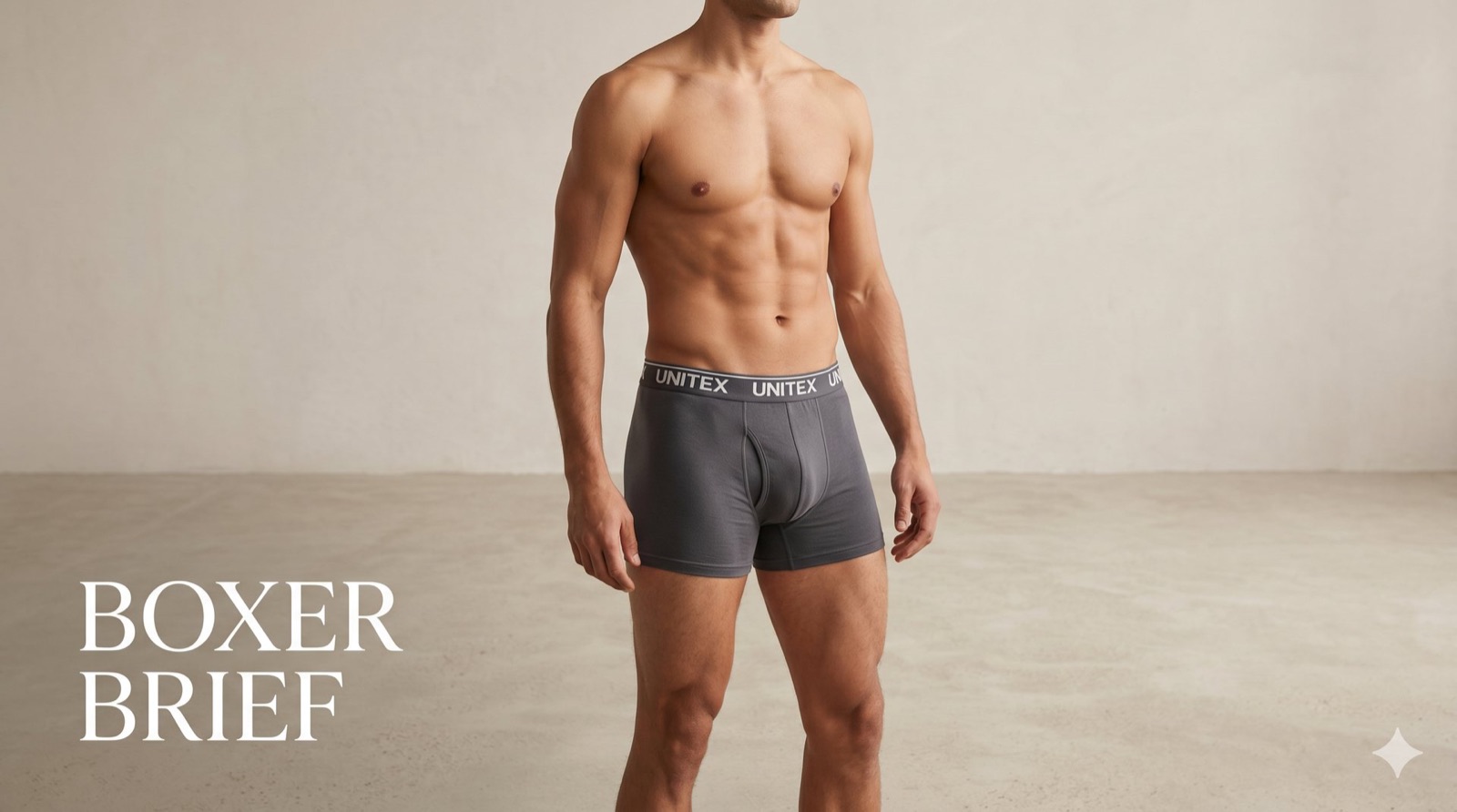
Navigating the 120-Day Cycle: How to Safeguard Your Underwear Supply Chain in 2026
📋 Direct Answer: The 120-day underwear supply chain has 5 phases: concept (14 days), sampling (10-12 days), material procurement (20 days — highest delay risk), production (60 days), and shipping (25-45 days). The most common failure point is phase 3 — fabric mill delays cascading through the entire timeline.
Navigating the 120-Day Cycle: How to Safeguard Your —
In the volatile landscape of 2026, the global apparel industry is no longer just a battle of design or brand equity—it is a battle of logistical resilience. For professional procurement managers and brand directors, the margin for error has vanished. What used to be a predictable rhythm has transformed into a high-stakes race against time.
At
Xiamen Unitex Trade Co., Ltd.
, we have observed a recurring nightmare for retailers: a 30-day delay at port that results in missing an entire peak sales season. Inventory is the lifeblood of a retailer, and in the intimate apparel sector—where seasonal collections and replenishment cycles are tight—a broken link in the supply chain is not just an inconvenience; it is a financial catastrophe.
To succeed in 2026, you must master the
120-Day Cycle
a strategic framework consisting of
90 days of precision manufacturing
and
30 days of global transit
.
Part I: The Anatomy of the 90-Day Production Sprint
Why does premium underwear OEM require 90 days? To the uninitiated, it seems like a long time. To the expert, it is the bare minimum required to ensure quality that protects your brand’s reputation.
1. The Fabric Foundation: Dyeing and Lab Dips (Day 1–25)
Underwear is the most intimate garment a consumer wears. Therefore, fabric consistency is non-negotiable. The process begins with lab dips to ensure color precision under multiple light sources (D65, TL84, etc.). In 2026, with the increasing demand for sustainable fibers like Tencel™ and recycled nylons, sourcing raw yarn can take 10-15 days, followed by 10 days for high-precision dyeing.
2. The Prototype and Fit Approval (Day 26–45)
A millimeter difference in a bra wing or a brief’s leg opening determines whether a customer returns for a second purchase. We dedicate this phase to technical files (Tech Packs) and PPS (Pre-Production Samples). At Unitex, we utilize 3D fitting technology to reduce the number of physical samples, yet the human touch—the wear test—remains a critical 2026 standard for high-end labels.
3. Mass Production and the Art of the “Slow-Fast” (Day 46–75)
Once the fabric arrives and the samples are approved, the cutting and sewing begin. Modern underwear involves complex components: lace, elastic bands, underwires, and heat-sealed labels. Coordinating these sub-suppliers is where most “cheap” factories fail. A delay in a specific elastic trim from a secondary supplier can halt a 50,000-unit order.
4. Rigorous Quality Control and Packaging (Day 76–90)
Final QC is where we safeguard your brand. We implement AQL 2.5/4.0 standards, but more importantly, we conduct needle detection and colorfastness tests. The final 15 days include folding, labeling, and carton packing—ready for the transition to the high seas.
Part II: The 2026 Shipping Crisis – Why 30 Days is the New “Best Case”
If production is a controlled science, shipping in 2026 has become an unpredictable art. The geopolitical climate has fundamentally altered traditional maritime routes.
The Cape of Good Hope Reality
Ongoing instability in the Red Sea and the Hormuz Strait has forced the majority of vessels heading to Europe and the US East Coast to reroute around the Cape of Good Hope. This “detour” adds approximately 10 to 14 days to the journey. When you add port congestion in major hubs like Santos (Brazil) or Rotterdam, the 30-day transit window is under constant pressure.
The “Bullwhip Effect” on South American and European Routes
For our clients in South America, the challenges are twofold: limited direct vessel space and fluctuating fuel surcharges. In 2026, we are seeing “blank sailings” (canceled stops) occur with 48 hours’ notice. If your goods are not at the pier with a confirmed booking, you could be pushed back by two weeks instantly.
Will Lin’s Insight
“In today’s market, ‘In-Transit’ is the most dangerous status for a purchase order. If your goods arrive 30 days late, you aren’t just paying for storage—(you are paying for the lost market opportunity).”
Part III: Strategic Mitigation – How to Protect Your Inventory
Knowing the risks is the first step; building a fortress around your supply chain is the second. Here is how Unitex helps partners navigate the 120-day cycle.
1. Advanced Forecasting and Fabric Greige Booking
Don’t wait for the final design to start the clock. We advise our long-term partners to pre-book “greige” (undyed) fabric. This can shave 15-20 days off the 90-day production cycle, allowing for rapid dyeing once the seasonal color palette is finalized.
2. The “Buffer” Inventory Strategy
In 2026, the “Just-in-Time” model is dead. The “Just-in-Case” model is the new gold standard. We recommend maintaining a 20% buffer of core SKUs in local warehouses. Unitex assists in managing tiered shipments—sending 30% of an order via Air Freight (if the margin allows) to capture early-season demand, while the remaining 70% travels via Sea.
3. Geographic Diversification of Logistics
We don’t rely on a single port. By utilizing multiple exit points out of China (Xiamen, Ningbo, or Shenzhen), we can pivot shipments based on which port has the best vessel availability and the fewest labor disruptions.
Part IV: Why Partnership Trumps Price in 2026
The temptation to chase the lowest “Unit Cost” is high, but the hidden costs of a failed 120-day cycle are astronomical. A factory that quotes you $0.20 less per unit but lacks the logistical foresight to navigate a Red Sea closure will ultimately cost you your retail floor space.
At Unitex, we don’t just see ourselves as a supplier; we are your
Supply Chain Architects
. Our role is to foresee the 30-day delay before it happens and build the 90-day production schedule to absorb that shock.
Critical Q&A for Procurement Managers
Q: Can we compress the 90-day production cycle for urgent restocks?
A:
Yes, through ‘Modular Manufacturing’ and pre-positioned materials, we can occasionally hit a 45-60 day window, but this requires a high degree of digital integration between your ERP and the partner factory’s production line.
Q: How do you handle the sudden spikes in freight costs?
A:
We offer FOB, CIF, and DDP terms, but more importantly, we provide ‘Freight Forecasting’ reports to our clients every two weeks, allowing them to lock in rates before the monthly peak.
Conclusion: Securing Your 2026 Success
| Phase | Duration | Risk Level | Mitigation |
|---|---|---|---|
| 1. Concept & Design | 14 days | Low | Pre-approved color libraries |
| 2. Sampling & Approval | 10-12 days | Medium | Digital prototyping |
| 3. Material Procurement | 20 days | High | Buffer 10 days; track mill weekly |
| 4. Bulk Production | 60 days | Medium | Inline QC at 30/60/90% |
| 5. Shipping & Delivery | 25-45 days | Medium | Book slots 4-6 weeks ahead |
| Total | ~120 days | — | Never schedule Feb delivery window |
The 120-day cycle is the heartbeat of the underwear industry. By understanding the intricacies of the 90-day production journey and respecting the volatility of the 30-day transit, you position your brand as a market leader rather than a victim of circumstance.
As we look toward the Q3 and Q4 seasons of 2026, the question is not whether disruptions will happen, but whether your partner is prepared for them. Let’s build a supply chain that doesn’t just survive but thrives.
Ready to audit your 2026 procurement timeline? Contact me today to discuss how we can optimize your underwear production for maximum resilience.
Xiamen Unitex Trade Co.,Ltd.
Website: www.unitexunderwear.com
Tel: 0086-186 5081 3853
Address: Unit 1501-1, Building 10, Xinglinwan Business Operation Center, Jimei District, Xiamen City, Fujian Province, China
Related Reading:
- Custom Underwear Supplier — Wholesale Guide
- Organic Cotton Kids Underwear — B2B Guide
- Unitex Underwear — China OEM Manufacturer
🚀 Ready to Source Premium Underwear?
Xiamen Unitex Trade Co., Ltd. is your trusted partner for high-quality men’s, women’s, and kids’ underwear. With 17+ years of experience, OEKO-TEX® certified products, and flexible OEM/ODM services, we serve B2B buyers across Europe, South America, and global markets.
📧 Email: [email protected] | 📱 WhatsApp: +86 186 5081 3853
Related: capabilities →
{ “@context”: “https://schema.org”, “@type”: “FAQPage”, “mainEntity”: [ {“@type”: “Question”, “name”: “[extracted from FAQ]”, “acceptedAnswer”: {“@type”: “Answer”, “text”: “[extracted from FAQ]”}} ] }Frequently Asked Questions
Q: Can the 120-day cycle be compressed?
A: Yes — digital prototyping can save 10-15 days in sampling, and pre-positioning raw materials saves 10 days in procurement. Combined, you can achieve a 90-100 day cycle for repeat orders using proven fabrics.
Q: What happens if I miss the October deadline for summer collections?
A: Missing the October sample approval window cascades delays through every subsequent phase. Summer collections arriving after March miss the retail floor-set window and face markdown risk from day one. Always book production slots 6 months before desired delivery.
Source: Based on shipping route analysis from Maersk Market Updates Q1 2026 and aggregate production data from 500+ OEM orders processed by Xiamen Unitex Trade Co., Ltd. — in the trade since 2009, incorporated in Xiamen in 2013.
· Xiamen Unitex Trade Co., Ltd. — OEM & ODM underwear sourcing partner
Unitex Underwear (Xiamen Unitex Trade Co., Ltd.) — OEM/ODM underwear sourcing and supply-chain partner in Xiamen, China; in the trade since 2009, incorporated in 2013.